Andhra Pradesh Chief Minister Chandrababu Naidu's proposal to build a Space City and satellite launch facility on Hope Island in Kakinada Bay has drawn scrutiny over risks to protected wildlife and nearby residents. The island hosts conserved bird species and a human population, both of which face potential disruption from large-scale aerospace infrastructure development. Compounding the concern, Hope Island is classified as a Moderate Damage Risk Zone-III (MSK VII) region under India's Coastal and Oceanic Island Database, managed by the National Centre for Sustainable Coastal Management. That designation signals elevated vulnerability to seismic and coastal hazard events. The MSK VII rating introduces a material constraint on the project's viability: infrastructure siting in a designated damage-risk zone typically triggers additional environmental clearance hurdles under India's coastal regulation framework. Observers will watch whether environmental bodies formally oppose the plan, and whether the classification forces a site review or redesign of the proposed Space City.
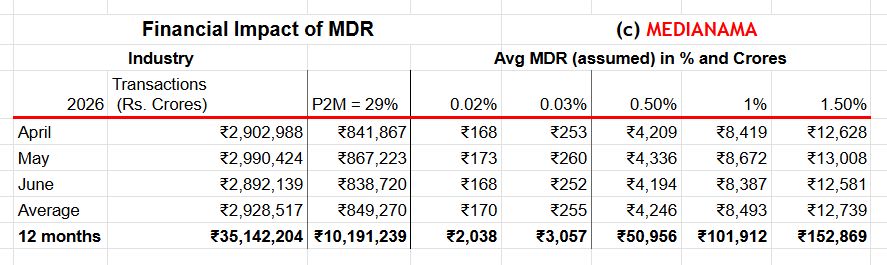
India's government plans to amend the Payment and Settlement Systems Act to restore UPI merchant discount rates, ending the zero-MDR regime in place since January 2020.
India's government has introduced the Taxation and Other Laws (Amendment) Bill, 2026, proposing changes to payments regulation, income tax, and the Finance Act to attract FDI and support Make in India. The Bill's final shape will depend on parliamentary debate and committee review.
The government's Taxation and Other Laws (Amendment) Bill, 2026, proposes to replace the blanket UPI MDR ban with a system allowing the Centre to notify which payment modes stay fee-free.
Prime Minister Narendra Modi inaugurated the Rs 5,000 crore Bhogapuram greenfield airport in Andhra Pradesh, built under a public-private partnership model. He also laid foundation stones for infrastructure projects worth nearly Rs 18,000 crore in the state, signalling a broad investment push for the region.