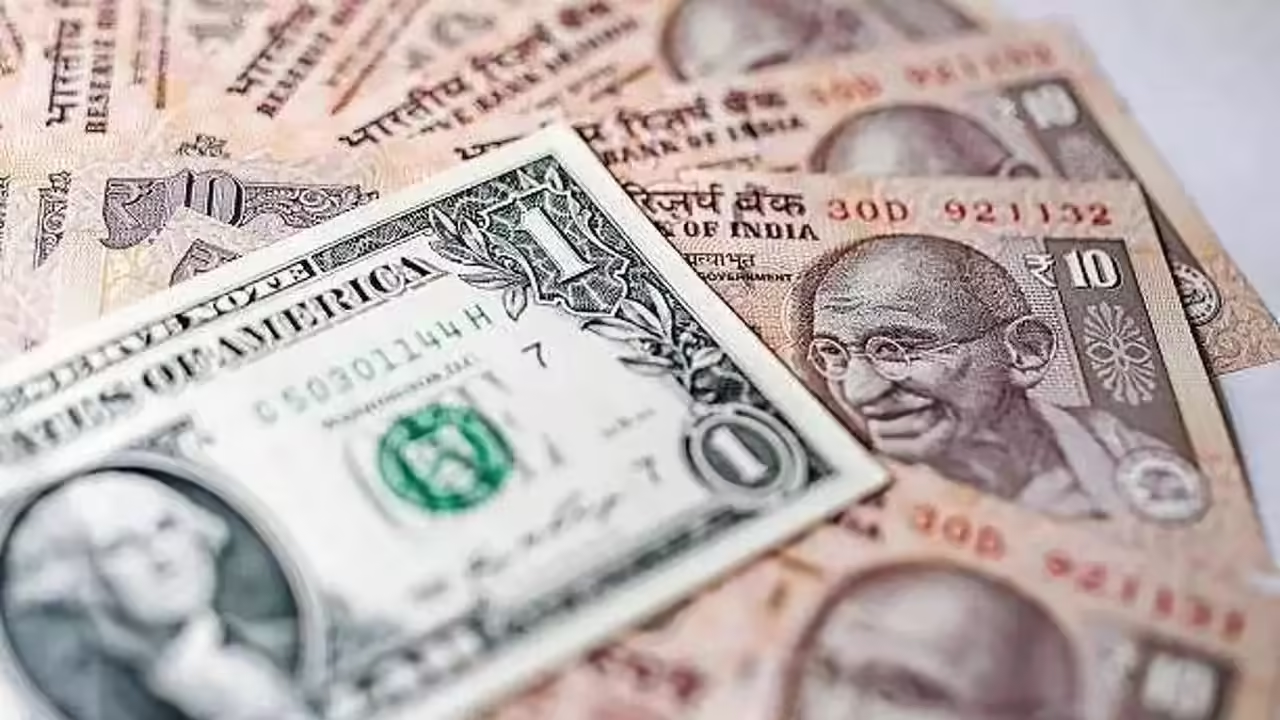
The Indian rupee fell to a record low of 95.55 against the US dollar, pressured by rising oil prices linked to a fraying ceasefire between the United States and Iran. The move marks the weakest point the currency has ever reached, and the timing reflects how quickly geopolitical stress in the Middle East transmits into financial pain for import-heavy economies like India.
Why oil prices are driving the pressure
Oil and the rupee move in opposite directions for India. The country imports roughly 85 percent of its crude oil needs, meaning higher global oil prices force Indian buyers to spend more dollars. That increased dollar demand weakens the rupee. When a ceasefire between major oil-region players shows signs of collapse, traders price in the risk of supply disruption even before any physical barrels go missing.
The US-Iran ceasefire tension sits at the center of this latest move. Any breakdown in that arrangement raises the prospect of tighter oil supply from one of the world's significant producing regions. Crude prices have responded by climbing, and the rupee has responded in turn by sliding.
A weaker rupee compounds the oil problem. India pays for crude in dollars, so a falling rupee means the same barrel of oil costs more in rupee terms. That feeds directly into fuel prices, transport costs, and eventually consumer prices across the economy. The Reserve Bank of India watches this channel closely because it links global commodity markets to domestic inflation.
What this means for India's economy
A record-low rupee creates pressure across several parts of the Indian economy at once. Importers face higher costs immediately. Companies that carry dollar-denominated debt see their repayment burden rise in rupee terms. Fuel retailers and state oil marketing companies absorb margin pressure if retail prices are not adjusted quickly.
On the other side, exporters, particularly in software services, pharmaceuticals, and textiles, receive more rupees for every dollar they earn. That partial offset exists, but India's trade balance tends to widen when oil prices rise sharply, because the energy import bill grows faster than export revenues adjust.
For ordinary consumers, the most direct effect arrives through fuel costs. Petrol and diesel prices in India are linked, with some lag, to global crude benchmarks. A sustained period of high oil prices combined with a weak rupee creates the conditions for upward fuel price revisions, which then ripple into freight and food costs.
The rupee's record low also signals investor caution about India's external account. A wider current account deficit, which is the gap between what India earns from abroad and what it spends abroad, tends to attract less foreign capital or pushes the central bank to defend the currency using its foreign exchange reserves.
The Reserve Bank of India has historically intervened in currency markets to slow sharp moves, selling dollars from its reserves to absorb excess demand. How aggressively it acts now will depend on whether this is seen as a temporary spike or the start of a sustained depreciation trend.
Watch for two near-term signals: whether crude oil prices stabilize or keep climbing as the US-Iran situation develops, and whether the RBI steps in visibly to slow the rupee's decline. If oil stays elevated and the ceasefire deteriorates further, the rupee could face continued pressure. Any diplomatic progress that reduces Middle East supply risk would likely give the currency room to recover some ground.