RTI data has revealed that resident doctors at top medical institutes across India are working extreme hours, facing mental health crises, and quitting their courses in large numbers. The data was filed by J. Swamidass in collaboration with the United Doctors Front (UDF). At AIIMS Delhi, 225 superspeciality students quit in the last three years. From January 2022 to December 2024, 112 PG medical students and 22 non-medical PG students took psychiatric counselling at the Student Wellness Centre. At JIPMER, 276 PG students quit between 2020 and 2024, and 12 were admitted to the Psychiatric Ward for depression and stress. At AIIMS Bhopal, 178 academic and 250 non-academic junior residents quit between 2020 and 2024. Duty hours recorded in the RTI data are severe. Junior residents in the Paediatrics Department of AIIMS Nagpur worked up to 540 hours per month, or 135 hours per week, in August and September 2025. Residents in the Anaesthesiology Department at AFMC had 63 separate 36-hour shifts in just three months. The National Medical Commission (NMC) acknowledged receiving 1,680 complaints between 2020 and 2024 covering heavy workload, bullying, and verbal abuse. During the same period, 1,113 PG medicos quit their courses and 119 UG and PG medicos died by suicide. The UDF has filed a Public Interest Litigation challenging working conditions and seeking enforcement of the 1992 Ministry of Health and Family Welfare directives, which cap duty at 12 hours per day and 48 hours per week. The Parliamentary Standing Committee on Health and Family Welfare submitted its 172nd report on 18.03.2026, recommending a formal Clinical Duty Hours Regulation policy with mandatory rest periods and monitored rosters. UDF Chairperson Dr. Lakshya Mittal has written to Union Health Minister JP Nadda seeking urgent implementation of the panel's recommendations. Many departments reportedly do not maintain records of actual duty hours, making oversight difficult.
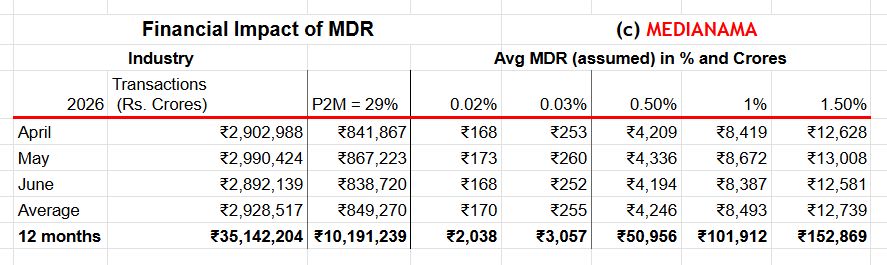
India's government plans to amend the Payment and Settlement Systems Act to restore UPI merchant discount rates, ending the zero-MDR regime in place since January 2020.
India's government has introduced the Taxation and Other Laws (Amendment) Bill, 2026, proposing changes to payments regulation, income tax, and the Finance Act to attract FDI and support Make in India. The Bill's final shape will depend on parliamentary debate and committee review.
The government's Taxation and Other Laws (Amendment) Bill, 2026, proposes to replace the blanket UPI MDR ban with a system allowing the Centre to notify which payment modes stay fee-free.
Prime Minister Narendra Modi inaugurated the Rs 5,000 crore Bhogapuram greenfield airport in Andhra Pradesh, built under a public-private partnership model. He also laid foundation stones for infrastructure projects worth nearly Rs 18,000 crore in the state, signalling a broad investment push for the region.