Retirement income planning has emerged as a shared challenge across developed and developing economies, driven by converging demographic and fiscal pressures. Aging populations, longer life expectancies, and strained public pension systems are forcing individuals, employers, and governments to rethink how retirement income is structured and delivered. The challenge is no longer confined to any single region or income bracket. Across markets, the core tension is the same: defined benefit systems are contracting, defined contribution participation remains uneven, and longevity risk is increasingly shifting onto individuals rather than institutions or the state. For investors and policymakers, this structural shift carries direct consequences. Asset managers face growing demand for income-oriented and annuity-adjacent products. Employers are under pressure to expand plan access and improve default contribution rates. Governments must balance pension adequacy against fiscal sustainability. The institutions and strategies that adapt earliest to this global retirement income gap are positioned to capture both market share and policy influence in the years ahead.
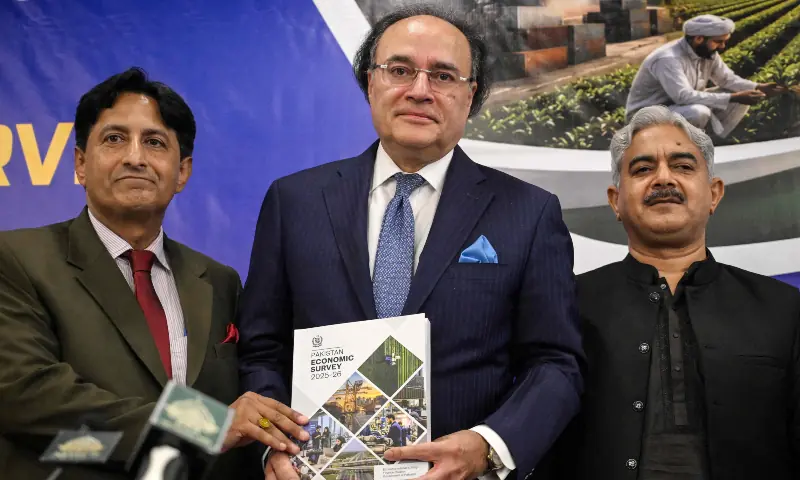
Pakistan's economy grew 3.7 percent in FY2026, its fastest rate in four years, according to the Pakistan Economic Survey presented by Finance Minister Muhammad Aurangzeb. Growth beat last year's 3.18 percent but missed the 4.2 percent target, with floods, regional conflict, and weaker food exports cited as key drags.
The Union government released an additional Rs 1,09,019 crore in tax devolution to states on August 1, 2026, separate from the regular monthly transfer. The lump-sum release aims to accelerate state capital spending in the July-September quarter, with Uttar Pradesh, Bihar, and Madhya Pradesh among the top recipients.
US mortgage rates have risen to a one-year high as markets weigh Federal Reserve rate uncertainty and Middle East conflict-driven inflation fears. Higher rates increase monthly payments for new buyers and are likely to further suppress housing market activity and refinancing.
Pakistan's Sensitive Price Index rose 13.52 percent year on year for the week ending July 2, 2026, marking 45 consecutive weeks of annual gains. Electricity up 49 percent, wheat flour up 68 percent, and LPG up 44 percent year on year are the main drivers.