The Reserve Bank of India reversed its April 1 directive that had barred banks from offering non-deliverable forward contracts to clients and prohibited rebooking of cancelled foreign exchange derivative contracts. The rollback restores two specific operational permissions that banks had lost under the earlier circular. Non-deliverable forwards are offshore-settled currency contracts commonly used by corporates and financial institutions to hedge rupee exposure without actual currency delivery, making them a key instrument for cross-border risk management. Rebooking of cancelled FX derivative contracts allows counterparties to re-enter hedges after cancellation, preserving continuity in hedging programs. With both restrictions lifted, banks can again offer NDF products to clients and allow related-party trade rebooking, reducing friction in corporate treasury operations. The practical effect is restored access to hedging instruments for entities managing rupee currency risk, particularly those with cross-border exposures. Market participants will watch whether the RBI issues further clarification on eligibility criteria or documentation norms for these reinstated permissions.
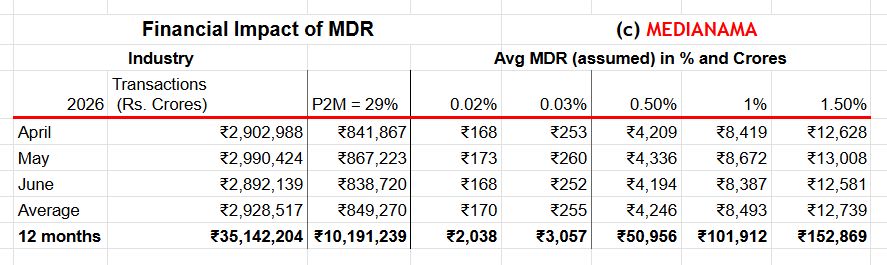
India's government plans to amend the Payment and Settlement Systems Act to restore UPI merchant discount rates, ending the zero-MDR regime in place since January 2020.
India's government has introduced the Taxation and Other Laws (Amendment) Bill, 2026, proposing changes to payments regulation, income tax, and the Finance Act to attract FDI and support Make in India. The Bill's final shape will depend on parliamentary debate and committee review.
The government's Taxation and Other Laws (Amendment) Bill, 2026, proposes to replace the blanket UPI MDR ban with a system allowing the Centre to notify which payment modes stay fee-free.
Prime Minister Narendra Modi inaugurated the Rs 5,000 crore Bhogapuram greenfield airport in Andhra Pradesh, built under a public-private partnership model. He also laid foundation stones for infrastructure projects worth nearly Rs 18,000 crore in the state, signalling a broad investment push for the region.