
Qatar Signals Progress in US-Iran War Talks
Qatar's foreign ministry said mediators including Qatar, Pakistan, and Oman have reached "very progressive stages" in efforts to end the US-Iran war, pushing Brent crude down more than four percent.
Key Takeaways
May 10, 2026 · 2 min read · By Rishabh Bhardwaj
·
AI-assisted, human-reviewed · Our editorial standards
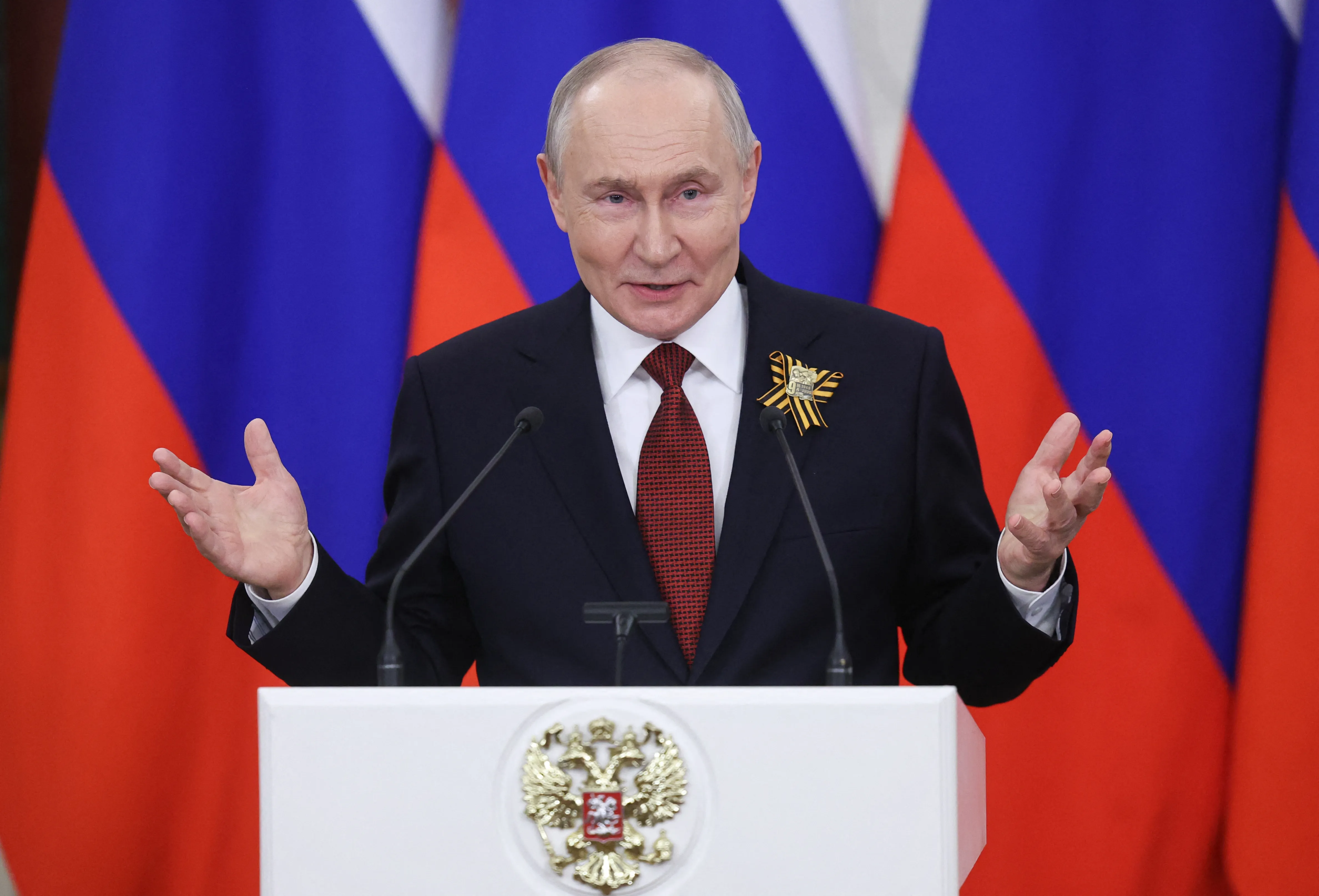
Russian President Vladimir Putin has said the war in Ukraine is "coming to an end" and indicated he would be willing to meet Ukrainian President Volodymyr Zelenskyy in a third country, but only if a long-term peace deal is reached first.
The comments mark one of Putin's more direct public acknowledgments that the conflict, now in its third year, could be approaching some form of conclusion. He has rarely spoken in terms of an endpoint, making the framing notable even if the conditions he attached are significant.
Putin did not say the war is over, nor did he announce a ceasefire or withdrawal. His language was conditional: a meeting with Zelenskyy would follow a deal, not precede it. That sequencing matters. It means Russia is not signaling readiness for direct negotiation as a path to peace, but rather treating any summit as a ceremonial endpoint after terms are agreed.
He also did not specify what a "long-term peace deal" would look like from Russia's perspective, leaving open the central questions of territory, sovereignty, and security guarantees that have blocked any settlement so far.
Public statements by Putin about the war's trajectory are rare and tend to be carefully calibrated. Saying the conflict is "coming to an end" could be aimed at several audiences at once, domestic Russian opinion, Western governments weighing continued military aid to Ukraine, and international mediators looking for an opening.
Ukraine has consistently said it will not negotiate under conditions that legitimize Russian territorial gains. Zelenskyy has previously said he is open to direct talks but has not accepted Russia's preconditions. The gap between the two sides on what a deal would actually contain remains wide.
No date, venue, or mediating party for a potential Putin-Zelenskyy meeting has been named. Several countries have previously offered to host talks, including Turkey and Saudi Arabia, though no formal process is currently underway based on available reporting.
Watch for whether other governments, particularly the United States, European powers, or China, respond to Putin's comments as a genuine signal or dismiss them as positioning. Any movement toward structured talks would require both sides to agree on a framework, which has not happened yet.
Qatar's foreign ministry said mediators including Qatar, Pakistan, and Oman have reached "very progressive stages" in efforts to end the US-Iran war, pushing Brent crude down more than four percent.
Qatar confirmed it is mediating between the US and Iran but said no direct talks are currently planned. The clarification follows conflicting statements from President Trump, who claimed talks are under way, and Tehran, which denied any dialogue is happening.
Saudi Aramco reported sharply higher second-quarter 2026 profits as the Iran war restricts global oil supply and pushes crude prices up. Other oil supermajors also posted outsized earnings, raising concerns about sustained fuel cost pressure for importing economies.
President Trump called current Iran negotiations the "last chance" to end five months of conflict, pushing oil prices higher. Tehran denied formal talks are taking place, raising the risk of a diplomatic breakdown with direct consequences for global energy markets.