
Qatar Signals Progress in US-Iran War Talks
Qatar's foreign ministry said mediators including Qatar, Pakistan, and Oman have reached "very progressive stages" in efforts to end the US-Iran war, pushing Brent crude down more than four percent.
Key Takeaways
May 9, 2026 · 2 min read · By Rishabh Bhardwaj
·
AI-assisted, human-reviewed · Our editorial standards
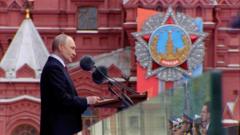
Russian President Vladimir Putin used Moscow's Victory Day parade on May 9 to defend his ongoing war in Ukraine, framing it once again as a necessary response to Western aggression. The parade, which marks the Soviet Union's defeat of Nazi Germany in World War Two, was notably scaled back compared to previous years.
Putin's speech followed a familiar pattern: casting the invasion of Ukraine as a "special military operation" forced upon Russia by NATO's eastward expansion. He portrayed Russia as fighting the same existential struggle it faced in 1945, a framing his government has repeated consistently since the full-scale invasion began in February 2022.
The parade itself was reduced in scale, though the article does not specify which military assets or troop formations were absent. Scaled-back Victory Day displays have previously drawn attention as indirect signals of battlefield strain, though no direct cause is confirmed here.
NATO, the North Atlantic Treaty Organization, is a military alliance of Western nations that Russia views as a direct security threat. Putin has long argued that NATO's expansion toward Russia's borders made conflict inevitable, a claim Western governments firmly reject, pointing to Russia's own decision to invade a sovereign neighbor.
Victory Day is Russia's most symbolically loaded national event. Putin's use of it to justify the Ukraine war is not new, but the platform matters: it signals to a domestic audience that the war remains framed as defense, not aggression, and that no shift in official position is coming.
The scaled-back nature of the parade is worth watching. In prior years, reductions in hardware or troop numbers have prompted analysis of whether military losses in Ukraine are affecting Russia's ability to stage its signature show of force.
For Western governments and markets tracking the war's trajectory, the speech offers no indication of a change in Russian war aims or openness to negotiation. The war's continuation keeps pressure on European energy supply chains, defense spending commitments across NATO members, and global grain and commodity markets that remain disrupted by the conflict.
The next signals to watch are whether any diplomatic back-channels show movement and whether Russia's battlefield posture shifts in the weeks following the parade.
Qatar's foreign ministry said mediators including Qatar, Pakistan, and Oman have reached "very progressive stages" in efforts to end the US-Iran war, pushing Brent crude down more than four percent.
Qatar confirmed it is mediating between the US and Iran but said no direct talks are currently planned. The clarification follows conflicting statements from President Trump, who claimed talks are under way, and Tehran, which denied any dialogue is happening.
Saudi Aramco reported sharply higher second-quarter 2026 profits as the Iran war restricts global oil supply and pushes crude prices up. Other oil supermajors also posted outsized earnings, raising concerns about sustained fuel cost pressure for importing economies.
President Trump called current Iran negotiations the "last chance" to end five months of conflict, pushing oil prices higher. Tehran denied formal talks are taking place, raising the risk of a diplomatic breakdown with direct consequences for global energy markets.