India to Restore UPI Merchant Fees, PhonePe Gains Most
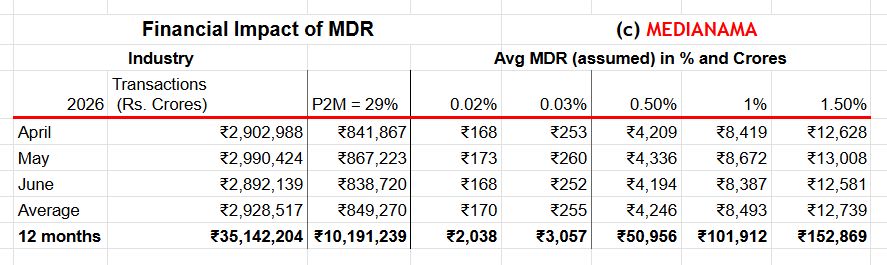
India's government plans to amend the Payment and Settlement Systems Act to restore UPI merchant discount rates, ending the zero-MDR regime in place since January 2020.
Key Takeaways
July 26, 2026 · 3 min read · By Rishabh Bhardwaj
·
AI-assisted, human-reviewed · Our editorial standards

Pralhad Joshi has taken charge of India's Education Ministry after Dharmendra Pradhan resigned from the post. Joshi holds the role in addition to his existing responsibilities as Consumer Affairs Minister, making him a dual-charge cabinet minister.
Cabinet reshuffles that place a senior minister in dual charge are often transitional arrangements, signalling either a forthcoming permanent appointment or a period of policy continuity while the government weighs its options. The Education Ministry is one of the most consequential portfolios in the Union Cabinet, overseeing the National Education Policy framework, the higher education regulatory architecture, school funding, and examinations through bodies like the CBSE and the National Testing Agency.
Pradhan had been a visible face of education reform since 2021, steering the rollout of NEP 2020 and defending the government's handling of examination controversies. His departure marks a significant change in the ministry's leadership at a time when several reform processes are still mid-course.
Joshi brings a long parliamentary career to the role. He previously served as Minister for New and Renewable Energy and Parliamentary Affairs, among other portfolios, and has been a senior Bharatiya Janata Party leader. However, his primary domain experience has not been in education, which means the ministry's bureaucratic leadership and ongoing policy teams will likely carry significant operational weight during this transition.
The key question is whether this dual-charge arrangement is short-term. If the government intends to appoint a dedicated Education Minister, an announcement could come through a broader cabinet reshuffle. Until then, Joshi will need to manage two demanding portfolios simultaneously.
On the education side, the priorities that carry over include the pending rollout of the National Curriculum Framework, the reform of the National Testing Agency following controversy over competitive examination management, and the push to expand higher education gross enrollment ratios under NEP 2020 targets.
On the Consumer Affairs side, Joshi has been active on issues of pricing, food adulteration enforcement, and consumer protection regulations. Holding both portfolios at once will test bandwidth, particularly given that Parliament sessions and budget cycles create simultaneous demands across ministries.
For students, educational institutions, and state governments coordinating with the Centre on NEP implementation, the practical day-to-day functioning of the ministry is unlikely to change immediately. Senior officials and secretaries continue to run administrative operations. But policy decisions requiring ministerial direction, and political negotiations with state education departments, may slow slightly during the transition period.
Pradhan's resignation has not been explained in detail by official sources available at this time. The circumstances behind it, whether voluntary, a strategic party decision, or tied to a broader government restructuring, remain unclear from available information and should not be assumed.
India's government plans to amend the Payment and Settlement Systems Act to restore UPI merchant discount rates, ending the zero-MDR regime in place since January 2020.
India's government has introduced the Taxation and Other Laws (Amendment) Bill, 2026, proposing changes to payments regulation, income tax, and the Finance Act to attract FDI and support Make in India. The Bill's final shape will depend on parliamentary debate and committee review.
The government's Taxation and Other Laws (Amendment) Bill, 2026, proposes to replace the blanket UPI MDR ban with a system allowing the Centre to notify which payment modes stay fee-free.
Prime Minister Narendra Modi inaugurated the Rs 5,000 crore Bhogapuram greenfield airport in Andhra Pradesh, built under a public-private partnership model. He also laid foundation stones for infrastructure projects worth nearly Rs 18,000 crore in the state, signalling a broad investment push for the region.