
Qatar Signals Progress in US-Iran War Talks
Qatar's foreign ministry said mediators including Qatar, Pakistan, and Oman have reached "very progressive stages" in efforts to end the US-Iran war, pushing Brent crude down more than four percent.
Key Takeaways
June 6, 2026 · 4 min read · By Rishabh Bhardwaj
·
AI-assisted, human-reviewed · Our editorial standards
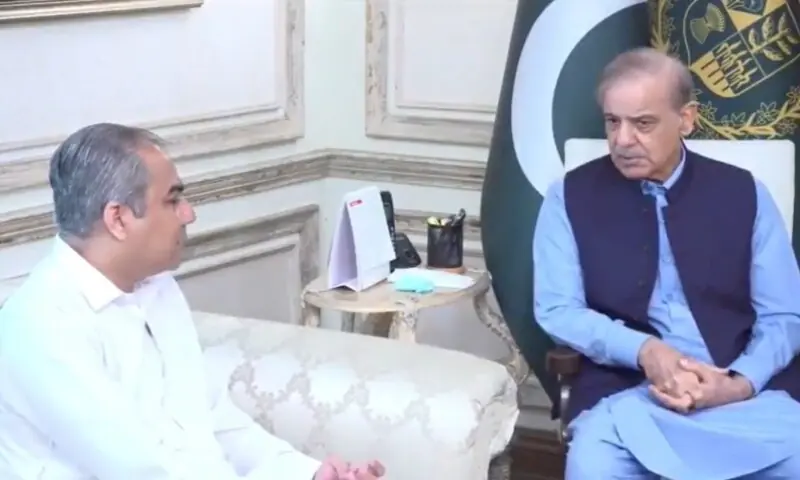
Pakistan's Interior Minister Mohsin Naqvi is preparing for another visit to Tehran as Islamabad continues to position itself as the key diplomatic channel between the United States and Iran amid an active, low-grade military conflict in and around the Strait of Hormuz.
Prime Minister Shehbaz Sharif met Naqvi on Saturday to discuss the upcoming trip, with the Prime Minister's Office saying Shehbaz provided direct guidance for the visit. Naqvi also briefed the prime minister on meetings he held on the sidelines of the Shanghai Cooperation Organisation conference in Bishkek, Kyrgyzstan, before returning home.
This is not Naqvi's first recent trip to Tehran. On May 17, he landed there on a two-day unannounced visit and met Iranian President Masoud Pezeshkian at the Presidential Palace for a 90-minute one-on-one session, with Iranian Interior Minister Eskandar Momeni and Foreign Minister Abbas Araghchi also present. He also met Parliament Speaker Mohammad Bagher Ghalibaf, who used the occasion to criticise unnamed regional governments for relying on the US military for security, saying that reliance had produced instability rather than peace.
The backdrop is a shaky US-Iran ceasefire struck in April, brokered in part through Pakistani mediation, which was followed by direct talks between the two sides hosted by Islamabad. Daily strikes across Iran and the Gulf stopped after the ceasefire, but armed exchanges have continued in bursts. On Saturday itself, the US military said it struck radar sites in Iran after shooting down drones near the Strait of Hormuz. Iran's Revolutionary Guards responded with missile strikes, claiming they had targeted enemy bases near Sirik and Qeshm islands. Air raid sirens sounded in Kuwait and Bahrain, both US allies. Earlier in the week, a US strike near the strait prompted an Iranian missile response that damaged Kuwait's airport and caused casualties.
Naqvi's May visit came after President Donald Trump rejected Tehran's latest response to American proposals, causing momentum from earlier rounds of Islamabad-hosted talks to stall sharply. Diplomatic sources described the unscheduled trip as shuttle diplomacy aimed at keeping the negotiations alive before they collapsed entirely. The visit was officially framed around bilateral relations and border security cooperation, but the diplomatic stakes were clearly higher.
Pakistan sits at an unusual intersection in this conflict. It shares a long border with Iran, has existing bilateral tensions with Tehran over border security, and yet has emerged as one of the few countries both sides trust enough to use as a backchannel. That trust gives Islamabad rare leverage, but it also means Pakistan is managing a delicate balancing act: maintaining working relations with both Washington and Tehran while both continue to exchange military strikes.
The Strait of Hormuz sits at the center of the economic stakes. The waterway handles a significant share of global oil exports, and the competing US and Iranian blockades around it have already disrupted international energy shipping. Trump is under pressure to reach a deal that lifts both blockades, as prolonged closure threatens oil prices and the broader global economy. Every round of shuttle diplomacy Pakistan facilitates buys time, but the window for a negotiated outcome narrows with each military exchange.
For Pakistan, the diplomatic return from this role is real but comes with risk. Being seen as indispensable to a major geopolitical negotiation raises Islamabad's international standing at a moment when it faces economic pressure and domestic security challenges. Naqvi's separate briefing to PM Shehbaz on law and order conditions at home, during the same Saturday meeting, underlines that Pakistan's security establishment is managing both internal stability and external diplomacy simultaneously.
What to watch: whether Naqvi's next Tehran visit produces any visible movement in the stalled US-Iran talks, and whether the ceasefire holds long enough for formal negotiations to resume. Any escalation around the Strait of Hormuz, particularly one that widens into Gulf state territory, could shut down the diplomatic track entirely and send energy markets into a sharper disruption than what is already unfolding.
Qatar's foreign ministry said mediators including Qatar, Pakistan, and Oman have reached "very progressive stages" in efforts to end the US-Iran war, pushing Brent crude down more than four percent.
Qatar confirmed it is mediating between the US and Iran but said no direct talks are currently planned. The clarification follows conflicting statements from President Trump, who claimed talks are under way, and Tehran, which denied any dialogue is happening.
Saudi Aramco reported sharply higher second-quarter 2026 profits as the Iran war restricts global oil supply and pushes crude prices up. Other oil supermajors also posted outsized earnings, raising concerns about sustained fuel cost pressure for importing economies.
President Trump called current Iran negotiations the "last chance" to end five months of conflict, pushing oil prices higher. Tehran denied formal talks are taking place, raising the risk of a diplomatic breakdown with direct consequences for global energy markets.