India to Restore UPI Merchant Fees, PhonePe Gains Most
India's government plans to amend the Payment and Settlement Systems Act to restore UPI merchant discount rates, ending the zero-MDR regime in place since January 2020.
Key Takeaways
May 4, 2026 · 2 min read · By Rishabh Bhardwaj
·
AI-assisted, human-reviewed · Our editorial standards

Prime Minister Narendra Modi hailed the BJP's performance in West Bengal's 2026 Assembly Elections as a "historic victory," saying "people's power has triumphed" in his first public reaction to the results.
The statement marks a significant political moment for the BJP, which has long sought to break through in West Bengal, a state that has resisted the party's dominance despite national-level electoral success. The party's sweep, if confirmed by final tallies, would represent one of its most consequential state-level wins in recent years.
West Bengal is India's third most populous state and has historically been a stronghold of the Trinamool Congress under Mamata Banerjee. A BJP majority there would end decades of left and then TMC dominance, reshaping the political balance in eastern India.
State assembly victories matter beyond local governance. They influence Rajya Sabha seat counts over time, affect the BJP's coalition leverage at the national level, and signal voter sentiment ahead of future general elections.
The immediate focus will be on the final seat count, the margin of the BJP's majority, and whether the Trinamool Congress concedes or contests results. The formation of a government, the choice of Chief Minister, and the BJP's policy priorities for the state will be the next major developments to follow.
For now, the BJP's central leadership is framing this as a mandate from voters rather than a party achievement, a messaging choice that typically signals a broad coalition appeal heading into governance.
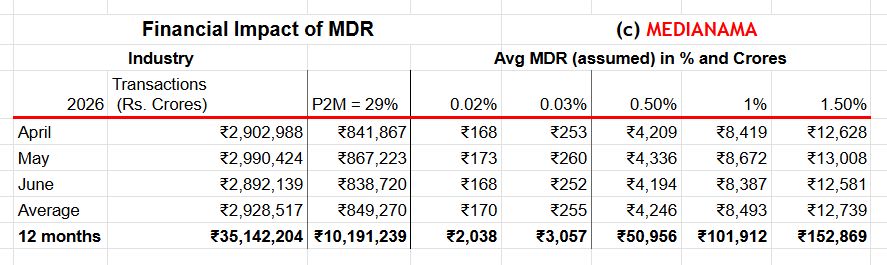
India's government plans to amend the Payment and Settlement Systems Act to restore UPI merchant discount rates, ending the zero-MDR regime in place since January 2020.
India's government has introduced the Taxation and Other Laws (Amendment) Bill, 2026, proposing changes to payments regulation, income tax, and the Finance Act to attract FDI and support Make in India. The Bill's final shape will depend on parliamentary debate and committee review.
The government's Taxation and Other Laws (Amendment) Bill, 2026, proposes to replace the blanket UPI MDR ban with a system allowing the Centre to notify which payment modes stay fee-free.
Prime Minister Narendra Modi inaugurated the Rs 5,000 crore Bhogapuram greenfield airport in Andhra Pradesh, built under a public-private partnership model. He also laid foundation stones for infrastructure projects worth nearly Rs 18,000 crore in the state, signalling a broad investment push for the region.