Prime Minister Narendra Modi is scheduled to address the nation, following a significant legislative setback for the BJP-led government in the Lok Sabha. The Constitution Amendment Bill failed to pass after falling short of the two-thirds supermajority required under Indian constitutional procedure. In the vote, 298 members supported the Bill against 230 in opposition, a margin that, while a simple majority, did not meet the 364-vote threshold needed in a 543-seat house for constitutional amendments under Article 368. The defeat marks a rare floor failure for the ruling coalition and signals meaningful limits on its legislative authority in the current parliament. The specific subject matter of the Amendment Bill was not detailed in the source; what is clear is the political consequence: a prime ministerial address to the nation following a high-profile parliamentary loss. Observers will watch whether Modi's address signals a renegotiation of coalition terms, a revised legislative strategy, or a public appeal ahead of potential re-tabling of the Bill.
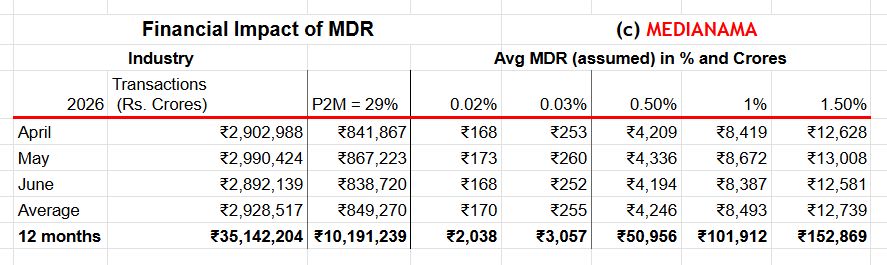
India's government plans to amend the Payment and Settlement Systems Act to restore UPI merchant discount rates, ending the zero-MDR regime in place since January 2020.
India's government has introduced the Taxation and Other Laws (Amendment) Bill, 2026, proposing changes to payments regulation, income tax, and the Finance Act to attract FDI and support Make in India. The Bill's final shape will depend on parliamentary debate and committee review.
The government's Taxation and Other Laws (Amendment) Bill, 2026, proposes to replace the blanket UPI MDR ban with a system allowing the Centre to notify which payment modes stay fee-free.
Prime Minister Narendra Modi inaugurated the Rs 5,000 crore Bhogapuram greenfield airport in Andhra Pradesh, built under a public-private partnership model. He also laid foundation stones for infrastructure projects worth nearly Rs 18,000 crore in the state, signalling a broad investment push for the region.