
Qatar Signals Progress in US-Iran War Talks
Qatar's foreign ministry said mediators including Qatar, Pakistan, and Oman have reached "very progressive stages" in efforts to end the US-Iran war, pushing Brent crude down more than four percent.
Key Takeaways
June 11, 2026 · 4 min read · By Rishabh Bhardwaj
·
AI-assisted, human-reviewed · Our editorial standards
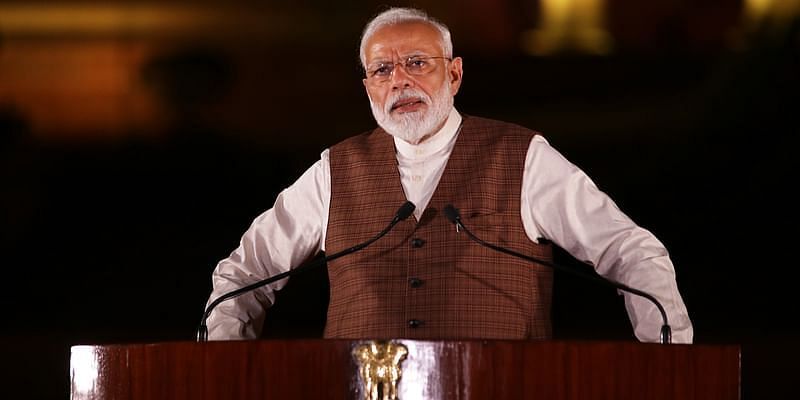
Prime Minister Narendra Modi is set to inaugurate Bharat Innovates 2026 alongside French President Emmanuel Macron in Nice, France, on June 14, as part of a state visit that runs from June 13 to 18. The event, scheduled for June 14 to 16, will bring 120 Indian deeptech startups, leading research universities, investors, and policymakers to the French Riviera under the banner of the India-France Year of Innovation.
The Ministry of External Affairs confirmed Modi's trip covers France and Slovakia. The French leg is anchored by Bharat Innovates, a programme framed by India's Ministry of Education as a national initiative, with IIT Bombay listed as the nodal institution. The stated purpose is to connect Indian science and engineering ventures with international capital, institutional partners, and commercial markets, rather than simply display what Indian startups are building.
Deeptech, in this context, means ventures built on long research cycles and specialised engineering, think semiconductors, biotechnology, or advanced materials, rather than consumer apps. These are sectors where ideas typically sit in university labs or incubators for years before reaching commercial or industrial use. That transition from laboratory to market is precisely where most innovation ecosystems stall, and it is the specific problem Bharat Innovates is designed to address.
Bharat Innovates describes itself as a global accelerator for innovations from Indian higher education institutions, building what organisers call a long-term collaboration bridge between India's innovation ecosystem and global partners. The 120 startups attending Nice are drawn from across 13 frontier technology areas: semiconductors, biotechnology, space and defence, healthcare and medtech, advanced computing, next-generation communications, advanced materials and critical minerals, manufacturing and Industry 4.0, energy and climate, smart cities and mobility, blue economy, agri and food technologies, and disaster management and resilience.
Alongside the startup cohort, the programme includes a curated set of 42 high-impact innovations from 17 premier higher education institutions, including IIT Bombay, IIT Madras, IISc Bangalore, IIT Delhi, IIT Kanpur, BITS Pilani, and the Department of Biotechnology's BIRAC. The design is deliberate: universities supply the research pipeline, investors supply capital and market access, and government provides the diplomatic scaffolding to make cross-border deals easier to close.
The opening session sets the tone. A keynote by N. R. Narayana Murthy leads into a panel on AI for global good, featuring Kris Gopalakrishnan, Rajan Anandan, Sandeep Bakshi, and Henri Verdier. Sessions on deeptech without borders, a planned MoU exchange ceremony, and a roundtable on Franco-Indian research cooperation follow. Speakers include India's Principal Scientific Adviser Ajay Sood, the directors of IIT Kanpur, IIT Bombay, and IIT Delhi, and leaders from SIDBI, Peak XV, Prosus, Bertelsmann Investments, and Sony Ventures. French and European participants include Michiel Scheffer of the European Innovation Council, Jean-Luc Barlet of CCI France International, and Maureen Clerc of Inria, alongside representatives from Nice, Grenoble, MonacoTech, and the broader Côte d'Azur ecosystem.
The range of sectors on display signals what India is choosing to lead with in Europe. Semiconductors and advanced computing point to strategic industrial capacity. Biotechnology, medtech, and agri-tech address both commercial opportunity and societal needs. Space, defence, critical minerals, and advanced materials speak to supply chain resilience, an area of growing interest for European partners looking to diversify from China. Climate, blue economy, and disaster resilience signal that the programme is not purely growth-tech, but is also positioning Indian innovation as relevant to public-interest challenges where European funding and institutional partnerships are available.
Union Minister of Education Dharmendra Pradhan, speaking at a preparatory interaction in May, described the event as a national innovation movement and said India is pursuing growth through partnership rather than alone. Higher Education Secretary Vineet Joshi added that Indian universities are evolving beyond academics to drive entrepreneurship, technology development, and economic growth.
The diplomatic framing of 2026 as the India-France Year of Innovation gives the event political weight that a standalone startup roadshow would not carry. Macron's co-presence at the inauguration signals that France sees deeptech and research collaboration as a substantive part of the bilateral relationship, not a side event to trade or defence talks. For Indian startups and research institutions, access to European Innovation Council networks, French regional innovation hubs, and investors present at Nice could open doors that are difficult to unlock through standard trade missions.
The structure to watch is whether the MoU exchange ceremony and pilot discussions translate into funded projects after the event closes. That outcome, not the attendance count, will determine whether Bharat Innovates becomes a repeatable mechanism for internationalising Indian research or remains a well-organised showcase.
Qatar's foreign ministry said mediators including Qatar, Pakistan, and Oman have reached "very progressive stages" in efforts to end the US-Iran war, pushing Brent crude down more than four percent.
Qatar confirmed it is mediating between the US and Iran but said no direct talks are currently planned. The clarification follows conflicting statements from President Trump, who claimed talks are under way, and Tehran, which denied any dialogue is happening.
Saudi Aramco reported sharply higher second-quarter 2026 profits as the Iran war restricts global oil supply and pushes crude prices up. Other oil supermajors also posted outsized earnings, raising concerns about sustained fuel cost pressure for importing economies.
President Trump called current Iran negotiations the "last chance" to end five months of conflict, pushing oil prices higher. Tehran denied formal talks are taking place, raising the risk of a diplomatic breakdown with direct consequences for global energy markets.