India to Restore UPI Merchant Fees, PhonePe Gains Most
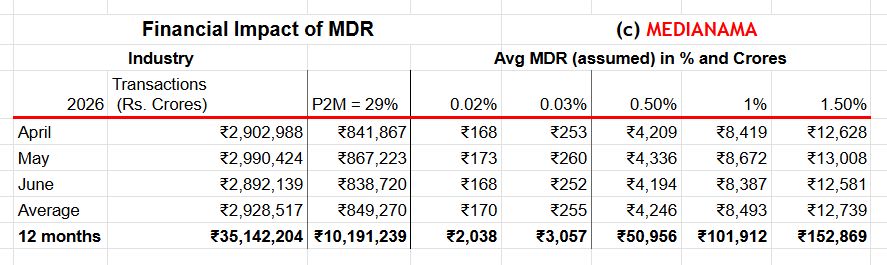
India's government plans to amend the Payment and Settlement Systems Act to restore UPI merchant discount rates, ending the zero-MDR regime in place since January 2020.
Key Takeaways
May 10, 2026 · 2 min read · By Rishabh Bhardwaj
·
AI-assisted, human-reviewed · Our editorial standards

Prime Minister Narendra Modi, speaking at a Telangana BJP rally, called on citizens to make personal commitments to save foreign exchange as a way to cushion India from the economic fallout of the ongoing war.
Modi pointed to two direct pressure points: petrol and fertilizer prices, both of which have risen sharply because of the conflict. India imports a large share of its crude oil and fertilizers, meaning global price spikes translate quickly into higher costs at home, for consumers at the pump and for farmers buying inputs for their crops.
When import prices rise, India has to spend more of its foreign exchange reserves to pay for the same quantities of fuel and fertilizer. If the rupee weakens at the same time, that cost climbs further. Encouraging citizens to reduce unnecessary imports or cut fuel consumption is a demand-side approach to easing that pressure, though the scale of individual action relative to macro import bills is limited.
The call comes as India, like many emerging economies, navigates higher energy costs without fully passing them on to consumers through subsidies, which adds to the fiscal burden on the government.
The BJP rally in Telangana signals the party is trying to frame the cost-of-living squeeze as a global, war-driven problem rather than a domestic policy failure, a framing likely to be repeated ahead of any state or national elections. Whether the government pairs this messaging with concrete policy steps on fuel pricing, fertilizer subsidies, or import substitution will be the more consequential question to follow.
India's government plans to amend the Payment and Settlement Systems Act to restore UPI merchant discount rates, ending the zero-MDR regime in place since January 2020.
India's government has introduced the Taxation and Other Laws (Amendment) Bill, 2026, proposing changes to payments regulation, income tax, and the Finance Act to attract FDI and support Make in India. The Bill's final shape will depend on parliamentary debate and committee review.
The government's Taxation and Other Laws (Amendment) Bill, 2026, proposes to replace the blanket UPI MDR ban with a system allowing the Centre to notify which payment modes stay fee-free.
Prime Minister Narendra Modi inaugurated the Rs 5,000 crore Bhogapuram greenfield airport in Andhra Pradesh, built under a public-private partnership model. He also laid foundation stones for infrastructure projects worth nearly Rs 18,000 crore in the state, signalling a broad investment push for the region.