The Constitution Amendment Bill failed to pass in India's Lok Sabha during a special parliamentary sitting, marking a significant legislative defeat for the ruling government. The Opposition has publicly celebrated the outcome, framing it as a democratic check on executive overreach in electoral boundary-setting. Leader of the Opposition Rahul Gandhi specifically accused the government of using women's reservation provisions as political cover to advance changes to the country's electoral map. The defeat means the proposed constitutional amendments will not advance to the Rajya Sabha, stalling any immediate redrawing of constituency boundaries tied to this legislative vehicle. Attention now shifts to whether the government reintroduces a revised bill, seeks a joint session, or pursues electoral delimitation through an alternate legislative or administrative route. The outcome also recalibrates the parliamentary arithmetic debate, signaling that the ruling coalition lacked the two-thirds supermajority required to pass constitutional amendments in the lower house.
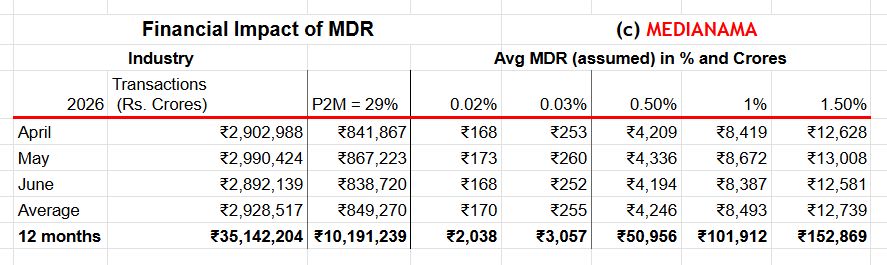
India's government plans to amend the Payment and Settlement Systems Act to restore UPI merchant discount rates, ending the zero-MDR regime in place since January 2020.
India's government has introduced the Taxation and Other Laws (Amendment) Bill, 2026, proposing changes to payments regulation, income tax, and the Finance Act to attract FDI and support Make in India. The Bill's final shape will depend on parliamentary debate and committee review.
The government's Taxation and Other Laws (Amendment) Bill, 2026, proposes to replace the blanket UPI MDR ban with a system allowing the Centre to notify which payment modes stay fee-free.
Prime Minister Narendra Modi inaugurated the Rs 5,000 crore Bhogapuram greenfield airport in Andhra Pradesh, built under a public-private partnership model. He also laid foundation stones for infrastructure projects worth nearly Rs 18,000 crore in the state, signalling a broad investment push for the region.