Pakistan's IMF Executive Board review is scheduled for mid-May in Washington, where approval of the Staff-Level Agreement reached on March 28 would release approximately $1.2 billion across two programmes: the Extended Fund Facility and the Resilience and Sustainability Facility. The third EFF review and second RSF review both passed successfully, clearing the procedural path to disbursement. Finance Minister Muhammad Aurangzeb confirmed the timeline during Pakistan's participation in the Bretton Woods Spring Meetings. The SLA was reached after an IMF mission that arrived in Islamabad on February 25 shifted to virtual discussions before concluding the agreement by end-March. A second mission is expected in May for pre-budget consultations, a standard feature of programme engagement. The EFF runs through 2027, contingent on remaining reviews, and Pakistan has not yet decided whether to seek a successor arrangement. Aurangzeb held bilateral meetings with senior US Treasury officials, UK counterparts, JICA, AIIB, S&P Global Ratings, and Citibank, covering debt strategy, Eurobond repayment, planned Panda bond issuance, and Pakistan's existing AIIB portfolio of approximately $1.7 billion. Discussions with JICA flagged a resumption of concessional lending for infrastructure and water projects. The mid-May board meeting is the near-term catalyst to watch. Approval would ease Pakistan's external liquidity position and signal continued programme compliance to credit markets.
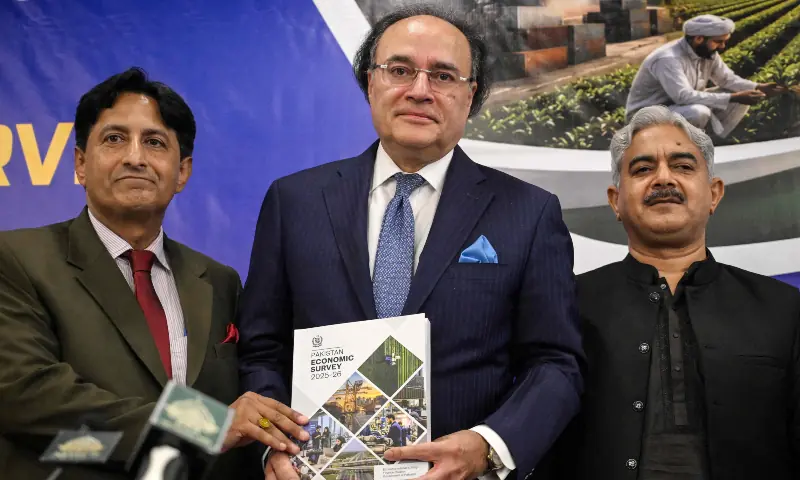
Pakistan's economy grew 3.7 percent in FY2026, its fastest rate in four years, according to the Pakistan Economic Survey presented by Finance Minister Muhammad Aurangzeb. Growth beat last year's 3.18 percent but missed the 4.2 percent target, with floods, regional conflict, and weaker food exports cited as key drags.
The Union government released an additional Rs 1,09,019 crore in tax devolution to states on August 1, 2026, separate from the regular monthly transfer. The lump-sum release aims to accelerate state capital spending in the July-September quarter, with Uttar Pradesh, Bihar, and Madhya Pradesh among the top recipients.
US mortgage rates have risen to a one-year high as markets weigh Federal Reserve rate uncertainty and Middle East conflict-driven inflation fears. Higher rates increase monthly payments for new buyers and are likely to further suppress housing market activity and refinancing.
Pakistan's Sensitive Price Index rose 13.52 percent year on year for the week ending July 2, 2026, marking 45 consecutive weeks of annual gains. Electricity up 49 percent, wheat flour up 68 percent, and LPG up 44 percent year on year are the main drivers.