
Qatar Signals Progress in US-Iran War Talks
Qatar's foreign ministry said mediators including Qatar, Pakistan, and Oman have reached "very progressive stages" in efforts to end the US-Iran war, pushing Brent crude down more than four percent.
Key Takeaways
May 3, 2026 · 2 min read · By Rishabh Bhardwaj
·
AI-assisted, human-reviewed · Our editorial standards
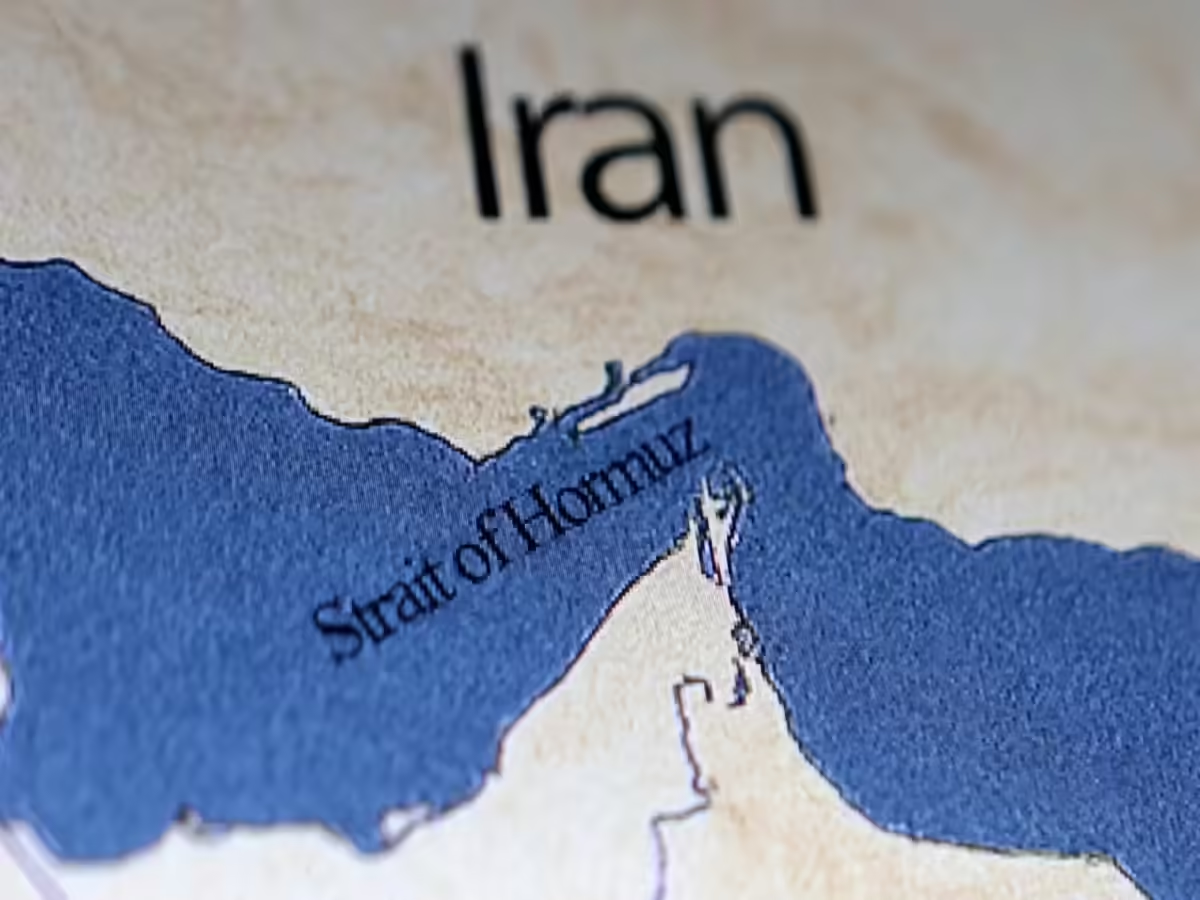
OPEC+ is set to approve a third production increase since the Strait of Hormuz was disrupted, but the move is largely symbolic, the waterway's closure means most of that extra oil cannot reach global markets anyway.
The Strait of Hormuz is the single most important oil shipping lane in the world, carrying roughly a fifth of global oil supply. When it closes or is severely restricted, producers in the Gulf, including key OPEC+ members, lose their main export route regardless of how much crude they pump. Approving higher output targets while the strait remains blocked does not translate into more barrels on the market.
The disruption stems from the ongoing U.S.-Iran conflict, which has made transit through the strait dangerous or effectively impossible for commercial tankers. Several major OPEC+ members rely on the Hormuz route to ship their crude, meaning the production increase cannot compensate for the physical export blockage.
Oil prices have already surged in response to the disruption. When a chokepoint this size is blocked, buyers scramble to secure alternative supplies, and the resulting shortage premium drives prices sharply higher. The OPEC+ decision, while signaling intent to calm markets, does not resolve the underlying supply crunch.
Analysts are flagging two immediate downstream risks. First, jet fuel shortages: aviation fuel is refined from crude, and a sustained reduction in oil flows tightens refinery throughput, cutting the supply of finished products airlines depend on. Second, broader inflation: energy costs run through nearly every supply chain, so a prolonged spike in oil prices pushes up transport, manufacturing, and food costs globally.
For India, which imports roughly 85% of its crude and sources a significant share from Gulf producers, a sustained Hormuz blockage raises both fuel costs and the risk of supply disruption, adding pressure to the rupee and to domestic fuel pricing.
Watch for whether the strait situation changes materially: any diplomatic movement between the U.S. and Iran, or any naval developments that reopen safe passage, would be the key trigger for prices to ease. Until then, OPEC+ output decisions remain largely on paper.
Qatar's foreign ministry said mediators including Qatar, Pakistan, and Oman have reached "very progressive stages" in efforts to end the US-Iran war, pushing Brent crude down more than four percent.
Qatar confirmed it is mediating between the US and Iran but said no direct talks are currently planned. The clarification follows conflicting statements from President Trump, who claimed talks are under way, and Tehran, which denied any dialogue is happening.
Saudi Aramco reported sharply higher second-quarter 2026 profits as the Iran war restricts global oil supply and pushes crude prices up. Other oil supermajors also posted outsized earnings, raising concerns about sustained fuel cost pressure for importing economies.
President Trump called current Iran negotiations the "last chance" to end five months of conflict, pushing oil prices higher. Tehran denied formal talks are taking place, raising the risk of a diplomatic breakdown with direct consequences for global energy markets.