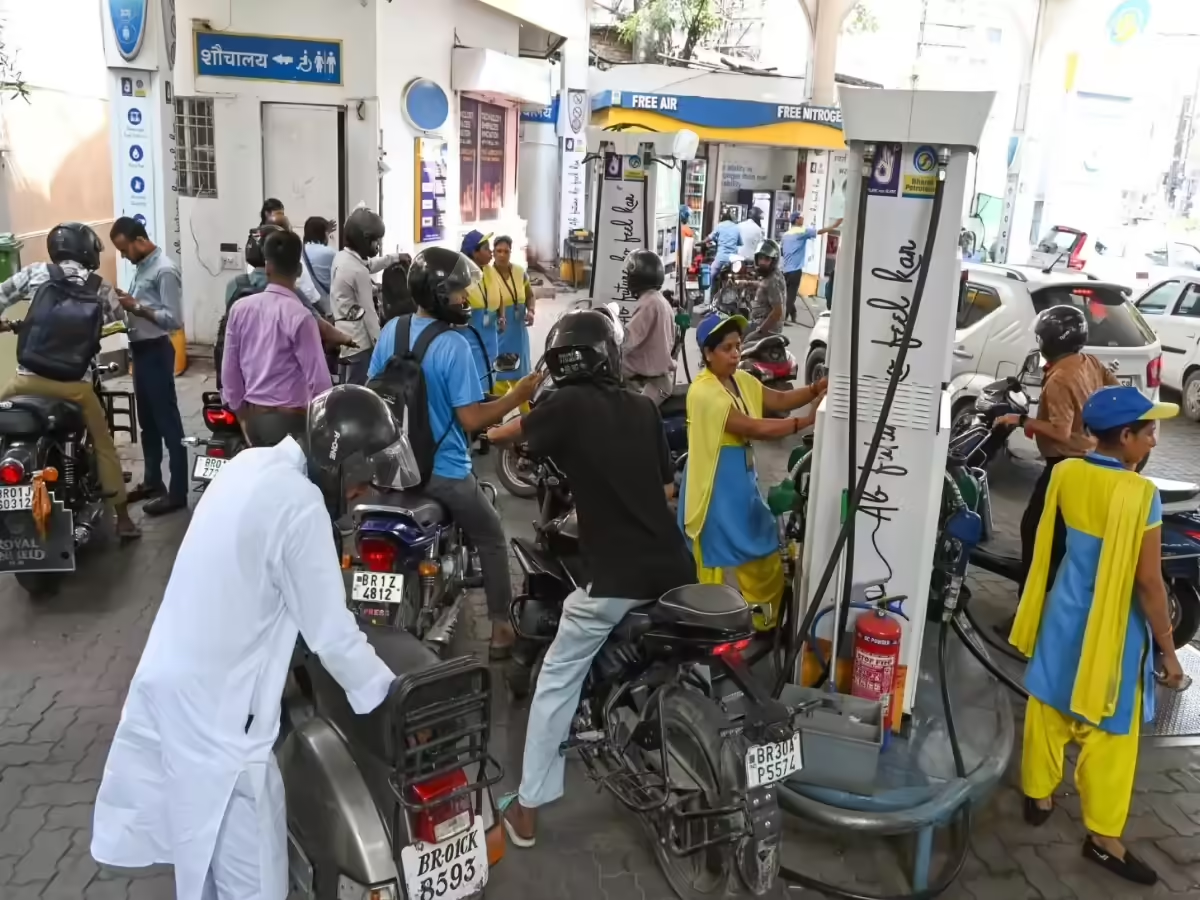
India's state-run oil marketing companies (OMCs) have raised petrol and diesel prices by roughly ₹2.7 per litre, the fourth increase in just 11 days. The cumulative rise now stands at ₹7.5 to ₹8 per litre, a sharp jump that directly affects household budgets, freight costs, and inflation expectations.
The three major OMCs, Indian Oil Corporation, Bharat Petroleum, and Hindustan Petroleum, control the bulk of retail fuel sales across India. When they move prices in unison, the effect reaches nearly every corner of the economy within days, from auto-rickshaw fares in cities to the cost of trucking goods between states.
Why prices are rising now
Fuel retail prices in India are officially deregulated but in practice OMCs have historically absorbed cost pressures for extended periods, especially around elections, before catching up in a series of rapid hikes. A jump of ₹7.5 to ₹8 per litre over 11 days suggests the companies are unwinding a backlog of under-recoveries, the gap between what it costs to produce or import fuel and what they charge at the pump.
Each ₹2.7 per litre increase on its own is modest, but four such moves in rapid succession signal that OMCs are moving urgently to restore margins rather than spacing out the correction gradually. This pattern typically follows a period of frozen prices, often politically driven, where losses were either absorbed on the balance sheet or partially covered by government support.
Diesel is the more consequential fuel for the broader economy. It powers trucks, tractors, generators, and construction equipment. A sustained rise in diesel prices feeds through to the cost of transporting food and manufactured goods, which then shows up in retail prices for consumers. Petrol affects personal vehicle users most directly, but its price rise also shapes inflation sentiment.
What this means for markets and policy
For equity markets, the hikes are a mixed signal. Higher retail prices improve OMC revenue and ease the margin pressure that has weighed on their valuations. Investors in Indian Oil, BPCL, and HPCL had been watching for exactly this kind of correction. On the other side, sectors sensitive to freight and logistics costs, including consumer goods, e-commerce, and food processing, face a near-term squeeze on operating margins.
For the Reserve Bank of India, rising fuel prices complicate the inflation picture. Fuel feeds directly into the headline Consumer Price Index and indirectly into core inflation through transport and logistics costs. If the hike cycle continues, it raises the floor on near-term inflation and could influence how the RBI reads incoming data when deciding on interest rates.
For the government, the timing and pace of these hikes matter politically. Excise duty on fuel is a major revenue source for the central government, and the current retail price level determines how much room exists to cut duties as a relief measure if public pressure mounts. State governments that levy their own VAT on fuel also see their revenues shift with every price move.
Consumers and small businesses face the most immediate pressure. Commuters, last-mile delivery operators, and small transporters running on tight margins have little ability to absorb four price hikes in under two weeks. Many will pass costs on where they can, contributing to a broader, if diffuse, inflationary pulse.
The key question now is whether this four-hike sequence marks the end of the correction or whether more increases are still in the pipeline. If OMC under-recoveries have been fully unwound, prices may stabilize. If global crude stays elevated or the rupee weakens further, additional hikes remain possible. Watching OMC management commentary and government signals on excise duty will give the clearest read on what comes next.