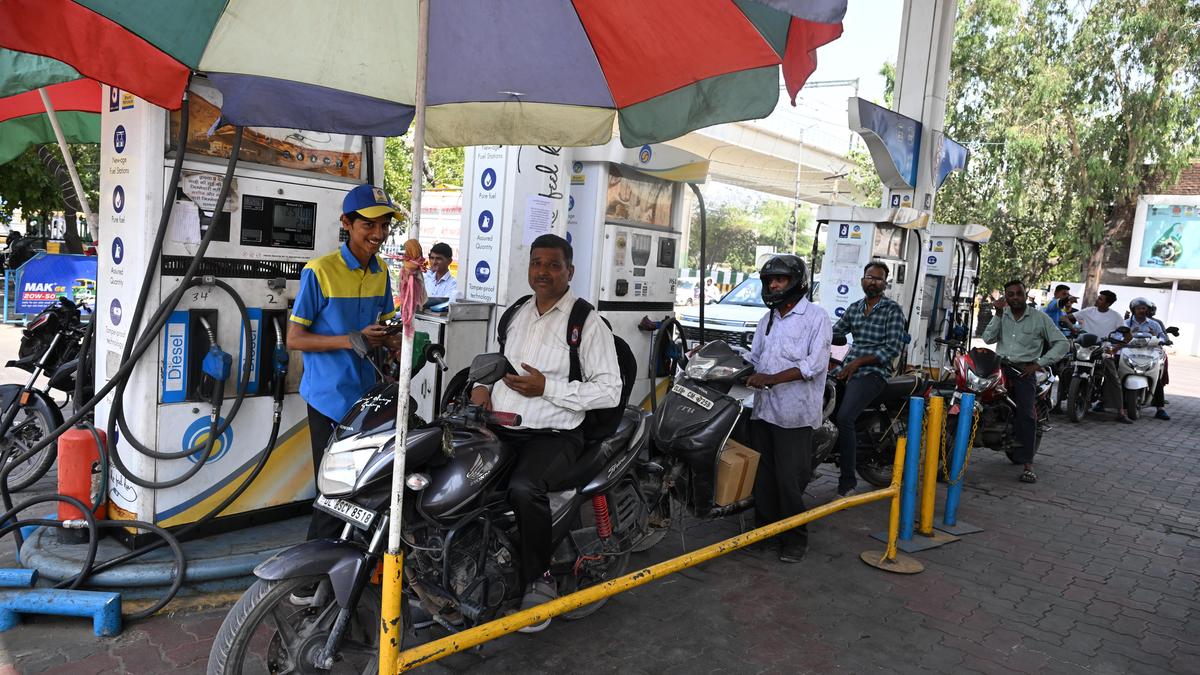
India's state-owned oil marketing companies (OMCs) are absorbing daily losses of roughly ₹550 crore on the sale of petrol, diesel, and LPG, the government has disclosed. The losses stem from conflict-led disruptions that have pushed global crude prices and supply costs higher while domestic retail prices remain fixed.
OMCs, which include Indian Oil Corporation, Bharat Petroleum, and Hindustan Petroleum, are required to sell fuel at government-approved prices. When global crude costs rise sharply, these companies bear the gap between what they pay to source fuel and what they recover at the pump. That gap, called an under-recovery, is now running at ₹550 crore every single day across the three products combined.
Private Players Hit Hard on Diesel
The pain is not limited to state-run companies. Privately-owned OMCs have seen diesel sales fall by roughly 38% so far this month, the government noted. Private fuel retailers typically price closer to market rates, which makes their fuel more expensive than state-run pumps when crude spikes. Consumers respond by shifting purchases to cheaper public-sector outlets, cutting private players out of the market in a meaningful way.
A 38% volume drop in diesel is significant. Diesel is the backbone of commercial transport in India, used by trucks, buses, tractors, and industrial equipment. A sharp swing in where diesel is purchased, rather than how much is consumed overall, signals that buyers are actively price-shopping between retail networks, something that happens when the spread between private and public pump prices widens enough to matter.
Why This Matters for the Broader Economy
The ₹550 crore daily loss figure is the immediate pressure point, but the downstream effects are wider. State-run OMCs fund their operations through a mix of internal cash flows and government support. Prolonged under-recoveries erode their financial buffers, raise their borrowing needs, and can eventually affect capital spending on refining capacity and fuel infrastructure.
LPG is a household fuel used by hundreds of millions of Indian families for cooking. When OMCs lose money on every cylinder sold, the fiscal question of who ultimately absorbs that loss, the companies, the government through subsidies, or consumers through a price revision, becomes unavoidable over time.
For petrol and diesel, the government has kept retail prices unchanged even as crude markets moved. This is a deliberate choice to protect consumers from imported inflation, but it transfers the cost onto the balance sheets of public-sector energy companies. If crude costs remain elevated due to ongoing geopolitical conflict, the daily loss figure will compound quickly into quarterly and annual earnings damage.
Investors tracking OMC stocks should note that sustained under-recoveries typically compress margins, pressure dividends, and sometimes prompt credit rating reviews. State support can offset some of this, but the timing and scale of any government compensation is rarely certain in the short term.
What to watch next: whether the government opts to revise retail fuel prices to reduce the under-recovery burden, whether it provides direct budget transfers to OMCs to cover losses, and whether the conflict driving supply disruptions de-escalates in a way that brings crude costs back down. Any formal price revision at the pump would be the clearest signal that the current loss-absorption approach has reached its limit.