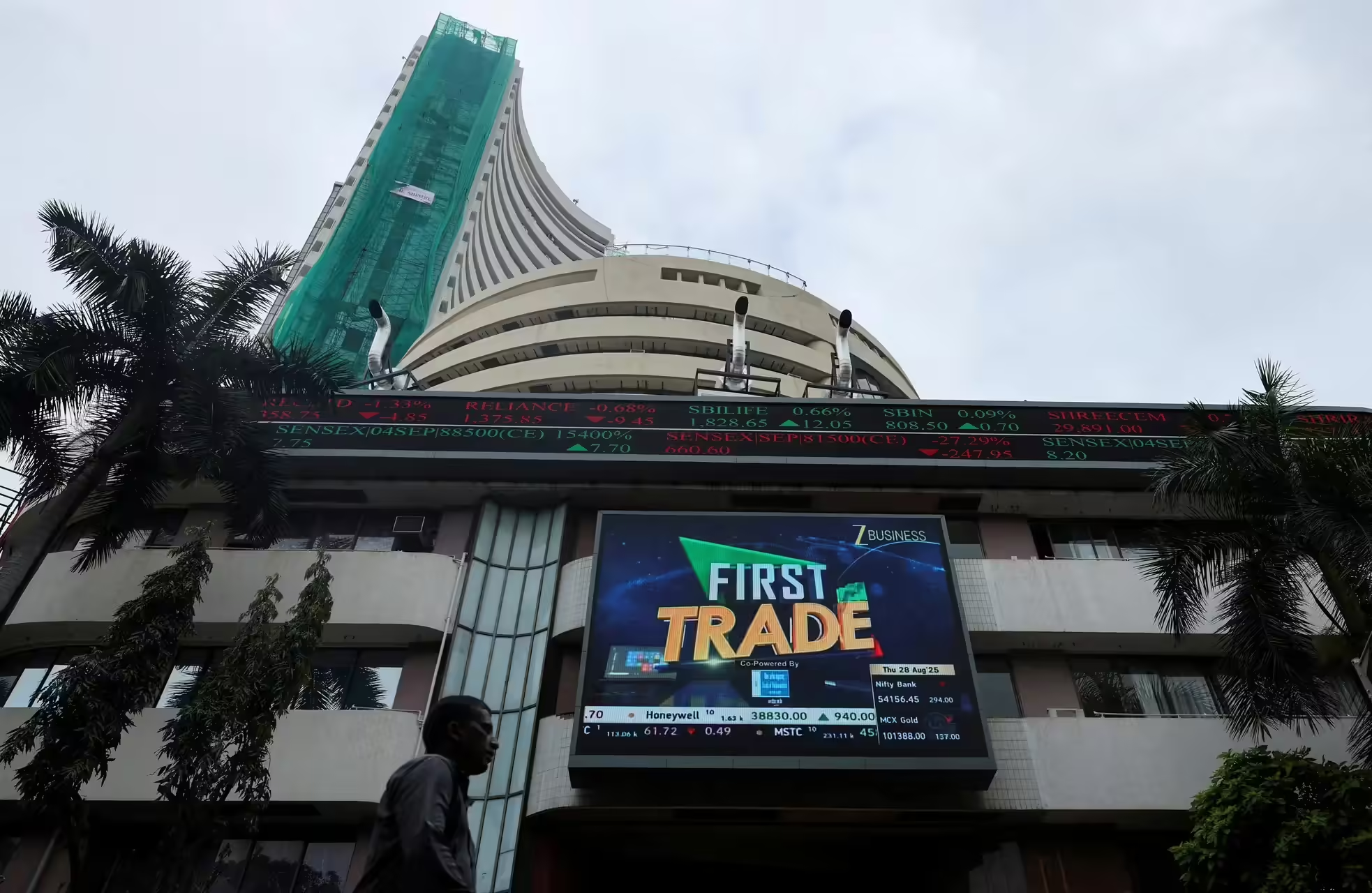
India's benchmark indices wrapped up their longest weekly winning run in seven months, with both the Nifty 50 and BSE Sensex posting gains as a combination of falling crude oil prices, a stronger rupee, and a supportive central bank stance drew buyers back into equities.
The catalyst is straightforward: crude oil prices have slid sharply in recent weeks, and that matters enormously for India, which imports roughly 85 percent of its oil needs. Lower crude directly cuts the country's import bill, narrows the current account deficit, and reduces the pressure on the rupee. All three effects make Indian assets more attractive to foreign investors at the same time.
What is driving the rally
The rupee's relative stability has been reinforced by policy measures aimed at attracting foreign capital. A weaker import bill and policy support working in tandem have given portfolio investors more confidence to hold or add Indian equity positions rather than rotate out. When the currency is not a source of risk, foreign funds tend to stay longer.
The Reserve Bank of India has also helped by signaling it does not plan to raise interest rates in the near term. That removes a key overhang for equity valuations: higher rates make future corporate earnings worth less in today's terms, so a no-hike signal effectively lifts the ceiling on how much investors are willing to pay for stocks right now. It also keeps borrowing costs stable for businesses and consumers, supporting demand in the broader economy.
Within the market, pharma and financial sector stocks led the gains. Pharma benefits from a stronger rupee on the input cost side while still earning in dollars from exports, improving margins. Financial stocks responded to the RBI's rate posture directly: stable or falling rates tend to boost lending volumes and reduce stress on bank loan books.
Why this streak stands out
A seven-month high in weekly winning runs is not just a streak count. It signals a shift in risk appetite. Earlier in 2026, markets were navigating global rate uncertainty, geopolitical risk premiums in energy, and a period of sustained foreign institutional selling. This rally suggests at least a partial reversal of those headwinds, with multiple factors aligning rather than a single short-covering bounce.
The length of the winning run also matters for technical market participants. Sustained weekly closes in positive territory often attract momentum-driven funds that track trend signals, which can extend a rally beyond its fundamental trigger. That dynamic is worth watching as the streak lengthens.
For the broader economy, the oil slide is doing real work. India's fiscal position benefits when crude is lower because fuel subsidies and fertiliser costs fall, giving the government more room to spend or consolidate. Lower fuel prices also act as a quiet tax cut for households and logistics businesses, feeding through to consumption and margins over the following weeks.
What to watch next: the durability of the crude decline is the single biggest variable. If oil prices stabilise at current levels or fall further, the current tailwinds for the rupee, fiscal position, and corporate margins stay intact. A reversal in crude, driven by a supply cut or a demand surprise, would quickly change the calculus. The RBI's next policy meeting and any fresh data on foreign institutional flows will also indicate whether this rally has institutional depth or is running ahead of fundamentals.