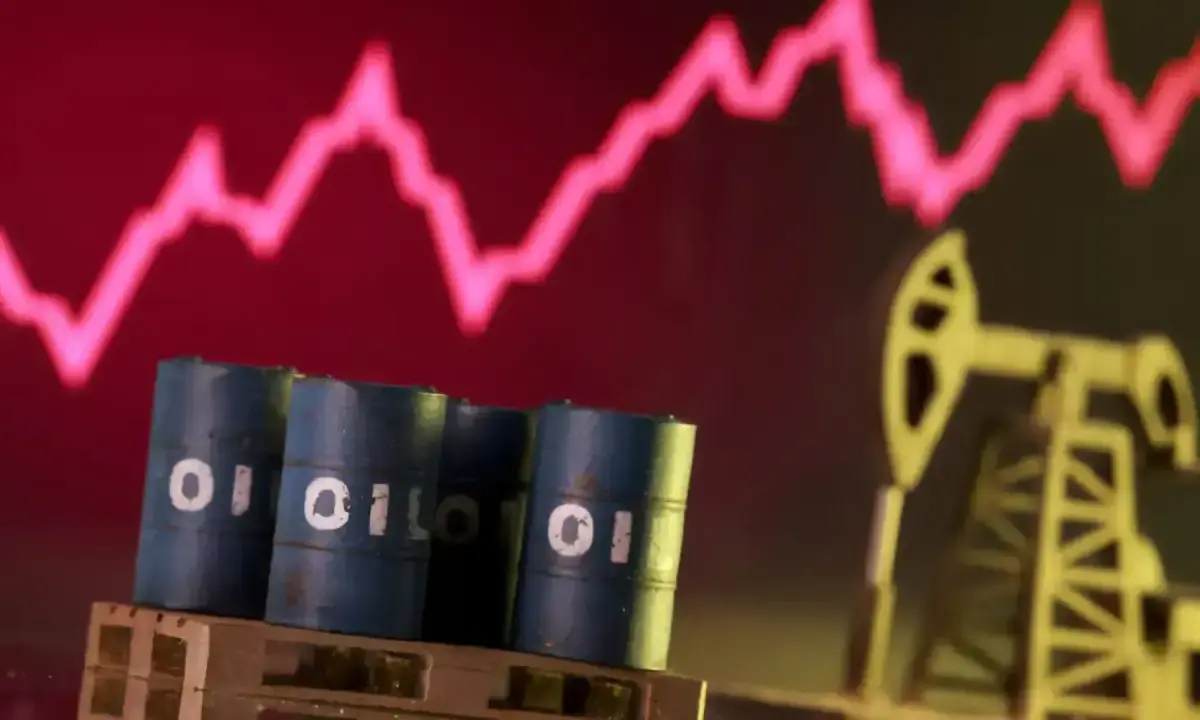
Oil prices jumped sharply on Monday after President Donald Trump called Iran's response to a US peace proposal "unacceptable," reigniting fears of a prolonged supply disruption as the Strait of Hormuz remained largely closed.
Brent crude futures rose $4.16, or 4.11%, to $105.45 a barrel in early trading. US West Texas Intermediate climbed $4.38, or 4.59%, to $99.80 a barrel. The move reversed much of last week's 6% losses, which had been driven by hopes the 10-week-old conflict between the US and Iran was close to a resolution that would reopen the strait.
Why the Strait of Hormuz matters so much
The Strait of Hormuz is the world's most important oil chokepoint, linking the Persian Gulf producers to global markets. It has been largely closed for roughly ten weeks amid the US-Iran conflict. Saudi Aramco CEO Amin Nasser said Sunday that the world has lost about 1 billion barrels of oil over that period and that markets will take time to stabilise even once flows resume. Adding to the picture: at least two tankers last week switched off tracking equipment to avoid Iranian attacks while exiting the strait, according to shipping data from Kpler, a sign that some exports are moving, but under significant risk.
The mechanism here is straightforward. Supply lost through a closed strait is not immediately replaceable. Inventories are depleted, and rebuilding them takes time even under normal shipping conditions. That gives oil prices a persistent upward floor, separate from whatever diplomacy is happening day to day.
Trump's China visit now in focus
Market attention is turning to Trump's scheduled visit to Beijing on Wednesday, where he is expected to meet Chinese President Xi Jinping. US officials say Iran will be among the topics. Analysts at IG noted that investors hope Trump can persuade Beijing to use its influence over Tehran to push for a ceasefire and end the Strait of Hormuz disruption. China is Iran's largest oil customer and has diplomatic ties that Washington lacks, making Beijing a potential back-channel.
Priyanka Sachdeva, senior market analyst at Phillip Nova, described oil as trading "like a geopolitical headline machine," with prices swinging sharply on every statement from Washington or Tehran. That dynamic is unlikely to settle soon.
ING analysts wrote on Monday that even if the acute supply shock fades by late 2026, depleted inventories, weaker policy coordination, and the ongoing risk of renewed Hormuz disruption will keep a geopolitical risk premium built into prices. They expect Brent to stay above $90 a barrel through 2026 and ease to $80, $85 through 2027 as demand growth resumes and inventories are slowly rebuilt. For India, which imports roughly 85% of its crude and counts the Gulf as its primary source, prices sustained above $90 directly widen the current account deficit and add pressure on the rupee and fuel subsidy bills.