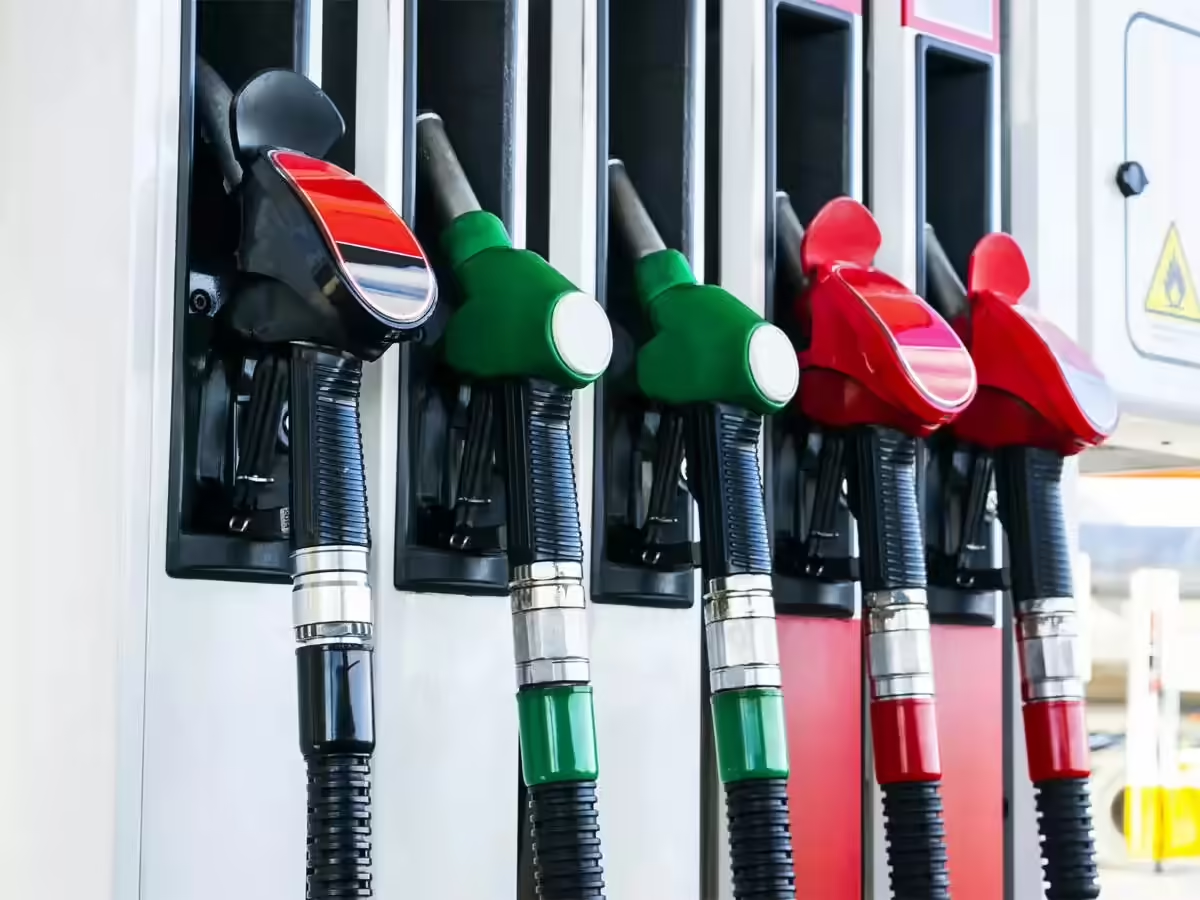
India's state-owned oil retailers, Indian Oil, HPCL, and BPCL, are collectively losing around ₹30,000 crore every month because they sell petrol, diesel, and LPG at prices below what it costs to source them internationally. The gap has widened as global crude and product prices have climbed, while domestic retail prices have stayed put.
Why the losses are mounting
When international fuel prices rise, the cost of importing or refining crude goes up. But Indian oil marketing companies (OMCs) cannot freely raise pump prices, they operate under political and regulatory pressure to keep fuel affordable. The difference between what they pay to procure fuel and what they charge consumers is called an under-recovery. At ₹30,000 crore a month, this is a serious cash drain.
LPG cooking gas has long been sold below cost, and that subsidy burden continues. Petrol and diesel prices, though partially deregulated in theory, have not been revised upward despite the rise in global benchmarks. That gap between market rates and pump prices is the core problem.
Impact on company earnings and shares
The financial hit is showing up directly in earnings. Indian Oil, HPCL, and BPCL, the three major government-owned fuel retailers, have seen their share prices fall as investors price in weaker profits. When under-recoveries are high, these companies either absorb the loss on their books or wait for government compensation, neither of which is good for near-term earnings.
The scale of ₹30,000 crore monthly translates to roughly ₹3.6 lakh crore annualised if unaddressed, a number large enough to affect the companies' ability to invest in refinery upgrades, pipelines, and energy transition projects.
What to watch: any government decision on fuel price revision or subsidy support to OMCs would be the key trigger. A fuel price hike, if it comes, would narrow under-recoveries quickly but risks passing inflation on to consumers. Alternatively, direct budgetary support from the government would stabilise earnings without touching pump prices. Until either happens, pressure on OMC margins and share prices is likely to continue.