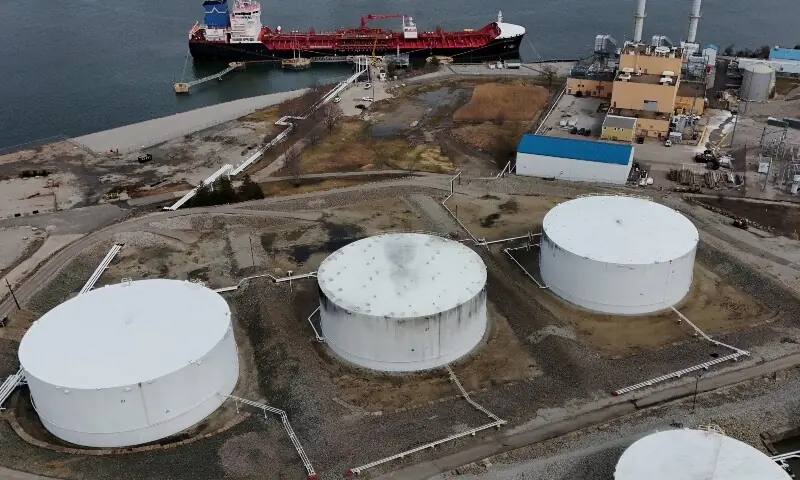
Oil prices dropped more than 6 percent on Monday after the United States and Iran paused military strikes over the weekend, signaling a possible diplomatic off-ramp after two weeks of direct conflict. Brent crude fell $6.20 to $90.58 a barrel by early morning trading, briefly slipping under the $90 support level. US West Texas Intermediate dropped $5.80 to $83.51. Both contracts hit their lowest point in nearly a week.
The sell-off reflects how heavily the market had priced in conflict risk. Brent had climbed all the way to $100 a barrel as hostilities disrupted oil shipments through the Strait of Hormuz and spilled into the Red Sea, blocking Saudi Arabian crude exports through the Bab el-Mandeb strait to Asia. That $100 level, now reversed in a single session, shows just how much of the recent rally was built on fear rather than fundamentals.
US Ambassador to the United Nations Mike Waltz told Fox News and other US media on Sunday that President Donald Trump had decided to pause American strikes to allow more time for diplomacy. That single announcement was enough to trigger the sharpest single-day oil price move in weeks.
Why Prices Fell So Fast
ING analysts put it plainly in a client note: "The price action in oil this morning clearly reflects the market's desperation for positive news." When prices are built on a fear premium, any credible sign of de-escalation unwinds that premium quickly. A $9-per-barrel drop from peak to current levels in a short window is the market repricing the probability of a prolonged blockade downward, even if the underlying risks have not fully disappeared.
The mechanics matter here. The Strait of Hormuz handles roughly a fifth of global oil supply. When conflict threatens free passage, shippers either reroute, slow down, or stop altogether, cutting effective supply to global markets and pushing prices up. A pause in US-Iran strikes raises the probability that shipping lanes reopen, which is deflationary for oil.
But the reopening is not automatic. Shipping data from Kpler showed fewer than 10 commodity vessels passed through the Strait of Hormuz daily over the weekend, well below normal traffic levels. MST Marquee analyst Saul Kavonic noted that "any rebound in flows through the Strait of Hormuz is likely to prove slow and partial, as many shippers remain wary and will want greater confidence in their safety before they bring more empty ships into the Strait." Repositioning empty tankers into a zone that was under active attack just days ago is not a decision any shipping operator will make lightly.
Other Supply Risks Have Not Gone Away
The Red Sea route faces its own separate pressure. Ship traffic through the Bab el-Mandeb strait fell on Sunday after Yemeni Houthis attacked Saudi oil installations along the Red Sea coast, even as a third Chinese supertanker managed to exit through the strait. Houthi activity in the Red Sea has been a persistent supply risk, and the weekend attacks on Saudi infrastructure signal that this threat has not cooled alongside the US-Iran pause.
Beyond the Middle East, Ukraine said it struck several Russian oil sites over the weekend, including ships and refineries. UOB analysts noted in a client note that sustained supply disruption across both the Middle East and the Russia-Ukraine war front "would likely keep oil prices elevated and continue to pose upside risks to global inflation." In other words, even with Monday's price drop, the global oil market remains tighter and more fragile than it was a month ago.
For energy markets, the key question now is whether the US-Iran diplomatic pause holds and translates into a durable ceasefire. If it does, Strait of Hormuz traffic could normalize over days to weeks, pushing Brent back toward the mid-$80s range that prevailed before the conflict escalated. If it breaks down, or if Houthi activity intensifies, the market could reverse Monday's move quickly. Traders and oil importers alike will be watching ship traffic data from Kpler and any diplomatic signals from Washington and Tehran closely in the days ahead.