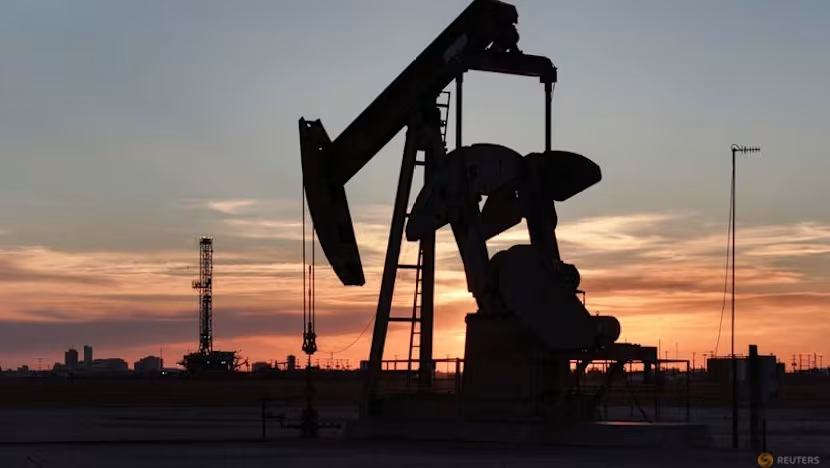
Oil prices slipped on Friday after reports surfaced that the United States and Iran may be close to a ceasefire agreement, raising the prospect of reduced tensions in a region that sits at the centre of global energy supply.
The move reflects how sensitive crude markets are to geopolitical risk in the Middle East. When conflict risk rises, traders price in the possibility of supply disruptions. When that risk fades, even partially, prices tend to ease as the threat premium built into the market gets unwound.
Iran is a significant oil producer and a member of OPEC. Any diplomatic thaw between Washington and Tehran carries direct implications for crude supply. A formal deal or lasting ceasefire could eventually open the door to eased sanctions on Iranian oil exports, which have been restricted under US pressure for years. More Iranian barrels reaching the global market would add to supply at a time when OPEC and its allies are already managing output carefully to support prices.
Why It Matters
The oil market has been trading with a geopolitical risk premium baked in for much of the past year, given conflict in the Middle East and ongoing uncertainty around Iranian nuclear negotiations. Even early-stage reports of a possible ceasefire are enough to move prices because traders act on probability shifts, not just confirmed outcomes.
A sustained de-escalation would be more consequential than a single day's price move suggests. If sanctions on Iran were to loosen as part of any broader agreement, estimates from energy analysts have consistently pointed to the potential for several hundred thousand additional barrels per day entering the market. That kind of volume shift would put pressure on OPEC producers who have been cutting output to keep prices stable.
For India, the stakes are especially direct. India is one of the world's largest crude oil importers and has historically been a significant buyer of Iranian oil before sanctions tightened. Lower global oil prices ease the import bill, reduce inflationary pressure on fuel and transport costs, and give the Reserve Bank of India more room on monetary policy. Any sustained fall in crude prices would be a meaningful tailwind for the Indian economy.
What to Watch Next
The key question is whether these reports translate into a formal agreement and, if so, what conditions it carries. A ceasefire alone may not immediately affect oil supply if sanctions remain in place. The sequence matters: diplomatic progress, followed by sanctions relief, followed by production ramp-up would each represent a separate stage with its own market impact.
OPEC's response is also worth watching. The group has shown a willingness to adjust output targets when market conditions shift, and a meaningful increase in Iranian supply would test that coordination. Saudi Arabia in particular has strong incentives to manage the pace of any supply increase to avoid a sharp price drop.
For now, the price dip is modest and reflects uncertainty rather than a confirmed outcome. Markets are pricing a possibility, not a done deal. If talks stall or collapse, the risk premium could return quickly. If a deal holds and sanctions ease, the downward pressure on oil prices could become more sustained over coming months.