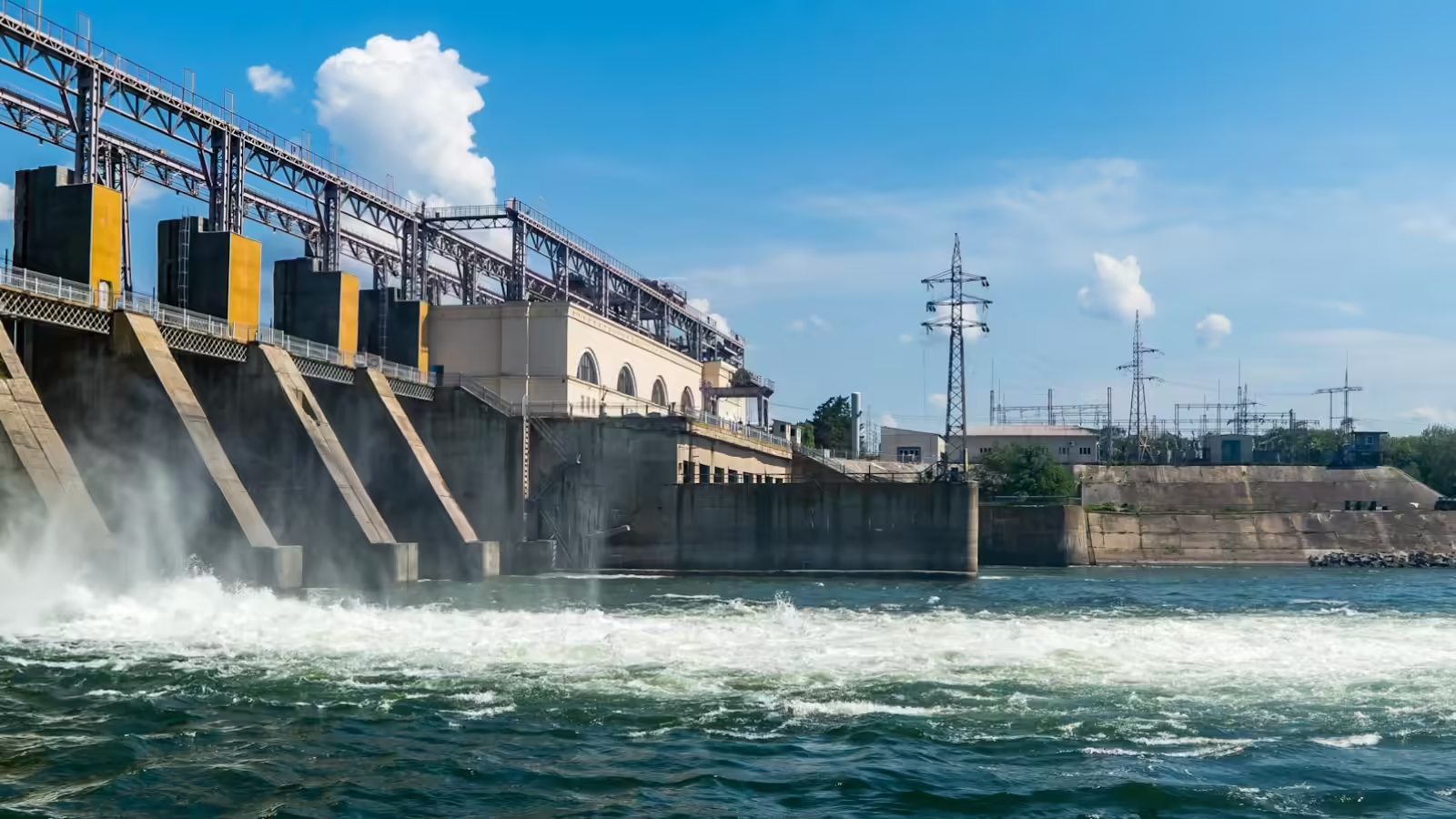
NHPC shares fell nearly 5 percent on Tuesday after the government launched an offer for sale (OFS) to divest up to a 6 percent stake in the state-owned hydropower company. The floor price was set at Rs 71 per share, representing an 8 percent discount to the prevailing market price, a gap wide enough to pull the stock down sharply as investors repositioned.
The OFS opened for non-retail investors on Tuesday. At up to Rs 4,300 crore in size, this is a meaningful divestment for a public sector undertaking, and the discount built into the floor price is the key pressure point for the stock.
Why the discount hits the share price
An OFS at a steep discount creates an immediate arbitrage signal. Institutional investors can buy shares through the offer at Rs 71 and avoid paying the higher market price. That logic pulls demand away from the open market, so the stock price tends to drift toward the offer floor. The sharper the discount, the harder the stock falls. An 8 percent markdown is significant enough to cause exactly that kind of reset.
For existing shareholders, the dilution is also relevant. A 6 percent stake sale by the government increases the total shares available in the market, which adds supply pressure even after the OFS closes. This is a standard side effect of government divestment through the OFS route, but it tends to weigh on short-term price performance.
What this means for investors watching NHPC
NHPC is a central government enterprise in the hydropower sector, a space that has attracted attention as India pushes renewable energy capacity. A large OFS from the government does not change the company's operations or earnings outlook directly. What it does is reset the stock's near-term price anchor closer to the offer floor.
For retail investors, the OFS typically opens on the following day, giving them a chance to participate at the same or a better price than institutional buyers. That is worth watching, as retail participation in government OFS rounds can sometimes be done at a further discount to the floor.
The broader takeaway is that government divestment activity, even in fundamentally sound PSUs, tends to create short-term turbulence. The stock price often stabilizes once the OFS closes and the new supply is absorbed by the market. How quickly that happens depends on demand at the Rs 71 floor and overall market sentiment toward the power sector.
Investors should watch the subscription levels from non-retail bidders on day one as a signal of institutional appetite. Strong coverage would suggest the discount was enough to attract buyers and that the post-OFS price floor may hold. Weak coverage would extend the pressure on the stock.