A new survey finds roughly 78 percent of Americans oppose raising the Social Security full retirement age, signaling broad public resistance to one of the most frequently discussed mechanisms for shoring up the program's long-term finances. The finding cuts across party lines, suggesting the position is not confined to any single political constituency. Social Security's full retirement age currently sits at 67 for those born after 1960, and the program's trust funds are projected to face a funding shortfall within roughly a decade under current law. Raising the retirement age is often proposed as a cost-reduction lever because it effectively reduces lifetime benefits for retirees who claim at the same age. Lawmakers weighing Social Security reform face a stark tension: actuarial pressure to adjust benefits or revenue, against a political environment where the most direct cost-containment tools draw near-universal opposition. Any legislative push to extend the retirement age would require navigating that constraint in an already divided Congress.
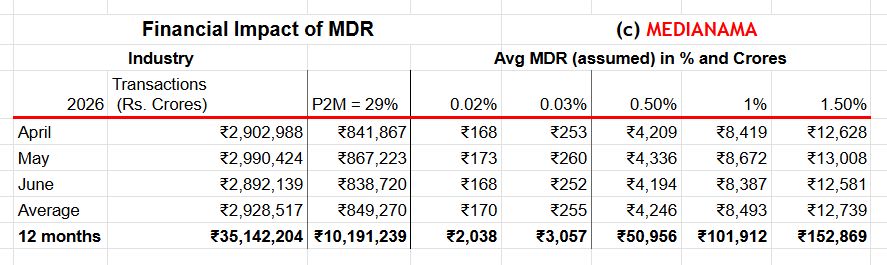
India's government plans to amend the Payment and Settlement Systems Act to restore UPI merchant discount rates, ending the zero-MDR regime in place since January 2020.
India's government has introduced the Taxation and Other Laws (Amendment) Bill, 2026, proposing changes to payments regulation, income tax, and the Finance Act to attract FDI and support Make in India. The Bill's final shape will depend on parliamentary debate and committee review.
The government's Taxation and Other Laws (Amendment) Bill, 2026, proposes to replace the blanket UPI MDR ban with a system allowing the Centre to notify which payment modes stay fee-free.
Prime Minister Narendra Modi inaugurated the Rs 5,000 crore Bhogapuram greenfield airport in Andhra Pradesh, built under a public-private partnership model. He also laid foundation stones for infrastructure projects worth nearly Rs 18,000 crore in the state, signalling a broad investment push for the region.