India to Restore UPI Merchant Fees, PhonePe Gains Most
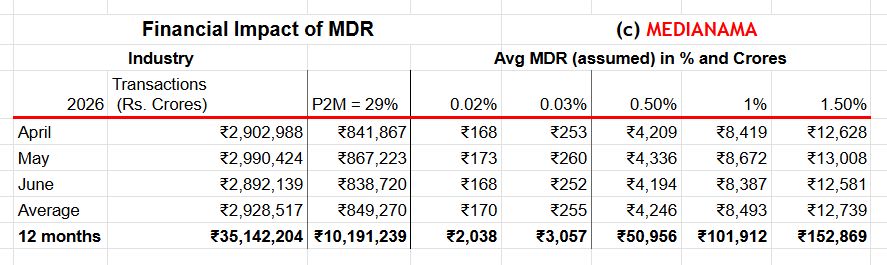
India's government plans to amend the Payment and Settlement Systems Act to restore UPI merchant discount rates, ending the zero-MDR regime in place since January 2020.
Key Takeaways
May 2, 2026 · 2 min read · By Rishabh Bhardwaj
·
AI-assisted, human-reviewed · Our editorial standards

India's Railway Board has set targets to surrender or redistribute nearly 30,000 posts across its zonal railways in 2026, 27, with the exercise framed as manpower rationalisation under annual performance agreements.
The board has communicated zone-wise targets for what it calls manpower rationalisation, covering both the outright surrender of posts and the redistribution of existing ones, to the Efficiency and Research (E&R) Directorate. These targets are being built into the Memoranda of Understanding (MoUs) that each zonal railway signs as part of its annual performance commitments.
Surrendering a post means the sanctioned position is formally given up and removed from a zone's headcount, reducing the authorised workforce. Redistribution means a post is moved from one zone or department to another where the workload justifies it. The two are being tracked together as a single Key Performance Indicator (KPI), which means zones will be assessed on how well they meet their combined target.
Tying workforce reduction to KPIs is significant. It puts manpower rationalisation on the same formal footing as revenue targets or punctuality scores, making zone-level compliance a measurable management obligation rather than an informal guideline.
The source material indicates zone-specific targets have been set, though the full zone-wise breakdown is not publicly available from this communication alone. Zones with historically higher staff-to-output ratios, typically older, larger networks, are likely to face steeper targets, but the specific allocation has been conveyed internally to the E&R Directorate rather than published in detail.
Indian Railways is one of the world's largest employers, with roughly 1.2 million staff on its rolls. A rationalisation exercise of this scale, nearly 30,000 posts in a single financial year, represents a meaningful reduction in authorised headcount, even if many of these are vacant posts being formally surrendered rather than filled roles being cut.
The distinction matters: surrendering vacant posts reduces future hiring capacity and budget obligations, while redistributing filled posts reshuffles where people work. Both affect long-term workforce planning and departmental budgets across zones.
Watch for the final MoU targets to be published zone-wise and for any union response, which has historically been the main friction point in past rationalisation rounds.
India's government plans to amend the Payment and Settlement Systems Act to restore UPI merchant discount rates, ending the zero-MDR regime in place since January 2020.
India's government has introduced the Taxation and Other Laws (Amendment) Bill, 2026, proposing changes to payments regulation, income tax, and the Finance Act to attract FDI and support Make in India. The Bill's final shape will depend on parliamentary debate and committee review.
The government's Taxation and Other Laws (Amendment) Bill, 2026, proposes to replace the blanket UPI MDR ban with a system allowing the Centre to notify which payment modes stay fee-free.
Prime Minister Narendra Modi inaugurated the Rs 5,000 crore Bhogapuram greenfield airport in Andhra Pradesh, built under a public-private partnership model. He also laid foundation stones for infrastructure projects worth nearly Rs 18,000 crore in the state, signalling a broad investment push for the region.