
Qatar Signals Progress in US-Iran War Talks
Qatar's foreign ministry said mediators including Qatar, Pakistan, and Oman have reached "very progressive stages" in efforts to end the US-Iran war, pushing Brent crude down more than four percent.
Key Takeaways
May 11, 2026 · 3 min read · By Rishabh Bhardwaj
·
AI-assisted, human-reviewed · Our editorial standards
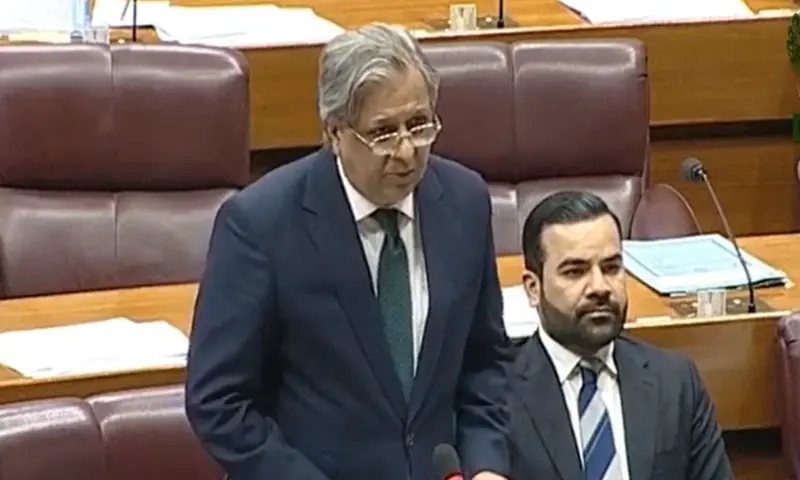
Pakistan's National Assembly passed a unanimous resolution on Monday formally commending the armed forces for their conduct during the May 2025 conflict with India, which the Pakistani state has named "Marka-i-Haq" (Battle of Truth). Law Minister Azam Nazeer Tarar moved the resolution, which credited the military's performance to the joint leadership of Prime Minister Shehbaz Sharif and Chief of Defence Forces Field Marshal Asim Munir.
The resolution traces the conflict's origins to the April 22, 2025 Pahalgam attack in what Pakistan calls Indian Illegally Occupied Jammu and Kashmir. It accuses the Indian government of immediately blaming Pakistan without evidence and rejecting Islamabad's offer to join a neutral investigation. According to the resolution, India launched an unprovoked airstrike on Pakistan on May 6, 2025, targeting civilians, a framing India has not endorsed. Pakistan then launched Operation Bunyanum Marsoos on May 10, the same day a ceasefire was reached between the two countries.
The resolution lists specific operational claims. The Pakistan Air Force is credited with shooting down multiple Indian aircraft, including Rafale jets. JF-17 Thunder aircraft are said to have destroyed India's S-400 air defence system, valued at $1.5 billion. On the ground, Pakistan's forces are said to have destroyed an Indian brigade headquarters and Brahmos missile facilities. The Navy is praised for blocking attempted intrusions and forcing the enemy to retreat. Cyber units are credited with disabling large portions of India's strategic infrastructure in response to what the resolution calls attacks by "Indian hackers."
The unanimity of the vote, spanning both government and opposition benches, gives the resolution weight as a cross-party national statement rather than a ruling coalition position. This matters for how Pakistan's civilian leadership is framing the conflict domestically ahead of any future diplomatic engagement with India.
The NA closed with a pointed warning: Pakistan's "desire for peace should not be misconstrued as weakness," and any future move against Pakistan's sovereignty would be met with full military force. This language mirrors remarks made by CDF Munir a day earlier at a ceremony marking the conflict's anniversary, suggesting coordinated messaging between the military and civilian institutions.
The resolution does not address the status of ongoing diplomacy or trade ties between the two countries, nor does it reference third-party mediation efforts. What to watch: whether India responds formally to these specific operational claims, and whether the resolution shapes Pakistan's posture in any bilateral talks that may follow the ceasefire.
Qatar's foreign ministry said mediators including Qatar, Pakistan, and Oman have reached "very progressive stages" in efforts to end the US-Iran war, pushing Brent crude down more than four percent.
Qatar confirmed it is mediating between the US and Iran but said no direct talks are currently planned. The clarification follows conflicting statements from President Trump, who claimed talks are under way, and Tehran, which denied any dialogue is happening.
Saudi Aramco reported sharply higher second-quarter 2026 profits as the Iran war restricts global oil supply and pushes crude prices up. Other oil supermajors also posted outsized earnings, raising concerns about sustained fuel cost pressure for importing economies.
President Trump called current Iran negotiations the "last chance" to end five months of conflict, pushing oil prices higher. Tehran denied formal talks are taking place, raising the risk of a diplomatic breakdown with direct consequences for global energy markets.