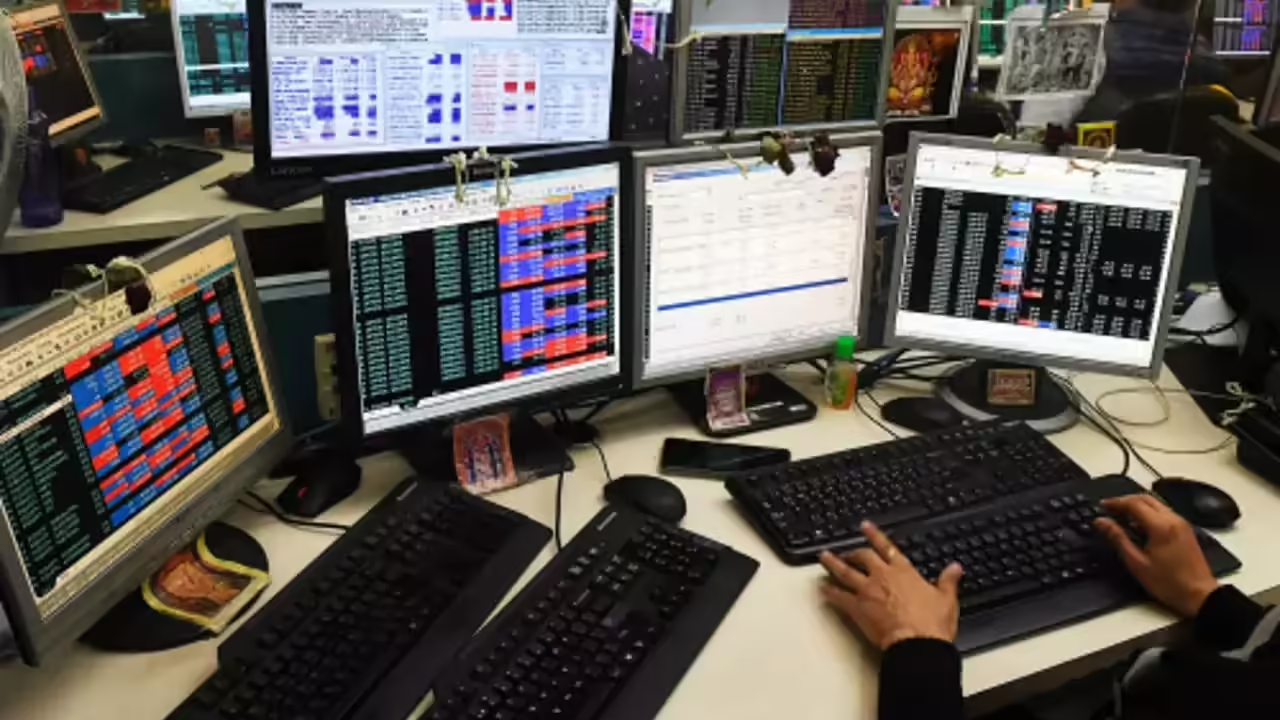
Indian equity markets fell sharply on Friday, pulled down by two converging forces: scheduled foreign fund outflows tied to an MSCI index rebalancing and lingering anxiety over the state of US-Iran nuclear talks.
The MSCI rebalancing is a routine but high-impact event. When MSCI adjusts the weights of stocks in its global and emerging-market indices, passive funds tracking those indices must buy or sell shares in exact proportion to stay aligned. The selling pressure that follows is mechanical, not a judgment on company fundamentals, but it moves prices all the same. On days when rebalancing coincides with broader macro uncertainty, the effect is amplified.
Foreign portfolio investors were net sellers on the session. Domestic institutional investors, typically mutual funds and insurance companies, stepped in to absorb some of that selling, providing a partial cushion. This pattern, where domestic money partially offsets foreign outflows, has become a recurring feature of Indian market volatility over the past few years as domestic fund flows have grown.
Why the US-Iran Overhang Still Weighs
A tentative ceasefire extension between the United States and Iran offered some relief in oil markets, pushing crude prices lower. For India, which imports a large share of its oil needs, cheaper crude is directly positive: it narrows the trade deficit, eases pressure on the rupee, and reduces input costs across industries from paint to aviation. That reprieve, however, was not enough to lift sentiment on Dalal Street.
The concern is not just where oil prices sit today, but where they could go if diplomacy breaks down. Any collapse in US-Iran talks would risk a fresh spike in crude, which would quickly feed through to Indian inflation, the current account, and the Reserve Bank of India's rate calculus. Markets are pricing in that tail risk even as the immediate news is relatively benign.
Geopolitical uncertainty of this kind tends to keep foreign investors cautious on emerging markets broadly. India is not uniquely exposed, but it is not insulated either, especially when global funds are already repositioning around an index rebalance.
What to Watch From Here
The MSCI rebalancing effect is transient. Once the mechanical selling clears, stocks that were sold purely for index reasons tend to stabilise, assuming no fresh macro shock. The more durable question is how foreign investor appetite for Indian equities evolves over the coming weeks.
On the geopolitical side, the trajectory of US-Iran negotiations will set the tone for crude prices. A durable deal would remove a significant source of uncertainty for oil-importing economies like India. A breakdown would do the opposite, and could prompt the RBI to hold rates higher for longer to manage the inflationary fallout.
Domestic investors will also be watching whether the institutional buying seen on Friday reflects genuine conviction or simply opportunistic dip-buying. If domestic flows remain steady, they could continue to limit the depth of any market correction driven by foreign selling.
For now, Friday's decline reflects a market navigating two distinct pressures at once: a known, scheduled technical event and an unresolved geopolitical situation with real consequences for India's import bill and macro stability. The first will pass quickly. The second has further to run.