
Qatar Signals Progress in US-Iran War Talks
Qatar's foreign ministry said mediators including Qatar, Pakistan, and Oman have reached "very progressive stages" in efforts to end the US-Iran war, pushing Brent crude down more than four percent.
Key Takeaways
May 9, 2026 · 3 min read · By Rishabh Bhardwaj
·
AI-assisted, human-reviewed · Our editorial standards
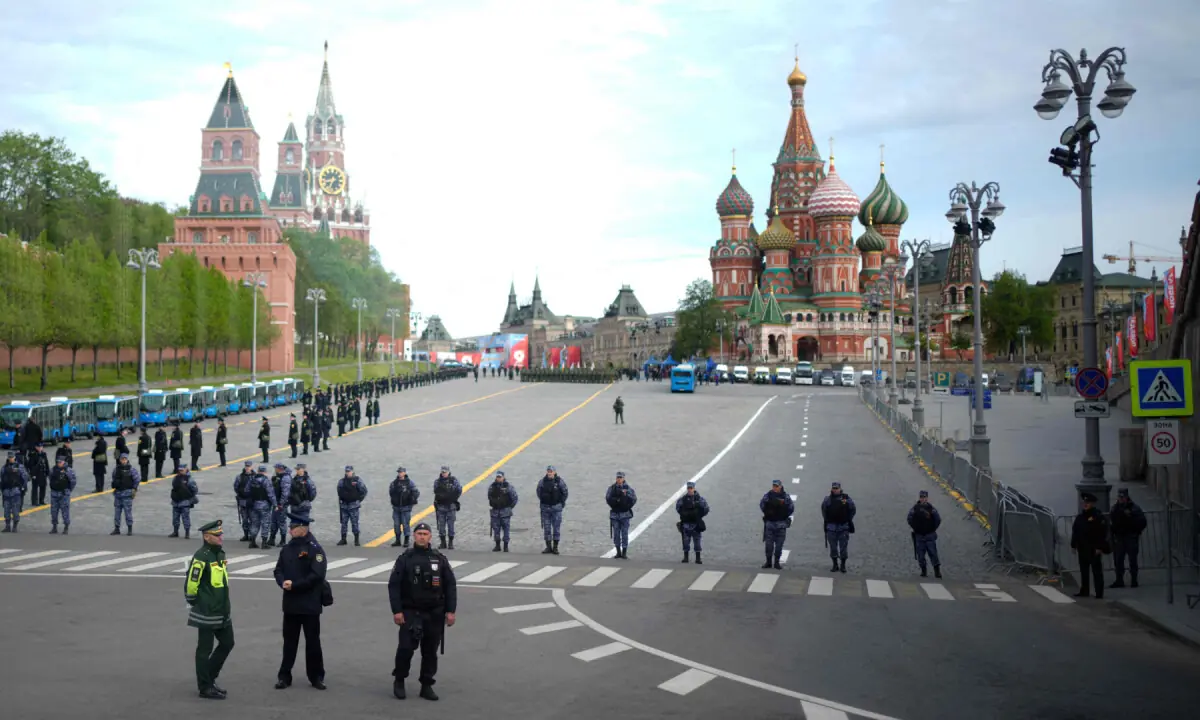
Russia held a scaled-back Victory Day parade in Moscow on Saturday as a US-brokered three-day ceasefire with Ukraine took effect, with Ukraine agreeing to halt attacks in exchange for a prisoner swap of 1,000 detainees from each side.
The May 9 parade, marking the Soviet victory over Nazi Germany, has been a cornerstone of President Vladimir Putin's political messaging for 25 years, used in part to build domestic support for the war in Ukraine. This year, for the first time in nearly two decades, no military hardware appeared on Red Square. The Kremlin scaled down the event after a series of Ukrainian long-range drone strikes on Russian energy facilities in recent weeks, and authorities intermittently shut off mobile internet in Moscow as a security precaution.
US President Donald Trump announced the three-day truce on Friday, posting on Truth Social that he hoped it marked "the beginning of the end" of the war. Ukraine's President Volodymyr Zelensky issued a formal decree ordering his military not to attack the parade and confirmed Ukraine would observe the wider ceasefire to enable the prisoner exchange. "Red Square is less important to us than the lives of Ukrainian prisoners who can be returned home," Zelensky said. Russia confirmed it had accepted the truce, which Trump said he hoped could be extended into a lasting peace.
The ceasefire came after two failed truce attempts earlier in the week by both sides. Even after Trump's announcement, both countries continued exchanging strikes on Friday. Russia fired 67 Ukrainian-bound drones overnight, the lowest count in nearly a month, while Ukraine hit two refineries in Russia's Yaroslavl and Perm regions and struck an air navigation centre in Rostov-on-Don, temporarily closing 13 airports in southern Russia. Zelensky noted that Russian assault operations had not slowed despite the declared ceasefire.
The downsized parade also reflected Russia's narrowing international support. Only the leaders of Belarus, Malaysia, and Laos, along with Slovak Prime Minister Robert Fico, travelled to Moscow, a sharp contrast to last year, when China's Xi Jinping attended. Russia had warned of a massive strike on Kyiv if Ukraine disrupted the commemoration and urged foreign diplomats to leave the Ukrainian capital before the event.
Now in its fifth year, the war has killed hundreds of thousands of people. US-mediated peace talks have made little headway since February, when Washington shifted its diplomatic attention toward Iran. Despite the ongoing fighting, Zelensky said he hoped US envoys would visit Ukraine in the coming weeks to restart negotiations, after Ukraine's lead negotiator met US representatives in Florida this week.
Separately, Pakistani President Asif Ali Zardari sent a congratulatory message to Putin and the Russian people on Victory Day, expressing hope for stronger bilateral ties and paying tribute to soldiers from the Indus Valley region who served with Allied forces in World War II.
Qatar's foreign ministry said mediators including Qatar, Pakistan, and Oman have reached "very progressive stages" in efforts to end the US-Iran war, pushing Brent crude down more than four percent.
Qatar confirmed it is mediating between the US and Iran but said no direct talks are currently planned. The clarification follows conflicting statements from President Trump, who claimed talks are under way, and Tehran, which denied any dialogue is happening.
Saudi Aramco reported sharply higher second-quarter 2026 profits as the Iran war restricts global oil supply and pushes crude prices up. Other oil supermajors also posted outsized earnings, raising concerns about sustained fuel cost pressure for importing economies.
President Trump called current Iran negotiations the "last chance" to end five months of conflict, pushing oil prices higher. Tehran denied formal talks are taking place, raising the risk of a diplomatic breakdown with direct consequences for global energy markets.