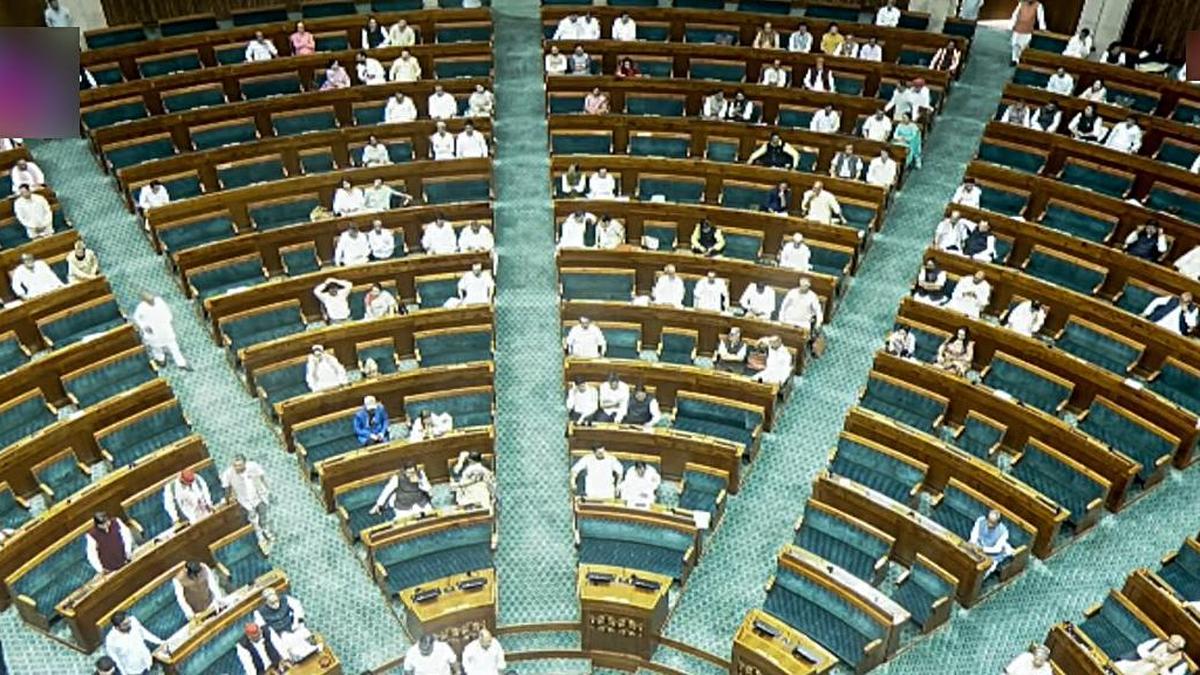
India's Parliament Monsoon Session opened on a combative note Monday, with opposition parties staging coordinated disruptions that forced the Lok Sabha to adjourn shortly after proceedings began. Lawmakers from the Congress, Samajwadi Party, and Trinamool Congress marched into the Well of the House, a formal act of protest that signals deep dissatisfaction and effectively stalls business on the floor.
The loudest grievances centred on two issues. First, opposition MPs pressed hard on the NEET paper leak controversy, which has already triggered street protests and court hearings across the country. The National Eligibility cum Entrance Test, or NEET, is the single gateway exam for medical college admissions in India, and allegations that question papers were compromised before the 2026 exam have shaken public confidence in the process. Second, members raised allegations of theft linked to donations collected for the Ram Temple in Ayodhya, a project carrying enormous political and religious weight for the ruling BJP.
By forcing repeated disruptions on both counts, the opposition is trying to push the government onto the defensive on issues that resonate with voters: the fairness of a high-stakes exam and the integrity of a landmark religious project.
Why Disruptions Matter Beyond the Headlines
A session that cannot function is not a minor procedural inconvenience. Parliament's Monsoon Session is typically the most productive of the three annual sessions, and a shortened or disrupted sitting directly affects how much legislation and scrutiny work actually gets done. Budget implementation orders, committee reviews, and question hours all depend on the House running normally. When the Lok Sabha adjourns repeatedly, government ministers escape questioning and pending bills stall.
The move by Congress, SP, and Trinamool to enter the Well together signals that at least three major opposition blocs are willing to coordinate, even if only tactically. That coordination is notable because the broader INDIA alliance has faced internal strain. The Trinamool Congress, led by the West Bengal government, has maintained an arm's-length relationship with Congress-led opposition meetings in recent months.
The DMK Wrinkle
A telling subplot emerged from the DMK's behaviour on day one. The Tamil Nadu-based party raised its own regional demand, the Mekedatu dam project on the Cauvery river, a long-running dispute between Tamil Nadu and Karnataka over water sharing. Yet the DMK chose to skip the Congress-led joint opposition meeting, underlining that regional parties often have their own priorities that do not map neatly onto the national opposition agenda.
The Mekedatu issue matters in Tamil Nadu politics because it touches directly on water access and farming livelihoods in the Cauvery delta. By raising it loudly in Parliament while staying out of the Congress caucus, the DMK is signalling that it will use the session for its own platform without being absorbed into a unified bloc led by another party.
This dynamic, opposition parties sharing a disruptive tactic but diverging on content and coordination, is a useful guide to how the session is likely to proceed. Expect continued disruptions on NEET and the Ram Temple donations, but watch for each party pushing its own issues when the cameras are on.
For the government, the challenge is to restore order quickly enough to advance its legislative calendar while not appearing to suppress legitimate debate. If the NEET controversy deepens in courts or if further details emerge on the donation allegations, the pressure to respond formally on the floor of the House will grow. The opposition knows that and is likely to keep both issues live throughout the session.
How much of the Monsoon Session's scheduled business actually gets done will depend on whether the government offers any concession, such as a dedicated discussion under a formal motion, to draw opposition parties back to their seats. Until that happens, the Well of the House is where the real action will be.