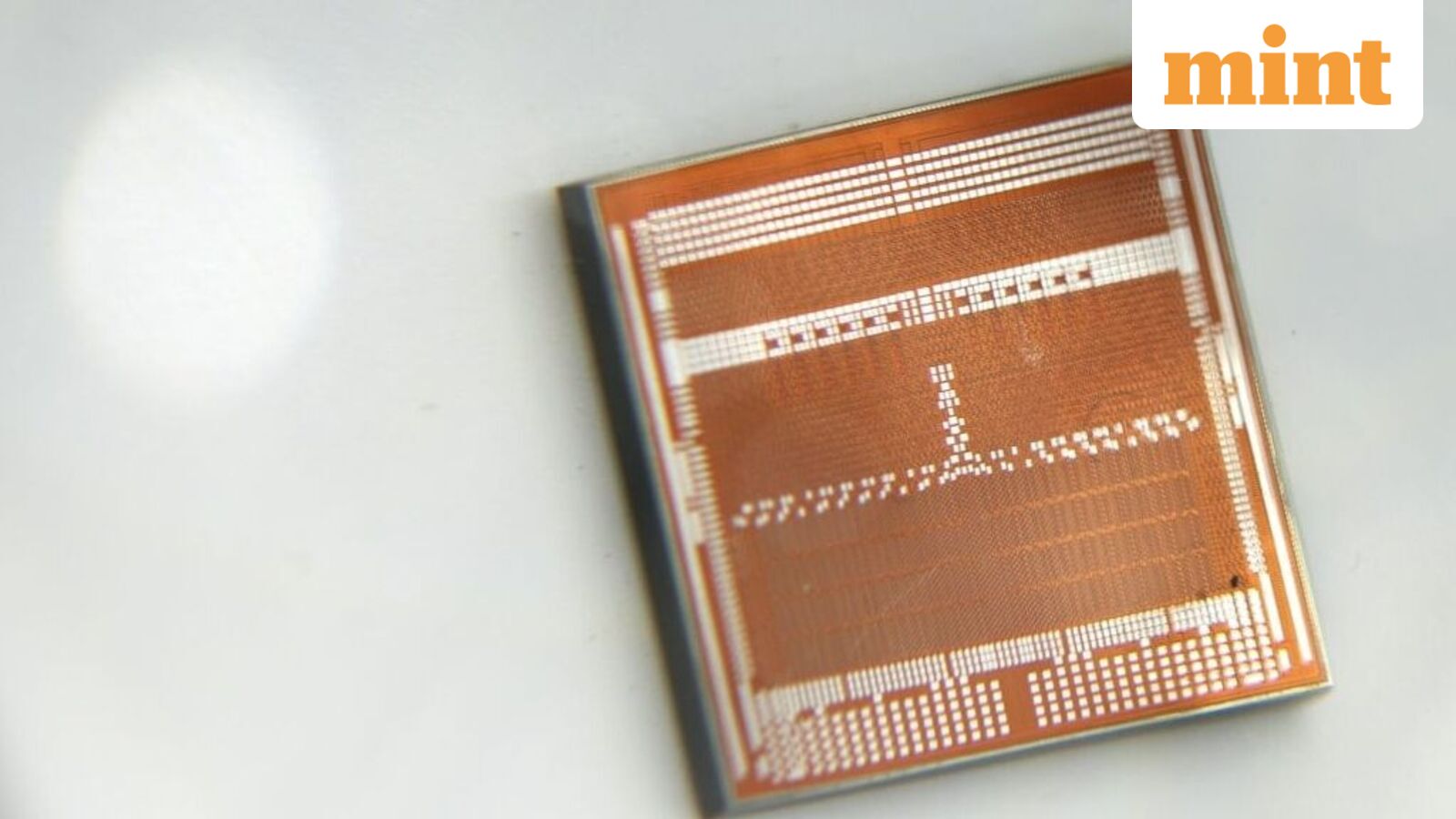
Micron Technology briefly overtook Meta Platforms in market value on June 25, 2026, after its stock surged 18.4% to $123.60, lifting the chipmaker's market cap to roughly $1.398 trillion. That put it just ahead of Meta's $1.392 trillion and within striking distance of Tesla's $1.4 trillion, which it also briefly touched before settling back.
The trigger was a strong earnings forecast from Micron, a sign that demand for its memory chips, particularly the high-bandwidth memory used in AI accelerators, remains robust. Micron makes the DRAM and NAND flash chips that sit inside the servers powering large language models and AI inference workloads. When AI infrastructure spending rises, Micron is one of the first companies in the supply chain to feel it.
Why this matters beyond the headline number
A company's market cap crossing a rival's is a snapshot, not a verdict. But the Micron move carries real signal. For much of the past decade, semiconductor memory was treated as a commodity business, cyclical and low-margin. The AI buildout has changed that framing. High-bandwidth memory is now a constrained, high-value component, and Micron is one of only three companies in the world, alongside Samsung and SK Hynix, that can make it at scale.
That scarcity is why investors are willing to reprice Micron alongside software-heavy platforms like Meta. The stock's move from under $80 in 2023 to above $120 in mid-2026 reflects a sustained reassessment of where memory sits in the AI value chain, not just a short-term earnings pop.
The forecast Micron issued clearly impressed the market. While the exact revenue or margin figures from the guidance were not disclosed in detail, a near-19% single-day gain in a stock of this size, adding well over $200 billion in market value in one session, is a rare event. It signals that the guidance came in well above what analysts had expected.
What to watch next
Three things will determine whether Micron holds this valuation or retreats. First, whether AI infrastructure spending by hyperscalers, the large cloud providers like Microsoft, Google, and Amazon, stays on its current pace through the second half of 2026. Any pullback in server orders would hit Micron's order book quickly. Second, whether Samsung and SK Hynix can close the gap in high-bandwidth memory supply, which would erode Micron's pricing power. Third, how Micron's actual earnings, when reported, compare to the forecast that drove today's rally. Guidance beats that are not followed by delivery tend to give back gains fast.
For broader markets, Micron crossing Meta in valuation is a signal of how capital is rotating. Traditional internet platforms, even very profitable ones, are being weighed against the physical infrastructure layer that makes AI possible. Memory chips are now in that infrastructure layer. That shift in perception, if sustained, has implications for how funds allocate across the technology sector.
Micron has not historically traded at the same multiples as platform companies. If the AI cycle extends and memory pricing holds, that gap may continue to close. If the cycle turns, the repricing can go the other way just as fast. For now, the market is clearly betting on the former.