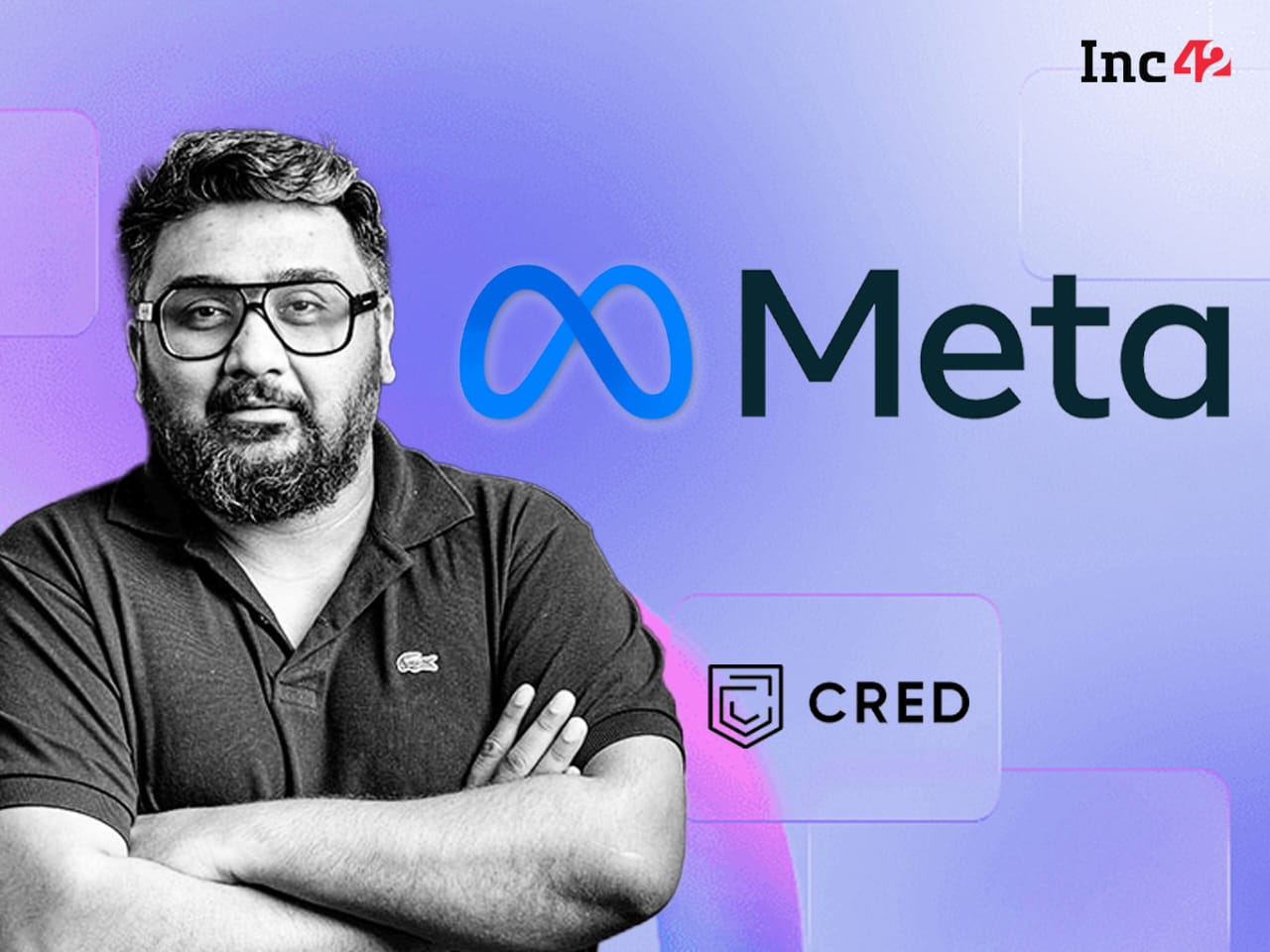
Meta has agreed to invest $900 million in Bengaluru-based fintech startup CRED, in what is the largest funding round for an Indian startup in 2026. The deal values CRED at approximately $4.5 billion post-money and comes packaged with a major leadership change: founder and CEO Kunal Shah is stepping back from day-to-day operations and moving into a global leadership role at Meta-owned WhatsApp.
The round is structured as a mix of primary and secondary transactions. About $500 million will flow directly into CRED as fresh capital, while roughly $400 million will go to existing investors selling partial stakes. Early backers including Peak XV Partners, Ribbit Capital, RTP Global, and Tiger Global are expected to book significant returns. The round also surpasses the total capital CRED raised across all previous funding rounds combined, a milestone that underscores how much the company has grown since its launch as a credit card bill payment app.
CRED's chief strategy and finance officer Miten Sampat, who joined in 2020, will take over as interim CEO. Sampat will have six senior leaders reporting directly to him, including heads of product, engineering, lending, payments, design, and the chief of staff, most of whom have been at CRED for five years or more. Shah will retain his shareholding in the company.
Why Meta Made This Bet
For Meta, the deal offers something beyond a financial return. WhatsApp is deepening its push into commerce, payments, and business messaging across India, and bringing Shah into a global leadership role gives Meta one of the country's most recognised fintech minds. India is WhatsApp's largest market by users, and the payments and commerce layer on the platform is still maturing. Shah's network and credibility in Indian financial services could accelerate that build-out.
For CRED, the capital arrives at a useful moment. Late-stage startup funding has grown harder to secure, and Meta's willingness to write such a large cheque provides both runway and a credibility signal to the broader market. CRED is also laying groundwork for a potential public listing, though the Meta relationship may shift the timeline or structure of any IPO plans.
What CRED Looks Like Now
CRED today is a meaningfully different company from the one Shah launched. It claims around 17 million members and says it processes more than 40 percent of India's credit card bill payments. Its lending business has scaled into a distribution platform for financial institutions, with managed assets crossing Rs 24,000 crore.
The startup has expanded well beyond credit card payments. Its 2024 acquisition of Kuvera gave it a foothold in wealth management. CRED has since upgraded Kuvera for affluent investors and launched Surplus, an invite-only feature that moves idle bank cash into low-risk liquid funds. It launched Cash by CRED, a standalone loan app open to all users, not just CRED members. It also launched Garage, a lifestyle product, alongside travel and e-commerce offerings. The fresh capital is expected to be used to scale these newer products and add features across all three apps.
One concrete near-term outcome of the deal is a significant employee liquidity event. Hundreds of current and former CRED employees are expected to be able to monetise stock holdings, with the buyback likely happening within a few weeks of the deal closing, according to people aware of the matter.
The bigger question is what CRED looks like without its founder at the helm. Shah has been central to the brand's identity and its reputation among India's affluent urban users. The leadership bench Sampat inherits is experienced, but institutional depth and founder-driven energy are different things. CRED is now optimising for governance, profitability, and scale, the right priorities for a pre-IPO company, but a shift from the scrappier, brand-first approach that defined its early years. How quickly Sampat and the team can establish their own credibility with users, partners, and potential public market investors will be the real test of this transition.