India to Restore UPI Merchant Fees, PhonePe Gains Most
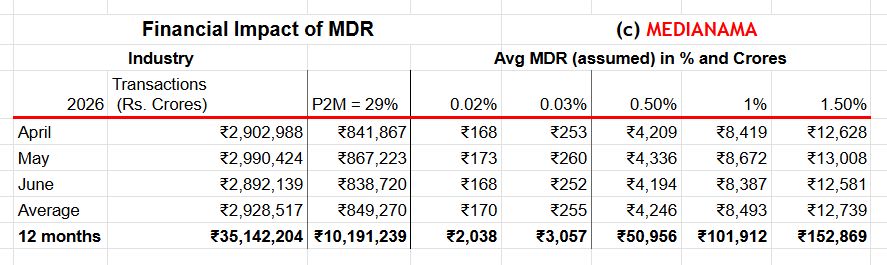
India's government plans to amend the Payment and Settlement Systems Act to restore UPI merchant discount rates, ending the zero-MDR regime in place since January 2020.
Key Takeaways
May 9, 2026 · 2 min read · By Rishabh Bhardwaj
·
AI-assisted, human-reviewed · Our editorial standards

Lieutenant General NS Raja Subramani has been appointed India's Chief of Defence Staff (CDS), effective immediately. He will also serve as Secretary of the Department of Military Affairs, the two roles that define the CDS position.
The Chief of Defence Staff is India's senior-most uniformed military officer and the principal adviser to the Defence Minister on tri-service matters, covering the Army, Navy, and Air Force. The Department of Military Affairs, which the CDS heads, was created to push long-pending reforms in procurement, jointness, and theaterization, the process of merging service commands into unified theatre commands.
The CDS position was created in January 2020 following recommendations by a government task force. General Bipin Rawat held the post until his death in a helicopter crash in December 2021. General Anil Chauhan served as the second CDS before this appointment.
India's military modernization agenda depends heavily on who sits in this role. The push to create integrated theatre commands, a major structural overhaul of how the armed forces are organized, has been in progress for years and requires strong coordination across all three services. The CDS is the officer responsible for driving that process.
Lt Gen Subramani steps into the role at a time when India is managing active border tensions, expanding its domestic defence manufacturing under the Atmanirbhar Bharat initiative, and navigating complex strategic relationships with both major powers and its immediate neighborhood.
The appointment is effective immediately, meaning the transition is already underway. Watchers of India's defence policy will focus on how Lt Gen Subramani approaches the theaterization agenda, which has seen slow progress due to inter-service coordination challenges.
India's government plans to amend the Payment and Settlement Systems Act to restore UPI merchant discount rates, ending the zero-MDR regime in place since January 2020.
India's government has introduced the Taxation and Other Laws (Amendment) Bill, 2026, proposing changes to payments regulation, income tax, and the Finance Act to attract FDI and support Make in India. The Bill's final shape will depend on parliamentary debate and committee review.
The government's Taxation and Other Laws (Amendment) Bill, 2026, proposes to replace the blanket UPI MDR ban with a system allowing the Centre to notify which payment modes stay fee-free.
Prime Minister Narendra Modi inaugurated the Rs 5,000 crore Bhogapuram greenfield airport in Andhra Pradesh, built under a public-private partnership model. He also laid foundation stones for infrastructure projects worth nearly Rs 18,000 crore in the state, signalling a broad investment push for the region.