
Qatar Signals Progress in US-Iran War Talks
Qatar's foreign ministry said mediators including Qatar, Pakistan, and Oman have reached "very progressive stages" in efforts to end the US-Iran war, pushing Brent crude down more than four percent.
Key Takeaways
May 9, 2026 · 2 min read · By Rishabh Bhardwaj
·
AI-assisted, human-reviewed · Our editorial standards
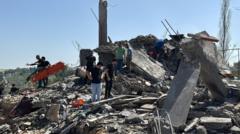
Lebanese authorities reported that Israeli strikes killed 39 people, the latest toll in ongoing cross-border fighting that has continued despite a ceasefire agreement announced last month.
The ceasefire deal, brokered and announced in late November, was meant to halt the conflict between Israel and the Iran-backed militant group Hezbollah, which operates out of southern Lebanon. But both sides have continued to exchange fire since then, raising serious questions about whether the agreement holds any practical force on the ground.
Ceasefire agreements between Israel and Hezbollah have historically been fragile. Hezbollah operates as both a political party and an armed force with a large missile arsenal, and Israeli military doctrine treats ongoing weapons transfers or troop movements as actionable threats even under a nominal ceasefire. The exact triggers for the current strikes were not specified in available reporting.
Lebanon's civilian population bears the most direct cost. A death toll of 39 from a single reported strike or wave of strikes is significant, and Lebanon's government, already under severe economic and political strain, has limited capacity to respond militarily or diplomatically.
The durability of the ceasefire is now the central question. International guarantors of the deal, including the United States and France, face pressure to respond if violations are confirmed. Persistent strikes could collapse the agreement entirely, reigniting a broader conflict that displaced hundreds of thousands of people in Lebanon during earlier escalations.
Markets with exposure to Middle East risk, particularly energy prices and regional sovereign debt, will track whether this remains contained or signals a return to large-scale hostilities. For now, the ceasefire exists on paper while the ground reality remains volatile.
Qatar's foreign ministry said mediators including Qatar, Pakistan, and Oman have reached "very progressive stages" in efforts to end the US-Iran war, pushing Brent crude down more than four percent.
Qatar confirmed it is mediating between the US and Iran but said no direct talks are currently planned. The clarification follows conflicting statements from President Trump, who claimed talks are under way, and Tehran, which denied any dialogue is happening.
Saudi Aramco reported sharply higher second-quarter 2026 profits as the Iran war restricts global oil supply and pushes crude prices up. Other oil supermajors also posted outsized earnings, raising concerns about sustained fuel cost pressure for importing economies.
President Trump called current Iran negotiations the "last chance" to end five months of conflict, pushing oil prices higher. Tehran denied formal talks are taking place, raising the risk of a diplomatic breakdown with direct consequences for global energy markets.