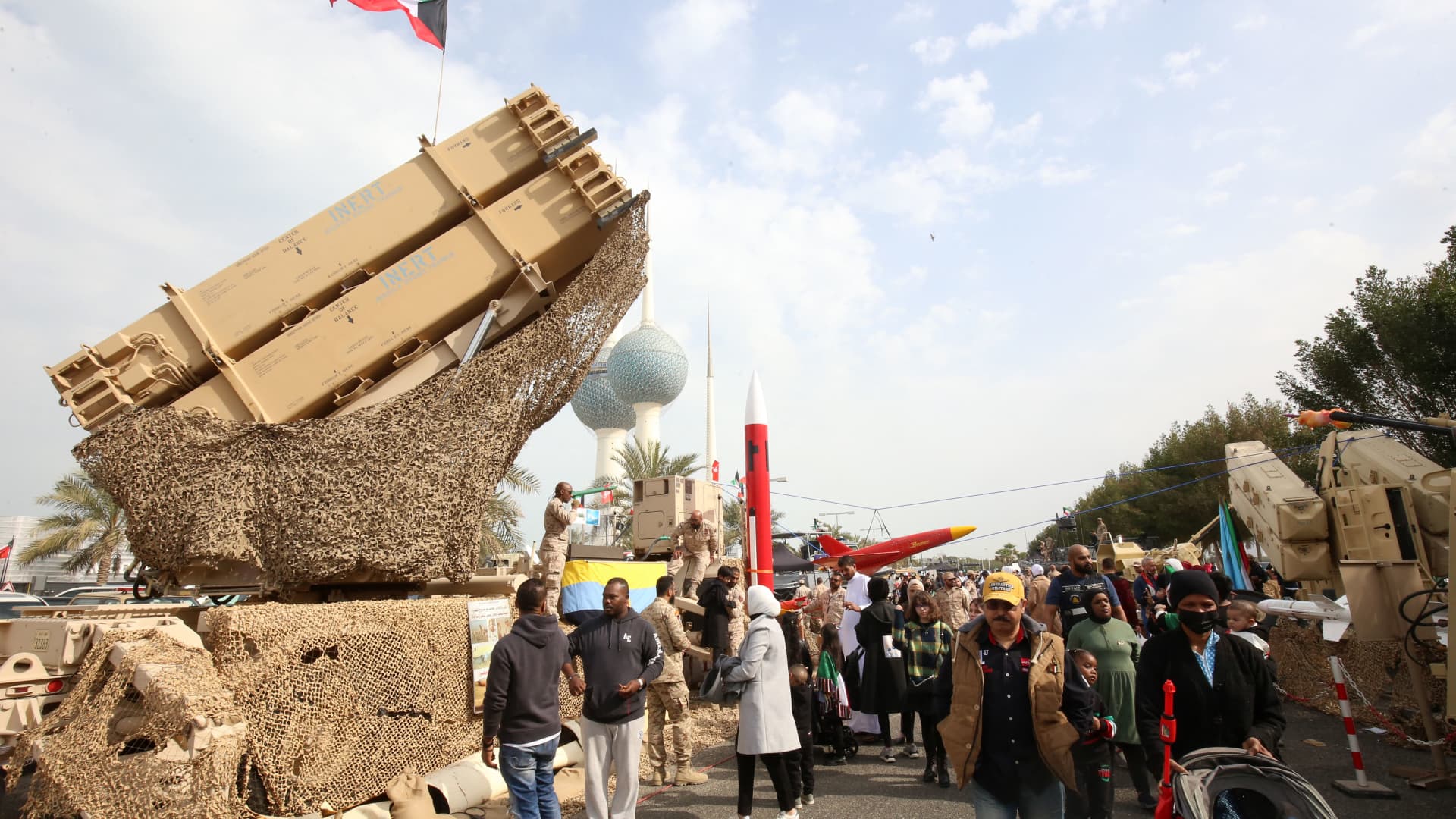
Kuwait activated its air defense systems on Saturday in response to what officials described as missile and drone threats, as the United States carried out a new round of strikes against Iran. The back-to-back developments mark a significant escalation in regional military activity across the Gulf.
Kuwait's air defenses were put into action amid what authorities characterized as incoming aerial threats. The country sits at a strategically sensitive position at the northern tip of the Persian Gulf, bordering Iraq to the north and west, and has long maintained close security ties with the United States. Any activation of its air defense network signals a serious and immediate threat assessment by Kuwaiti military commanders.
Simultaneously, the U.S. carried out fresh strikes on Iran. This represents a continuation of direct American military action against Iranian targets, a major shift in how Washington has chosen to respond to regional tensions that have been building for months. The decision to strike Iran directly, rather than proxy forces, carries a fundamentally different set of risks and consequences for the broader Middle East.
Why It Matters
The combination of Kuwaiti air defense activation and fresh U.S. strikes on Iran in the same window points to a rapidly widening conflict zone. Gulf states have significant exposure here. Kuwait, like its neighbors, hosts U.S. military personnel and infrastructure. An escalating exchange between Washington and Tehran puts every American-aligned Gulf country in a potential crossfire, whether by Iranian ballistic missiles, armed drones, or proxy militia strikes from Iraq or Yemen.
For energy markets, the Gulf is not a passive backdrop. A significant portion of global oil supply transits through this region, and any sustained military exchange near or within it tends to push crude prices higher as traders price in supply disruption risk. Iran has previously threatened to close or disrupt traffic through the Strait of Hormuz, the narrow chokepoint through which roughly 20 percent of the world's oil passes.
For India specifically, the stakes are direct. India imports a substantial share of its crude oil from Gulf producers, and a large Indian diaspora lives and works across Kuwait, the UAE, Saudi Arabia, and other Gulf states. A broadening conflict would affect remittance flows, energy import costs, and the safety of millions of Indian nationals in the region.
What to Watch Next
The immediate questions are how Iran responds to the new U.S. strikes, and whether the missile or drone threats that triggered Kuwait's air defenses were launched by Iranian-aligned forces or by Iran directly. Those two facts would significantly change the trajectory of what follows.
Gulf states will be watching for any signal from Washington on whether these strikes are a limited punitive action or part of a broader campaign. Regional governments have strong incentives to avoid being drawn into direct conflict, but their geography and alliances leave little room for neutrality if the exchange intensifies.
Markets open Monday will be pricing in this weekend's developments. Oil, defense sector equities, and safe-haven assets like gold are the most likely immediate movers. Investors will also be watching for any emergency diplomatic signals from European capitals or from Gulf states themselves seeking de-escalation channels.