The Justice Department has opened an antitrust case targeting leading US egg producers, according to a Wall Street Journal report. The action signals federal prosecutors are scrutinizing whether major players in the egg supply chain coordinated pricing or supply in ways that violate competition law. The egg industry has faced sustained public and political pressure over sharp price increases in recent years, with a dozen eggs reaching record highs that drew congressional attention and consumer backlash. An antitrust case of this nature typically examines whether producers engaged in price-fixing, output restriction, or other collusive conduct, mechanisms that, if proven, would constitute per se violations under the Sherman Act. A successful prosecution or settlement could reshape pricing dynamics across the egg market, expose producers to significant civil and criminal liability, and invite follow-on private litigation from buyers and distributors. Watch for formal charges or grand jury activity as the next signal of how aggressively DOJ intends to pursue the case.
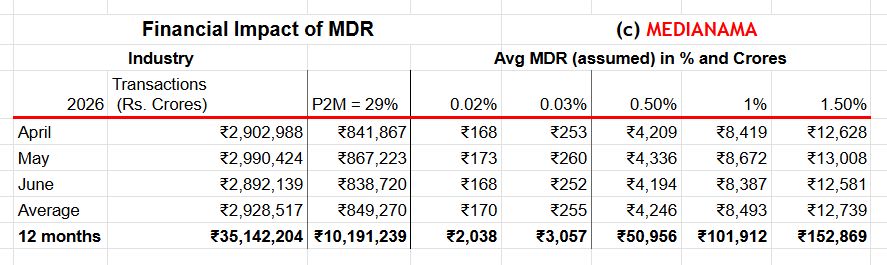
India's government plans to amend the Payment and Settlement Systems Act to restore UPI merchant discount rates, ending the zero-MDR regime in place since January 2020.
India's government has introduced the Taxation and Other Laws (Amendment) Bill, 2026, proposing changes to payments regulation, income tax, and the Finance Act to attract FDI and support Make in India. The Bill's final shape will depend on parliamentary debate and committee review.
The government's Taxation and Other Laws (Amendment) Bill, 2026, proposes to replace the blanket UPI MDR ban with a system allowing the Centre to notify which payment modes stay fee-free.
Prime Minister Narendra Modi inaugurated the Rs 5,000 crore Bhogapuram greenfield airport in Andhra Pradesh, built under a public-private partnership model. He also laid foundation stones for infrastructure projects worth nearly Rs 18,000 crore in the state, signalling a broad investment push for the region.