Jammu & Kashmir's Lieutenant Governor has launched a 100-day anti-drug campaign, Nasha Mukt J&K Abhiyan, formally requesting legislators and political party leaders across the territory to participate directly in the initiative. The L-G's letter framed the campaign as an ambitious, time-bound framework requiring cross-party cooperation rather than administrative action alone. The outreach signals an effort to convert political capital into grassroots anti-narcotics mobilization, enlisting elected representatives as active campaign figures rather than passive endorsers. Regional parties have responded positively to the call, indicating early buy-in from a political class that otherwise operates under a constrained legislative environment in the Union Territory. The practical test is implementation: whether legislator participation translates into measurable reduction in drug availability or treatment uptake across J&K's districts will determine whether the 100-day window produces verifiable outcomes or remains largely symbolic.
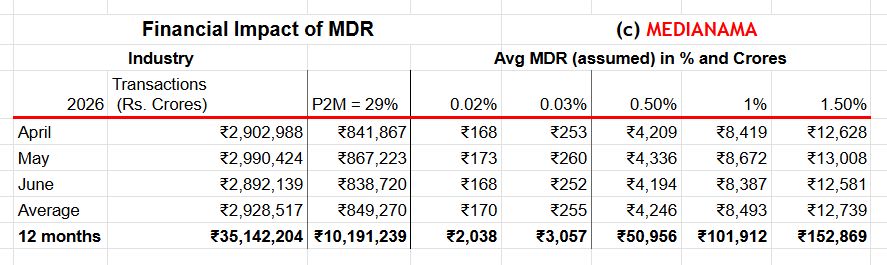
India's government plans to amend the Payment and Settlement Systems Act to restore UPI merchant discount rates, ending the zero-MDR regime in place since January 2020.
India's government has introduced the Taxation and Other Laws (Amendment) Bill, 2026, proposing changes to payments regulation, income tax, and the Finance Act to attract FDI and support Make in India. The Bill's final shape will depend on parliamentary debate and committee review.
The government's Taxation and Other Laws (Amendment) Bill, 2026, proposes to replace the blanket UPI MDR ban with a system allowing the Centre to notify which payment modes stay fee-free.
Prime Minister Narendra Modi inaugurated the Rs 5,000 crore Bhogapuram greenfield airport in Andhra Pradesh, built under a public-private partnership model. He also laid foundation stones for infrastructure projects worth nearly Rs 18,000 crore in the state, signalling a broad investment push for the region.