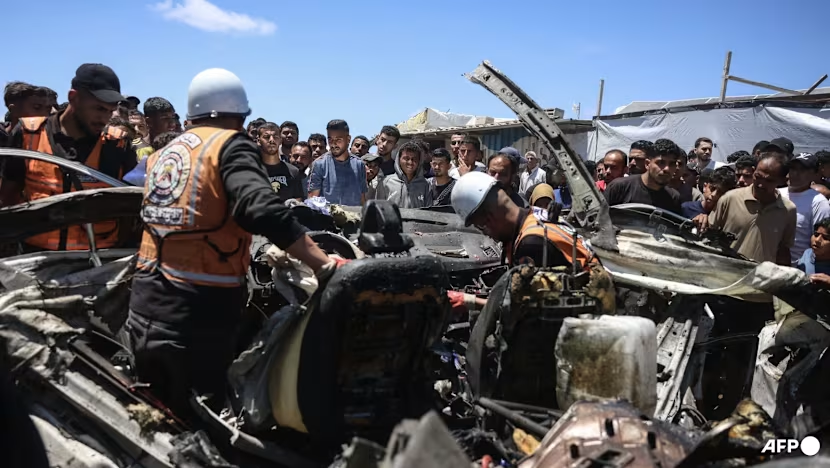
Israel has announced it killed the newly appointed chief of Hamas's armed wing in a strike in Gaza. The target was the latest senior Hamas military figure to be eliminated since Israel's military campaign in the territory intensified.
Hamas's armed wing, known as the Izz ad-Din al-Qassam Brigades, has lost several senior commanders over the course of the conflict. The killing of a newly installed chief signals that Israel's targeting campaign has continued to reach the upper levels of Hamas's military structure even as the group attempts to replace fallen leaders.
The pattern here is significant. Israel has consistently focused its strikes on command-level figures, aiming to disrupt Hamas's ability to plan and direct military operations. When a senior commander is killed, Hamas typically appoints a successor, but those replacements have themselves become targets, creating persistent pressure on the group's leadership pipeline.
Why It Matters
Eliminating the head of Hamas's armed wing is not merely symbolic. The Qassam Brigades are the operational force behind Hamas's attacks, and their chief coordinates military decisions, weapons management, and fighter deployments. Disrupting that role, even temporarily, can degrade the group's ability to execute coordinated operations.
At the same time, decapitation strategies have limits. Armed groups with deep organizational structures and dispersed cells can continue functioning even when top leaders are removed. Whether this strike meaningfully degrades Hamas's military capacity or accelerates a leadership reshuffle that keeps operations running depends on factors not yet publicly known.
For the broader conflict, the strike keeps pressure on ceasefire and hostage negotiations, which have been stop-start throughout the campaign. The killing of senior figures often complicates talks, as it changes the internal balance of authority within Hamas and can harden positions on both sides.
What to Watch Next
The key questions now are whether Hamas publicly names a successor, how quickly the group reconstitutes its command structure, and whether Israel's stated claim is verified by independent sources or acknowledged by Hamas. Any shift in the pace of strikes or a response from Hamas's military wing would signal how much operational disruption this killing actually caused.
Ongoing negotiations over a ceasefire and the release of hostages held in Gaza remain the most consequential near-term variable. A high-profile killing of this kind tends to inject new uncertainty into those talks at a sensitive moment.