
Qatar Signals Progress in US-Iran War Talks
Qatar's foreign ministry said mediators including Qatar, Pakistan, and Oman have reached "very progressive stages" in efforts to end the US-Iran war, pushing Brent crude down more than four percent.
Key Takeaways
June 8, 2026 · 4 min read · By Rishabh Bhardwaj
·
AI-assisted, human-reviewed · Our editorial standards
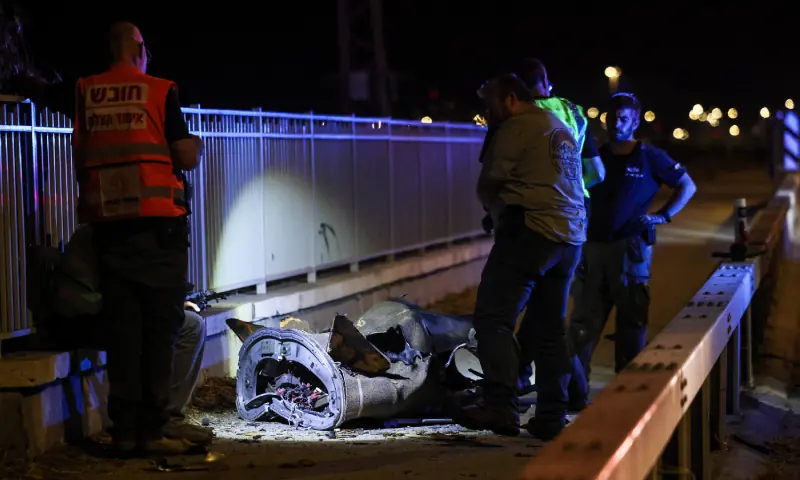
Israel and Iran exchanged fresh strikes on Monday, with Israel hitting an Iranian petrochemical complex in Mahshahr in southwestern Iran, just hours after US President Donald Trump personally asked Israeli Prime Minister Benjamin Netanyahu to hold back. The escalation puts a fragile wider ceasefire under severe strain and complicates ongoing US-Iran peace talks.
The sequence unfolded quickly. Iran fired 11 ballistic missiles at Israeli targets on Sunday, all of which were intercepted with no casualties reported. Israel responded by striking western and central Iran, including the petrochemical facility in Mahshahr, confirmed by both the Israeli military and Iranian local media. Iran's Revolutionary Guards said Israel used air-launched ballistic missiles and that their own strikes targeted the Ramat David air base near Nazareth. In Jerusalem, AFP journalists heard explosions as they took shelter. Air raid sirens sounded in Tel Aviv, and the Israeli military said its defence systems were working to intercept a new wave of incoming missiles. A separate missile launched from Yemen toward Israeli territory was also identified, the first such attack since an April 8 truce with Yemen.
Trump tried to keep a lid on the fighting. He spoke with Netanyahu by phone for just under half an hour from his golf club in Bedminster, New Jersey, telling him to hold off on further strikes because, in the words of a US official quoted by Axios, "we are close to doing something good in terms of a deal." In a Fox News interview, Trump told Iran directly: "You've shot your missiles, that's enough, get back to the table and make a deal." When asked whether Israel's actions would derail negotiations, Trump told the Financial Times: "It's not going to have any impact on the deal. I call the shots. I call all the shots. He doesn't call the shots."
That assertion matters because the two countries are not moving in the same direction. Israel launched strikes in the Beirut area on Sunday, the first since the US announced a truce plan for Lebanon last week, targeting the Dahiyeh district, a Hezbollah stronghold in southern Beirut. Netanyahu said those strikes were a response to Hezbollah firing toward Israel. Israel has never paused its Lebanon campaign, which has killed thousands and displaced hundreds of thousands more. Hezbollah has also continued attacking and says it will not disarm unless Israel halts operations and withdraws from Lebanon entirely.
Iran has consistently tied any peace agreement with Washington to a ceasefire also holding in Lebanon. Iran's chief negotiator, Parliamentary Speaker Mohammed Baqer Qalibaf, said US bases and Israeli assets were legitimate targets because of what he called violations of agreements over Lebanon. That linkage means every Israeli strike in Beirut directly complicates the wider negotiating track, regardless of Trump's confidence that a deal remains reachable.
The wider war has been technically paused since the US and Israel halted attacks on Iran in early April. Since then, Tehran has blocked most shipping through the Strait of Hormuz, the passage through which roughly a fifth of the world's crude oil and liquefied natural gas moves. Washington has imposed its own blockade of Iranian ports. Both sides have said they were close to a preliminary deal to reopen the strait, but escalating strikes have repeatedly interrupted progress.
Energy markets reacted immediately. Brent crude futures rose more than three percent in early Monday trading, pushing the benchmark back above $96 a barrel. The Strait of Hormuz remains the single biggest physical chokepoint in global oil supply, and any sustained disruption there would tighten supply far beyond the Middle East. The fact that markets moved sharply on a single day of strikes suggests traders are pricing in a meaningful probability that the ceasefire collapses entirely.
Trump's broader diplomatic position is also under pressure. He has said any final agreement must prevent Iran from developing a nuclear weapon, and he faces expectations of terms tougher than the 2015 deal he repudiated when he was last in office. Iran, for its part, is demanding the lifting of US and international sanctions, formal recognition of its influence over the Strait of Hormuz, and the release of billions of dollars in frozen assets. Those positions leave a wide gap to close.
Israel's ambassador to the United States, Yechiel Leiter, framed Monday's strikes as a matter of national self-respect, saying on X that Iran had fired 11 ballistic missiles and that "no self-respecting country in the world would tolerate such an attack." He added that Israel was targeting Iran's missile launch sites and infrastructure unrelated to the energy sector. Whether that distinction holds in practice, and whether Trump's pressure is enough to stop further rounds of retaliation, are the two questions that will shape the next 48 to 72 hours.
Qatar's foreign ministry said mediators including Qatar, Pakistan, and Oman have reached "very progressive stages" in efforts to end the US-Iran war, pushing Brent crude down more than four percent.
Qatar confirmed it is mediating between the US and Iran but said no direct talks are currently planned. The clarification follows conflicting statements from President Trump, who claimed talks are under way, and Tehran, which denied any dialogue is happening.
Saudi Aramco reported sharply higher second-quarter 2026 profits as the Iran war restricts global oil supply and pushes crude prices up. Other oil supermajors also posted outsized earnings, raising concerns about sustained fuel cost pressure for importing economies.
President Trump called current Iran negotiations the "last chance" to end five months of conflict, pushing oil prices higher. Tehran denied formal talks are taking place, raising the risk of a diplomatic breakdown with direct consequences for global energy markets.