
Qatar Signals Progress in US-Iran War Talks
Qatar's foreign ministry said mediators including Qatar, Pakistan, and Oman have reached "very progressive stages" in efforts to end the US-Iran war, pushing Brent crude down more than four percent.
Key Takeaways
May 31, 2026 · 4 min read · By Rishabh Bhardwaj
·
AI-assisted, human-reviewed · Our editorial standards
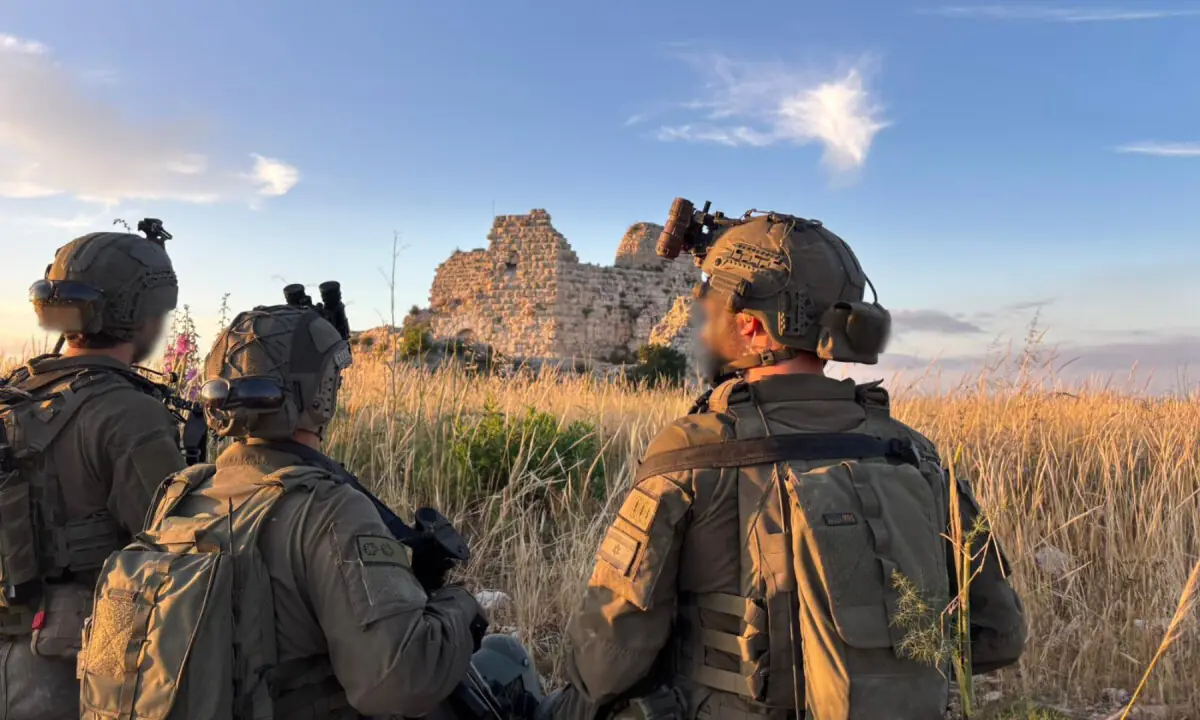
Israeli forces raised their flag over Beaufort Castle in southern Lebanon on Sunday, capturing the 900-year-old medieval fortress and the strategic ridge it sits on. The Israeli military called it the deepest ground incursion into Lebanon in 26 years, crossing north of the Litani River and seizing what Defence Minister Israel Katz described as one of the most important strategic points for defending northern Israel.
Beaufort Castle commands wide views across south Lebanon, making it a prized military position for centuries. Israel first captured it from the Palestine Liberation Organisation in 1982, under then-defence minister Ariel Sharon, during an offensive that pushed as far north as Beirut. Israeli forces held the castle and the surrounding territory for nearly two decades before withdrawing from Lebanon in 2000. Sunday's seizure is the first time Israeli forces have held the position since that withdrawal.
Katz framed the operation in explicitly historical terms, noting it fell on a day commemorating soldiers killed in the First Lebanon War. He said the army had expanded operations under Prime Minister Benjamin Netanyahu's direction, crossed the Litani River, and captured Beaufort Ridge. The Litani crossing is significant: earlier phases of the current campaign had been concentrated closer to the border, and moving north of the river marks a substantial escalation in the ground operation's reach.
Alongside the Beaufort advance, the Israeli military issued a broad displacement order covering areas south of the Zahrani River, which sits roughly 40 kilometres from the Israeli border. Military spokesman Avichay Adraee warned that any building used by Hezbollah for military purposes could be targeted, and that anyone near Hezbollah positions was at personal risk. Lebanese Prime Minister Nawaf Salam condemned the campaign as a "scorched-earth policy and collective punishment," saying it was destroying towns, forcing residents from their homes, and pushing people into exile.
Hezbollah said it was actively fighting Israeli forces on the outskirts of three towns, Zawtar al-Sharqiyah, Yohmor al-Shaqif, and Dibbine, and said Israeli troops had not yet taken control of those locations. The armed group also said it launched multiple attacks into northern Israel on Saturday. The Israeli military reported more than 25 projectiles fired from Lebanon that day, with air alert sirens sounding in the northern cities of Karmiel and Safed for the first time since a ceasefire formally took effect.
That ceasefire, which officially began on April 17, has not held in practice. Both Israel and Hezbollah accuse each other of daily violations and use the other's alleged breaches to justify continued strikes. The breakdown is visible in the casualty figures: one Israeli soldier was killed by a Hezbollah explosive drone on Saturday, bringing Israeli military deaths in Lebanon to 25 since early March. Lebanon's health ministry says Israeli attacks have killed more than 3,371 people since March 2.
Military delegations from Israel and Lebanon met in Washington on Friday for security talks brokered by the United States. More negotiations are planned for next week, with a political-level meeting expected to follow. A US statement after Friday's session described the discussions as productive but made no reference to the ceasefire, suggesting the truce framework is not the central focus of the current diplomatic track.
Salam said the outcome of next week's talks was not guaranteed but called negotiations the least costly path forward. Hezbollah, which is not part of the direct talks, has strongly opposed them. The group's opposition matters because it controls significant military capacity on the ground and has continued fighting throughout the ceasefire period.
The Beaufort seizure and the displacement orders together signal that Israel is expanding its operational footprint in Lebanon rather than consolidating existing positions. Whether the Washington talks can slow or redirect the military escalation is the central question heading into next week, and the answer is not yet clear from either side.
Qatar's foreign ministry said mediators including Qatar, Pakistan, and Oman have reached "very progressive stages" in efforts to end the US-Iran war, pushing Brent crude down more than four percent.
Qatar confirmed it is mediating between the US and Iran but said no direct talks are currently planned. The clarification follows conflicting statements from President Trump, who claimed talks are under way, and Tehran, which denied any dialogue is happening.
Saudi Aramco reported sharply higher second-quarter 2026 profits as the Iran war restricts global oil supply and pushes crude prices up. Other oil supermajors also posted outsized earnings, raising concerns about sustained fuel cost pressure for importing economies.
President Trump called current Iran negotiations the "last chance" to end five months of conflict, pushing oil prices higher. Tehran denied formal talks are taking place, raising the risk of a diplomatic breakdown with direct consequences for global energy markets.