The Federal Reserve's Beige Book shows overall US economic activity and employment holding steady, but the Iran conflict is injecting meaningful uncertainty into business planning. Rising energy prices tied to the conflict are pushing up fuel and input costs, sustaining inflation pressure even as the broader economy remains functional. Businesses across the survey are responding by deferring investment and hiring decisions, a classic wait-and-see posture that can slow momentum without triggering outright contraction. Wage growth remains muted despite the cost-side pressure, suggesting firms are absorbing margin strain rather than passing it fully into labor compensation. The key variable to track is how long the Iran-related energy disruption persists: a prolonged spike would convert deferred decisions into cancelled ones, while a quick resolution could release pent-up investment. Fed policymakers will be watching whether input-cost inflation feeds into broader price indices, complicating any rate path recalibration.
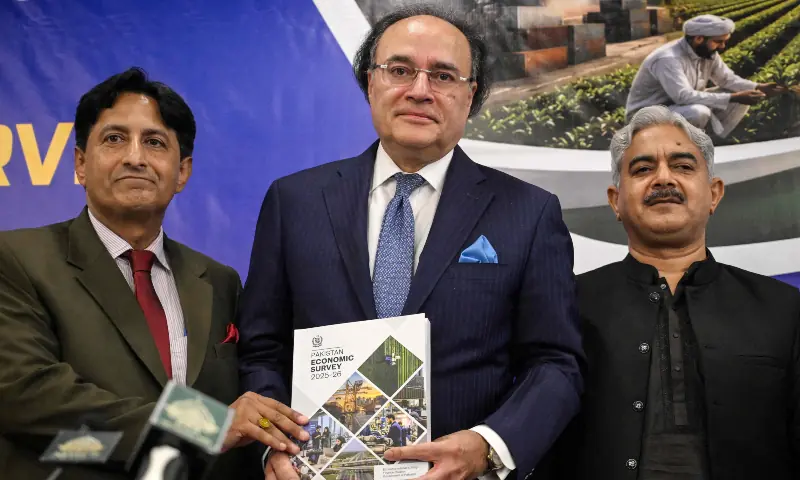
Pakistan's economy grew 3.7 percent in FY2026, its fastest rate in four years, according to the Pakistan Economic Survey presented by Finance Minister Muhammad Aurangzeb. Growth beat last year's 3.18 percent but missed the 4.2 percent target, with floods, regional conflict, and weaker food exports cited as key drags.
The Union government released an additional Rs 1,09,019 crore in tax devolution to states on August 1, 2026, separate from the regular monthly transfer. The lump-sum release aims to accelerate state capital spending in the July-September quarter, with Uttar Pradesh, Bihar, and Madhya Pradesh among the top recipients.
US mortgage rates have risen to a one-year high as markets weigh Federal Reserve rate uncertainty and Middle East conflict-driven inflation fears. Higher rates increase monthly payments for new buyers and are likely to further suppress housing market activity and refinancing.
Pakistan's Sensitive Price Index rose 13.52 percent year on year for the week ending July 2, 2026, marking 45 consecutive weeks of annual gains. Electricity up 49 percent, wheat flour up 68 percent, and LPG up 44 percent year on year are the main drivers.