
Qatar Signals Progress in US-Iran War Talks
Qatar's foreign ministry said mediators including Qatar, Pakistan, and Oman have reached "very progressive stages" in efforts to end the US-Iran war, pushing Brent crude down more than four percent.
Key Takeaways
May 3, 2026 · 2 min read · By Rishabh Bhardwaj
·
AI-assisted, human-reviewed · Our editorial standards
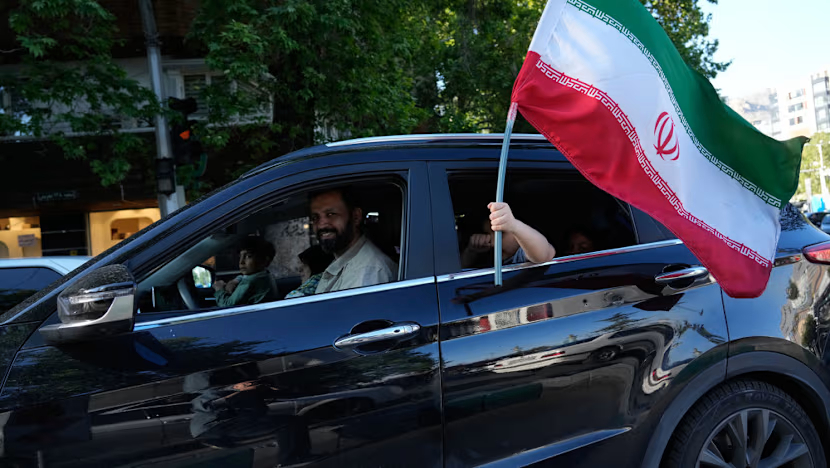
Iran says it has received a US response to its latest proposal for diplomatic talks, keeping open a channel that has repeatedly stalled over the past several months.
The announcement is thin on specifics. Iranian officials confirmed receipt of the American reply but did not disclose its content, tone, or whether it moves the two sides closer to a formal negotiating session. The backdrop is a fragile ceasefire that has repeatedly come under strain, with peace talks failing to gain traction each time they appeared to be moving forward.
Even an exchange of written responses carries weight here. Direct or back-channel communication between Washington and Tehran has been irregular and politically sensitive on both sides. The fact that the US chose to reply signals that the diplomatic door has not been shut, though what lies behind that door remains unclear.
Iran's nuclear program remains the central issue in any potential deal. Western governments and Israel have long pressured Washington to use diplomacy, and the threat of military action, to prevent Tehran from advancing toward weapons-grade uranium enrichment. Iran insists its program is civilian. That gap has blocked every previous round of talks from producing a durable agreement.
The next signal will be whether either side publicly characterizes the US response as constructive or dismissive. A positive framing from Tehran would suggest talks could advance; silence or hostile language would indicate another stall. Regional actors, particularly Gulf states and Israel, will be watching closely, since any deal or breakdown directly affects security calculations across the Middle East.
For markets, sustained uncertainty around Iran talks keeps a risk premium embedded in oil prices, given Iran's position as a significant crude producer. Progress toward a deal could eventually add Iranian supply back to global markets; a collapse raises the odds of renewed sanctions pressure or military escalation.
Qatar's foreign ministry said mediators including Qatar, Pakistan, and Oman have reached "very progressive stages" in efforts to end the US-Iran war, pushing Brent crude down more than four percent.
Qatar confirmed it is mediating between the US and Iran but said no direct talks are currently planned. The clarification follows conflicting statements from President Trump, who claimed talks are under way, and Tehran, which denied any dialogue is happening.
Saudi Aramco reported sharply higher second-quarter 2026 profits as the Iran war restricts global oil supply and pushes crude prices up. Other oil supermajors also posted outsized earnings, raising concerns about sustained fuel cost pressure for importing economies.
President Trump called current Iran negotiations the "last chance" to end five months of conflict, pushing oil prices higher. Tehran denied formal talks are taking place, raising the risk of a diplomatic breakdown with direct consequences for global energy markets.