
Qatar Signals Progress in US-Iran War Talks
Qatar's foreign ministry said mediators including Qatar, Pakistan, and Oman have reached "very progressive stages" in efforts to end the US-Iran war, pushing Brent crude down more than four percent.
Key Takeaways
May 10, 2026 · 2 min read · By Rishabh Bhardwaj
·
AI-assisted, human-reviewed · Our editorial standards
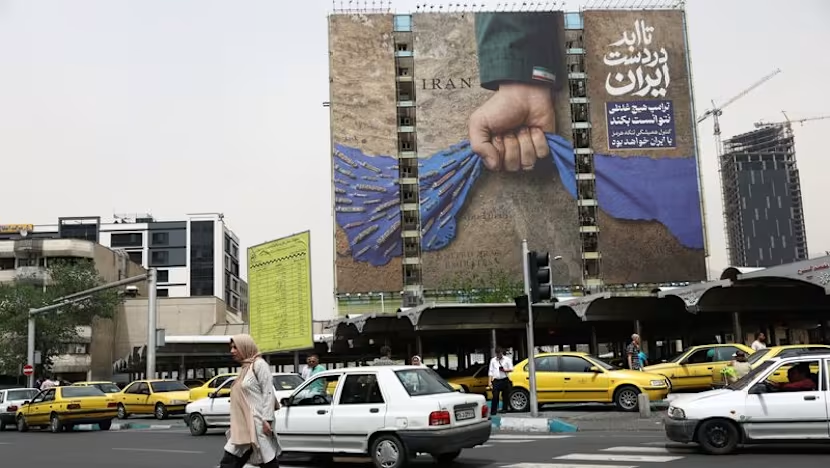
Iran has formally responded to a US peace proposal, according to reports, while warning that any new attacks against it would draw a strong reaction. The timing is notable: the response arrived just ahead of a US-China summit scheduled in South Korea.
Tehran's message carried a dual track. It engaged with the American proposal while simultaneously signaling that Iran's deterrence posture remains intact. The warning against new attacks suggests Iran wants any diplomatic process to begin from a position of security, not vulnerability.
The US-China meeting in South Korea adds a layer of geopolitical weight to this moment. Both Washington and Beijing have interests in Middle East stability, and Iran's response lands on the table just as the two powers sit down together. Whether Iran's move was timed deliberately to influence that conversation or coincided with it is not clear from available information.
For markets and policymakers, the key question is whether this exchange marks the start of a credible negotiating track or remains an early, fragile signal. Iran's public warning against attacks while simultaneously responding to a peace proposal is a classic dual-signal approach: show willingness to talk, but do not appear weak domestically or regionally.
The situation bears watching closely. If the US and China align on a shared position toward Iran during the South Korea summit, that could accelerate diplomatic momentum. If their approaches diverge, Iran may have room to play one side against the other, a dynamic it has used before.
What to watch: the US response to Tehran's reply, any joint statement from the South Korea summit touching on Iran, and whether other regional actors, particularly Gulf states and Israel, react publicly to the exchange.
Qatar's foreign ministry said mediators including Qatar, Pakistan, and Oman have reached "very progressive stages" in efforts to end the US-Iran war, pushing Brent crude down more than four percent.
Qatar confirmed it is mediating between the US and Iran but said no direct talks are currently planned. The clarification follows conflicting statements from President Trump, who claimed talks are under way, and Tehran, which denied any dialogue is happening.
Saudi Aramco reported sharply higher second-quarter 2026 profits as the Iran war restricts global oil supply and pushes crude prices up. Other oil supermajors also posted outsized earnings, raising concerns about sustained fuel cost pressure for importing economies.
President Trump called current Iran negotiations the "last chance" to end five months of conflict, pushing oil prices higher. Tehran denied formal talks are taking place, raising the risk of a diplomatic breakdown with direct consequences for global energy markets.