
Qatar Signals Progress in US-Iran War Talks
Qatar's foreign ministry said mediators including Qatar, Pakistan, and Oman have reached "very progressive stages" in efforts to end the US-Iran war, pushing Brent crude down more than four percent.
Key Takeaways
May 2, 2026 · 2 min read · By Rishabh Bhardwaj
·
AI-assisted, human-reviewed · Our editorial standards
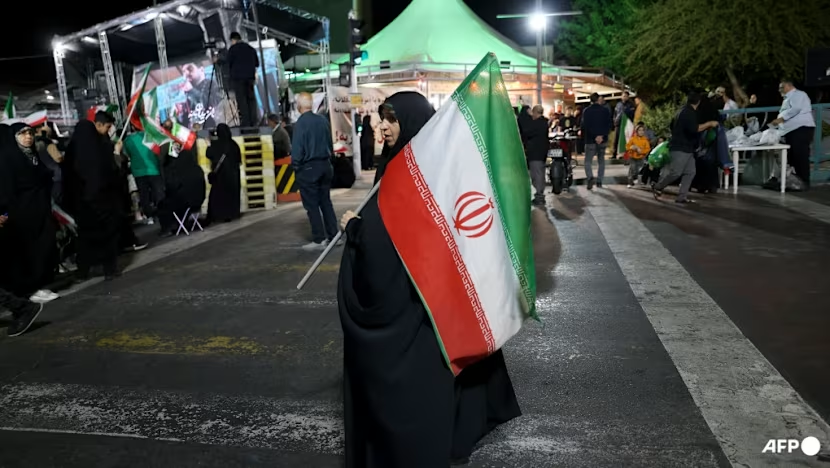
A senior Iranian military official has said a renewed war with the United States is likely, in one of the most direct public warnings from Tehran's defence establishment in recent memory.
The statement is notable for its bluntness. Iranian officials have long used combative rhetoric, but framing armed conflict with the US as a probable outcome rather than a conditional threat marks a shift in tone from military leadership.
The warning comes against a backdrop of sustained pressure between Washington and Tehran. The US has maintained and periodically tightened sanctions on Iran's oil exports, while negotiations over Iran's nuclear programme have stalled at various points. Any signal from Iran's military that conflict is expected rather than merely possible raises the risk premium on regional stability.
The Gulf region sits at the centre of global oil supply chains. Roughly 20% of the world's traded oil passes through the Strait of Hormuz, which Iran has the capacity to disrupt. Even a rhetorical escalation from a senior military figure can move energy markets and defence positioning among Gulf states.
The official's rank and specific role have not been confirmed in available reporting, which limits how precisely to read the statement, a comment from a commander in the Islamic Revolutionary Guard Corps carries different weight than one from a conventional military spokesperson.
The immediate question is whether this reflects a shift in Iranian strategic thinking or is designed for domestic and regional audiences ahead of diplomatic activity. US forces maintain a significant presence in the Gulf, and American carrier groups have been repositioned in the region during past periods of tension.
Markets and policymakers will be watching for any follow-up from Tehran's political leadership or from Washington, which could either escalate or contain the signal sent by this statement.
Qatar's foreign ministry said mediators including Qatar, Pakistan, and Oman have reached "very progressive stages" in efforts to end the US-Iran war, pushing Brent crude down more than four percent.
Qatar confirmed it is mediating between the US and Iran but said no direct talks are currently planned. The clarification follows conflicting statements from President Trump, who claimed talks are under way, and Tehran, which denied any dialogue is happening.
Saudi Aramco reported sharply higher second-quarter 2026 profits as the Iran war restricts global oil supply and pushes crude prices up. Other oil supermajors also posted outsized earnings, raising concerns about sustained fuel cost pressure for importing economies.
President Trump called current Iran negotiations the "last chance" to end five months of conflict, pushing oil prices higher. Tehran denied formal talks are taking place, raising the risk of a diplomatic breakdown with direct consequences for global energy markets.