
Qatar Signals Progress in US-Iran War Talks
Qatar's foreign ministry said mediators including Qatar, Pakistan, and Oman have reached "very progressive stages" in efforts to end the US-Iran war, pushing Brent crude down more than four percent.
Key Takeaways
May 9, 2026 · 2 min read · By Rishabh Bhardwaj
·
AI-assisted, human-reviewed · Our editorial standards
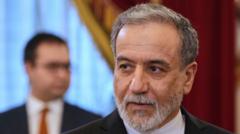
Iran's Foreign Minister Abbas Araghchi accused the United States of choosing military action over diplomacy, saying Washington pursues a "reckless military adventure" whenever a negotiated solution is within reach.
The statement from Araghchi is pointed and deliberate. It frames American decision-making as a pattern rather than a one-off choice, suggesting Tehran believes the US systematically undermines talks by escalating militarily at critical moments. The timing of the comment matters: Iran does not make ministerial-level accusations in a vacuum, and such language typically signals either a breakdown in backchannel contacts or a pre-emptive move to shape public perception ahead of a diplomatic flashpoint.
Araghchi's phrasing, "every time a diplomatic solution is on the table", is a deliberate rhetorical structure. It positions Iran as the willing negotiator and the US as the spoiler. This kind of framing is often used to build international sympathy and apply pressure on American allies who prefer de-escalation. It also serves a domestic audience inside Iran, reinforcing the narrative that engagement with Washington carries inherent risk.
The statement gives no specific trigger, no named talks, and no referenced military action. That absence is notable. Either Araghchi is speaking in broad historical terms, or the specifics are being deliberately withheld, possibly to avoid confirming whether active negotiations exist.
Iran-US tensions run through oil markets, regional security, and global shipping lanes. Any credible escalation in this relationship tends to push crude prices higher and raises insurance costs for vessels moving through the Strait of Hormuz, through which roughly 20 percent of global oil trade passes. Araghchi's comments alone are unlikely to move markets, but they add to a body of rhetoric that traders and policymakers monitor for directional shifts.
For US allies in Europe and the Gulf, the statement is a signal to watch closely. If Iran is signaling that diplomacy is stalling, European intermediaries who have worked to keep nuclear or security talks alive will face renewed pressure to re-engage or clarify their own position.
What to watch: whether the US responds formally, whether any specific diplomatic track is named in follow-up statements, and whether the rhetoric escalates into concrete policy moves such as sanctions activity, military positioning, or UN engagement.
Qatar's foreign ministry said mediators including Qatar, Pakistan, and Oman have reached "very progressive stages" in efforts to end the US-Iran war, pushing Brent crude down more than four percent.
Qatar confirmed it is mediating between the US and Iran but said no direct talks are currently planned. The clarification follows conflicting statements from President Trump, who claimed talks are under way, and Tehran, which denied any dialogue is happening.
Saudi Aramco reported sharply higher second-quarter 2026 profits as the Iran war restricts global oil supply and pushes crude prices up. Other oil supermajors also posted outsized earnings, raising concerns about sustained fuel cost pressure for importing economies.
President Trump called current Iran negotiations the "last chance" to end five months of conflict, pushing oil prices higher. Tehran denied formal talks are taking place, raising the risk of a diplomatic breakdown with direct consequences for global energy markets.