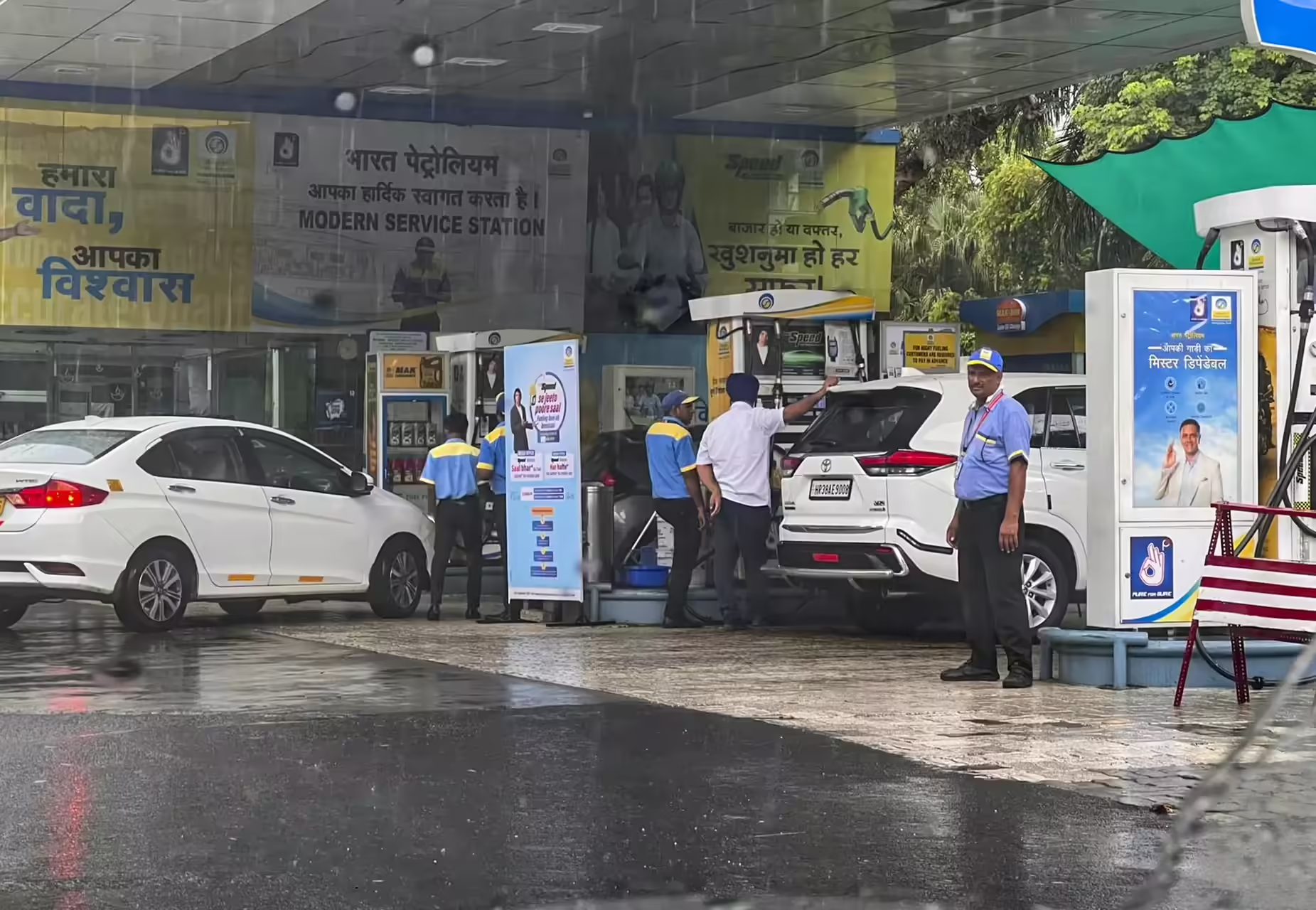
India's three state-owned oil marketing companies, Indian Oil, Bharat Petroleum, and Hindustan Petroleum, absorbed an estimated Rs 30,000 crore in combined losses by holding retail fuel and LPG prices steady even as global energy markets went into shock. The decision was a deliberate policy call, not a market outcome.
How the Losses Built Up
When global crude and energy prices surged, the cost of procuring oil rose sharply for Indian refiners. But retail prices at the pump and for cooking gas cylinders were not raised to match. The gap between what these companies paid to source fuel and what they recovered from consumers widened into a large, sustained under-recovery. Across the three firms, that shortfall added up to roughly Rs 30,000 crore.
The government stepped in with excise duty cuts on petrol and diesel, which reduced the tax component built into pump prices. This gave oil companies some relief by lowering the effective price floor, but it did not fully close the gap. The cuts also meant lower tax revenue for the central government, spreading part of the cost burden across the fiscal budget rather than concentrating it entirely on the oil firms.
What India Chose, and What It Cost
The contrast with other countries was stark. Many nations passed rising global energy costs directly to consumers, leading to sharp fuel price increases and, in some cases, political unrest. India chose the opposite path: absorb the cost within state-owned enterprises and use fiscal tools to soften the blow. The direct benefit to consumers was price stability, no sudden spike in petrol, diesel, or LPG costs during a period of global disruption.
The trade-off is financial stress on companies that are ultimately government-owned. Losses of this scale reduce the cash available for capital investment, dividend payouts, and debt servicing. If global energy prices stay elevated or rise further, the question of whether to finally pass costs on to consumers, or keep absorbing them, becomes harder to avoid.
Watch for any revision in retail fuel or LPG prices, changes in excise duty structure, or government compensation packages for the oil marketing companies as signals of how long this policy stance can hold.