India's government introduced legislation Thursday to expand the size of parliament and accelerate a mandated one-third reservation of seats for women, framing the moves as a democratic overhaul. Prime Minister Narendra Modi's administration brought forward both bills simultaneously, linking parliamentary expansion with the women's quota, a reservation law that had already been passed but whose implementation was tied to a future delimitation exercise. The opposition rejected both measures as electoral manipulation, arguing the restructuring of constituencies and seat counts could be engineered to favor the ruling Bharatiya Janata Party. The delimitation process, redrawing parliamentary boundaries based on census data, sits at the center of the dispute, since seat allocation under any expanded parliament would depend on which populations are counted and how districts are drawn. The outcome will shape the composition of India's lower house for decades. Observers should watch whether the bills advance through both chambers, how the delimitation timeline is set, and whether coalition partners outside the BJP align with or resist the package.
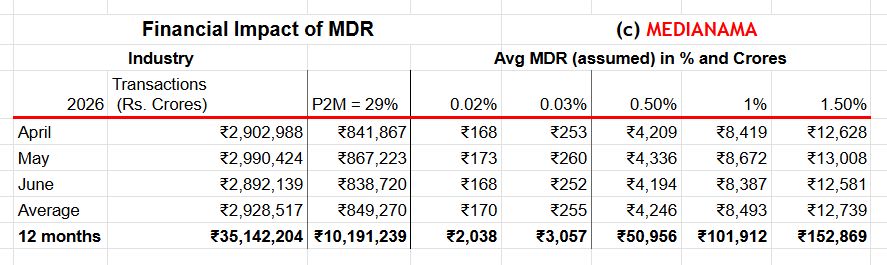
India's government plans to amend the Payment and Settlement Systems Act to restore UPI merchant discount rates, ending the zero-MDR regime in place since January 2020.
India's government has introduced the Taxation and Other Laws (Amendment) Bill, 2026, proposing changes to payments regulation, income tax, and the Finance Act to attract FDI and support Make in India. The Bill's final shape will depend on parliamentary debate and committee review.
The government's Taxation and Other Laws (Amendment) Bill, 2026, proposes to replace the blanket UPI MDR ban with a system allowing the Centre to notify which payment modes stay fee-free.
Prime Minister Narendra Modi inaugurated the Rs 5,000 crore Bhogapuram greenfield airport in Andhra Pradesh, built under a public-private partnership model. He also laid foundation stones for infrastructure projects worth nearly Rs 18,000 crore in the state, signalling a broad investment push for the region.