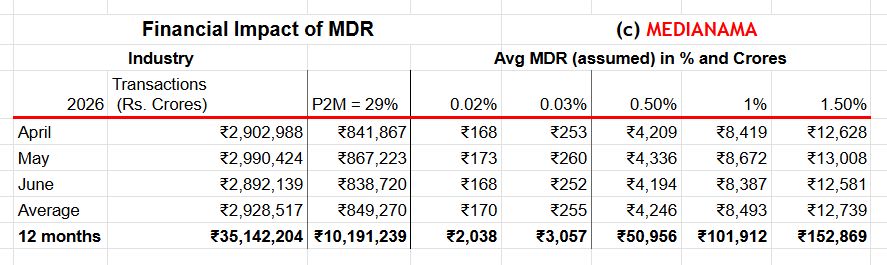
India to Restore UPI Merchant Fees, PhonePe Gains Most
India's government plans to amend the Payment and Settlement Systems Act to restore UPI merchant discount rates, ending the zero-MDR regime in place since January 2020.
Key Takeaways
May 11, 2026 · 2 min read · By Rishabh Bhardwaj
·
AI-assisted, human-reviewed · Our editorial standards
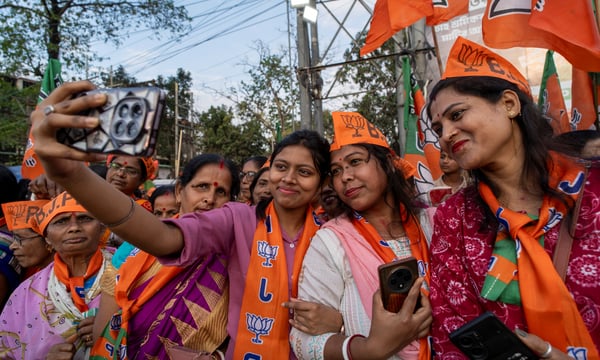
A clutch of state assembly elections due in 2026 is shaping up as the next major test for Prime Minister Narendra Modi's Bharatiya Janata Party, with results likely to influence both the party's national momentum and the opposition's ability to mount a credible challenge before the next general election cycle.
State elections in India function as rolling referendums on the ruling party at the centre. A strong BJP showing in 2026 would deepen the party's control over state governments, expand its footprint in the Rajya Sabha over time, and reinforce Modi's political standing within the party and with coalition partners. Losses, by contrast, tend to energise opposition coalitions and complicate the Centre's legislative agenda.
The BJP's dominance across multiple states already gives it significant structural advantages: control over administrative machinery, access to incumbency-based welfare delivery, and the ability to frame local contests around national leadership. These factors have historically translated into vote share even when local anti-incumbency runs against the party.
Opposition parties have raised concerns about what they describe as electoral manipulations, threats to India's federal structure, and an erosion of democratic balance. The federal concern centres on the relationship between centrally governed schemes and state-level governance, a recurring tension in Indian politics where states ruled by opposition parties argue they receive unequal treatment in fund flows and administrative cooperation.
The electoral manipulation concern, raised by opposition voices, points to questions about the fairness of processes surrounding voter rolls, campaign resource asymmetry, and the use of state machinery. These are long-standing allegations in Indian electoral politics, though the specifics tied to the 2026 cycle are not yet fully detailed in public discourse.
For the opposition, particularly the INDIA bloc, 2026 offers an opportunity to prove it can win states and build a platform heading into future national contests. But the alliance has struggled with coordination, with constituent parties often prioritising their own state-level interests over bloc-wide strategy. Whether that tension eases or widens ahead of 2026 is one of the more consequential political questions in play.
What to watch: which states hold elections and their regional significance, whether the INDIA bloc fields joint candidates or fragments, any formal Election Commission rulings on conduct complaints, and how welfare delivery and economic conditions in key states shape voter sentiment closer to polling dates.
India's government plans to amend the Payment and Settlement Systems Act to restore UPI merchant discount rates, ending the zero-MDR regime in place since January 2020.
India's government has introduced the Taxation and Other Laws (Amendment) Bill, 2026, proposing changes to payments regulation, income tax, and the Finance Act to attract FDI and support Make in India. The Bill's final shape will depend on parliamentary debate and committee review.
The government's Taxation and Other Laws (Amendment) Bill, 2026, proposes to replace the blanket UPI MDR ban with a system allowing the Centre to notify which payment modes stay fee-free.
Prime Minister Narendra Modi inaugurated the Rs 5,000 crore Bhogapuram greenfield airport in Andhra Pradesh, built under a public-private partnership model. He also laid foundation stones for infrastructure projects worth nearly Rs 18,000 crore in the state, signalling a broad investment push for the region.