India to Restore UPI Merchant Fees, PhonePe Gains Most
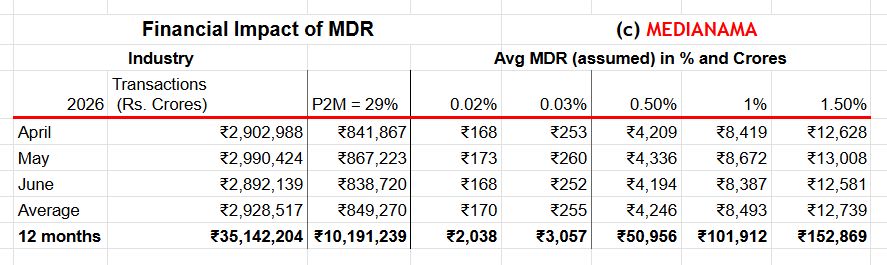
India's government plans to amend the Payment and Settlement Systems Act to restore UPI merchant discount rates, ending the zero-MDR regime in place since January 2020.
Key Takeaways
May 4, 2026 · 2 min read · By Rishabh Bhardwaj
·
AI-assisted, human-reviewed · Our editorial standards
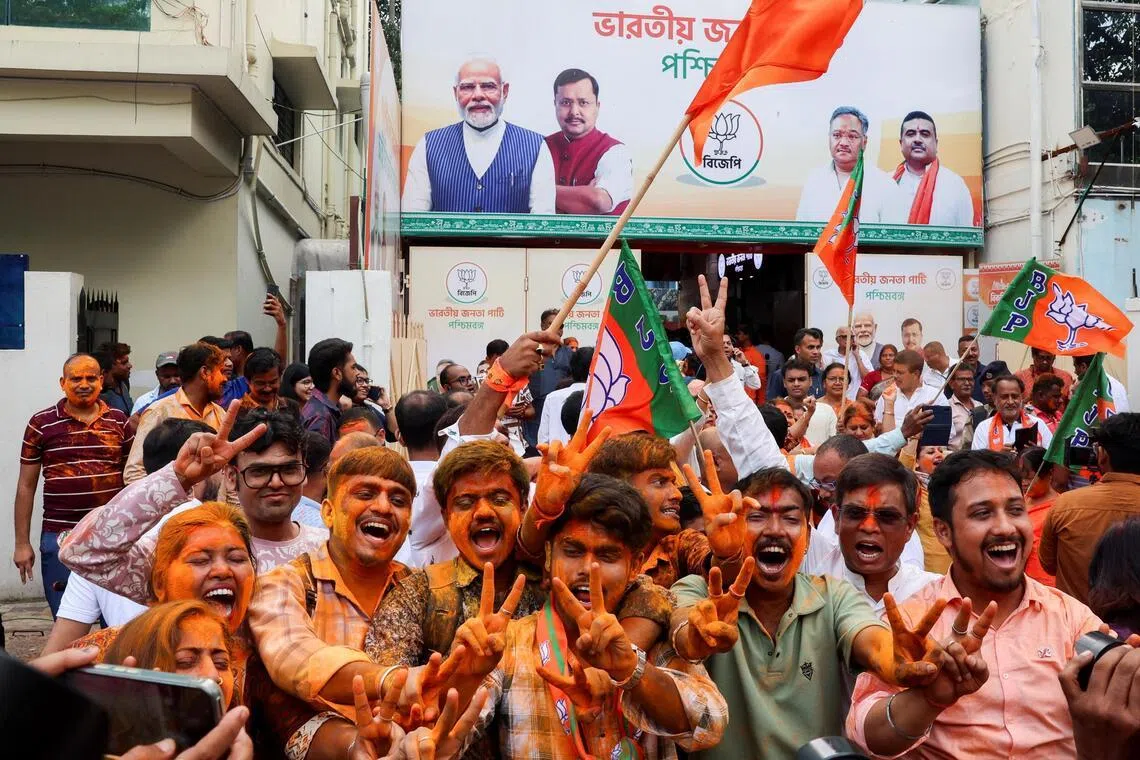
Assembly elections in three of India's most politically significant states, West Bengal, Tamil Nadu, and Kerala, have delivered results that will reshape the regional balance of power and test the BJP's national ambitions.
The Bharatiya Janata Party appears set to take control of West Bengal, a state that has been a stronghold of the Trinamool Congress under Mamata Banerjee. A BJP win here would be a major political milestone, the party has long targeted Bengal as a key expansion market in eastern India. Control of the state government would give the BJP a significant administrative and organisational foothold in a region it has historically struggled to dominate.
In Tamil Nadu, a political party backed by a movie star has won decisively. Tamil Nadu has a strong tradition of film personalities crossing into politics, most famously M.G. Ramachandran and J. Jayalalithaa, both of whom went on to become chief ministers. A fresh wave of that tradition appears to be playing out, with the electorate backing a candidate with strong cultural name recognition over established political machinery.
Kerala's results add another layer to a complex national picture. The southern state has historically alternated between the Left Democratic Front and the Congress-led United Democratic Front, making it a closely watched indicator of left-of-centre political strength in India.
Together, these three states cover a large share of India's population and parliamentary seats, meaning the outcome carries weight beyond local governance. State governments influence everything from law enforcement priorities to welfare delivery and land policy, all areas where central and state agendas frequently collide.
For the BJP, a Bengal win would signal that its 2019 Lok Sabha momentum has translated into durable state-level support. For opposition parties, holding or gaining ground in Tamil Nadu and Kerala would offer a counternarrative ahead of future national elections.
Watch for: cabinet formation in West Bengal, the incoming Tamil Nadu government's first policy signals, and whether Kerala's result shifts the arithmetic for national coalition calculations.
India's government plans to amend the Payment and Settlement Systems Act to restore UPI merchant discount rates, ending the zero-MDR regime in place since January 2020.
India's government has introduced the Taxation and Other Laws (Amendment) Bill, 2026, proposing changes to payments regulation, income tax, and the Finance Act to attract FDI and support Make in India. The Bill's final shape will depend on parliamentary debate and committee review.
The government's Taxation and Other Laws (Amendment) Bill, 2026, proposes to replace the blanket UPI MDR ban with a system allowing the Centre to notify which payment modes stay fee-free.
Prime Minister Narendra Modi inaugurated the Rs 5,000 crore Bhogapuram greenfield airport in Andhra Pradesh, built under a public-private partnership model. He also laid foundation stones for infrastructure projects worth nearly Rs 18,000 crore in the state, signalling a broad investment push for the region.