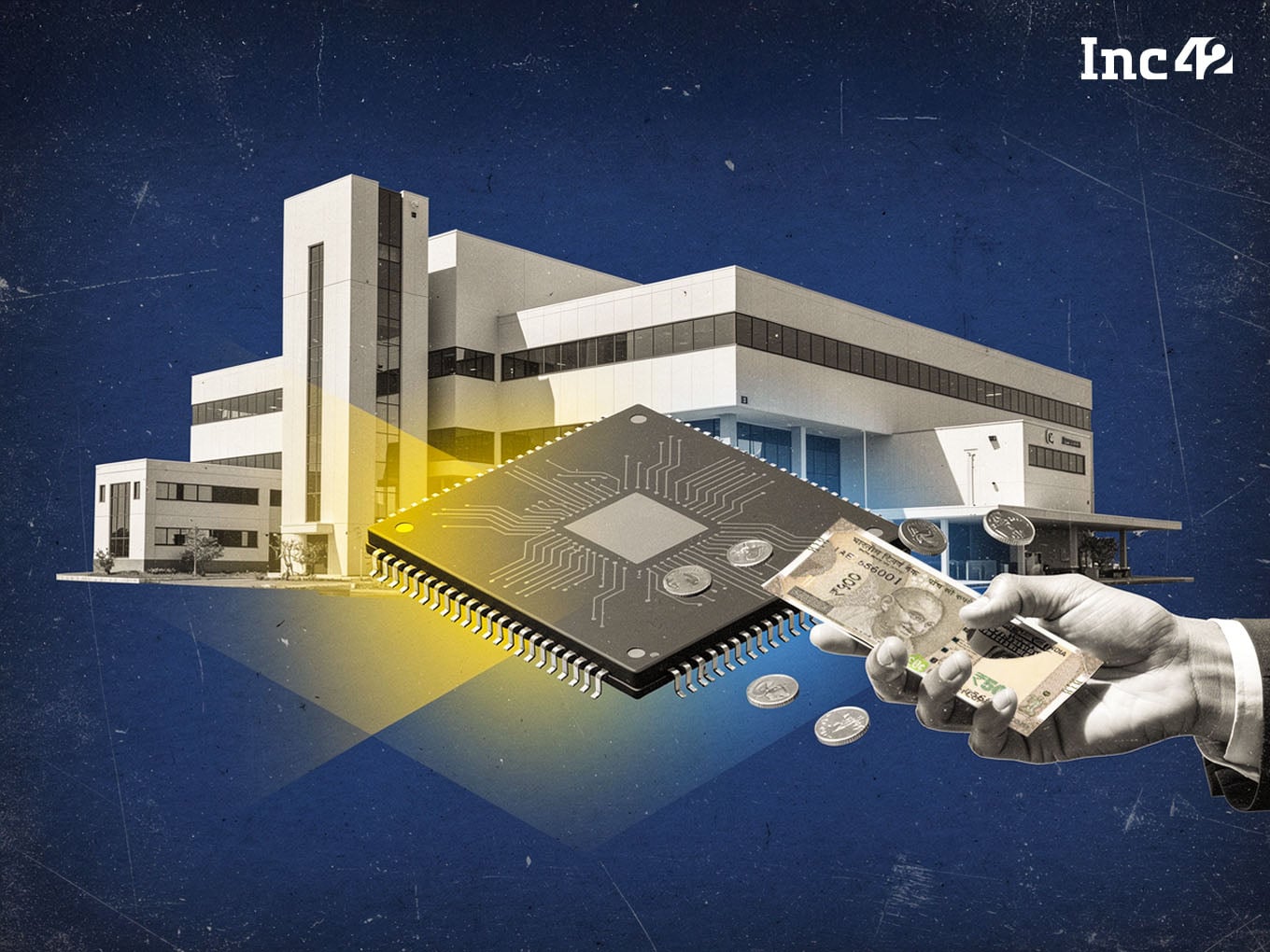
Marvell Commits $250 Mn to India Chip Expansion
Marvell Technology will invest $250 million in India over three years, doubling its workforce and expanding offices in Bengaluru and Hyderabad to advance AI and cloud chip design.
Key Takeaways
July 5, 2026 · 5 min read · By Rishabh Bhardwaj
·
AI-assisted, human-reviewed · Our editorial standards
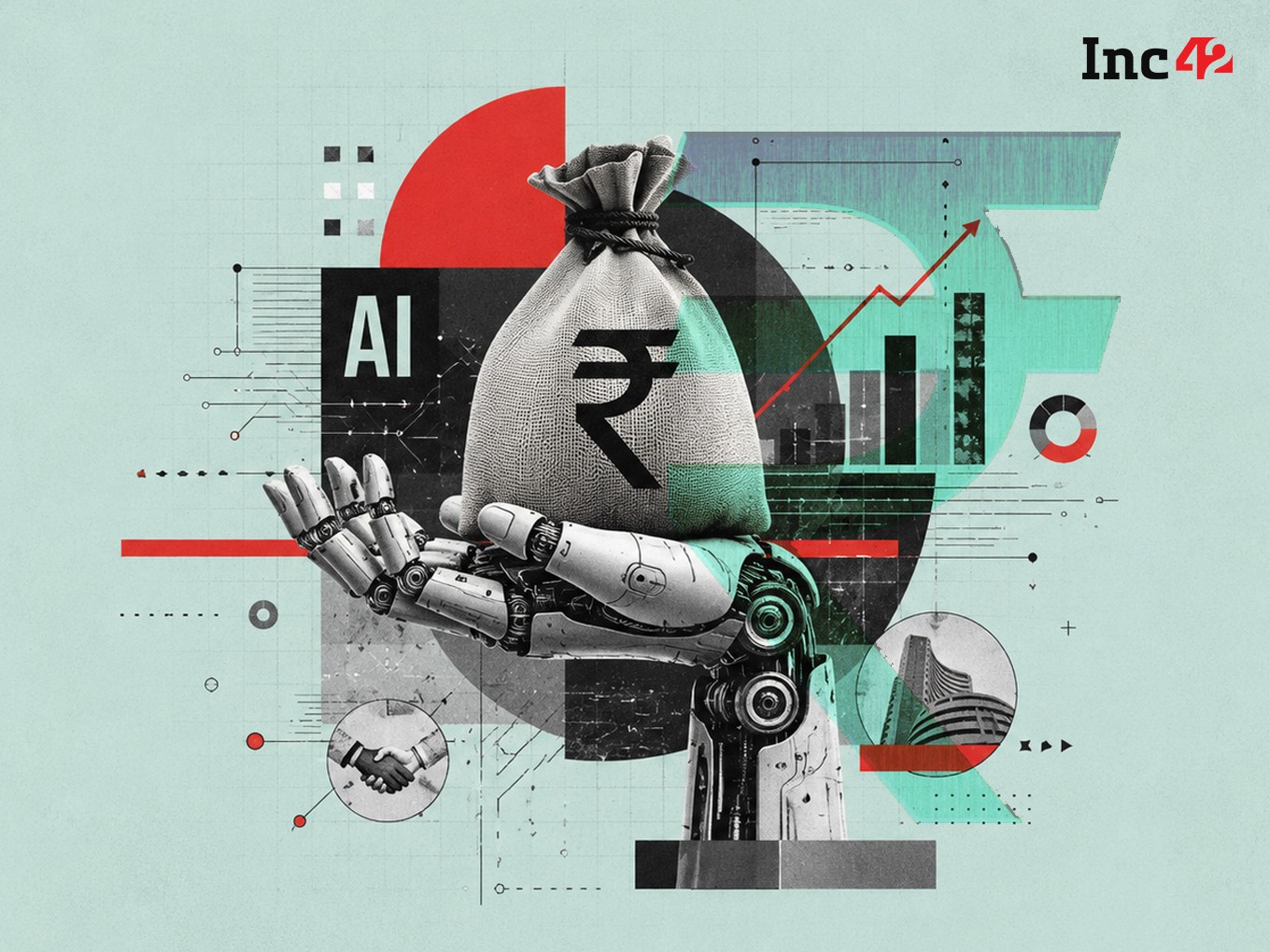
Indian AI startups raised $676 million in the first half of 2026, more than four times the $162 million raised in H1 2025, according to Inc42's Indian Tech Startup Funding Report for H1 2026. The number of deals hit a six-month high of 57, up from 30 in the same period last year. Sequentially, AI funding rose more than 35% compared to the second half of 2025. To put the acceleration in context: Indian AI startups had raised roughly $1.8 billion cumulatively through all of 2025. In just six months, the sector pulled in nearly a third of that total.
The AI surge ran counter to the broader Indian startup market, where total funding fell 9% year-on-year to $5.2 billion between January 1 and June 23. Overall deal count rose 7% to 501, signalling that investors spread capital more thinly across more bets. Late-stage funding dropped sharply, slumping 29% to $2.2 billion, with only five mega-rounds closing during the period.
Government policy is playing a direct role. The IndiaAI Mission, approved with an outlay of over Rs 10,372 crore, has reshaped investor calculus. Around 66% of institutional investors surveyed in the Inc42 report said the mission has influenced their AI investment thesis. The initiative subsidises compute infrastructure, encourages data localisation, and builds enabling policy frameworks. Unicorn India Ventures founder Bhaskar Majumdar described it as a "genuine policy tailwind rather than just rhetoric," noting that the government is effectively lowering the cost of entry into AI.
Prime Minister Narendra Modi publicly reinforced this direction in January, emphasising the need for a distinct Indian AI model built on a "Made in India, Made for the World" philosophy. Alongside the IndiaAI Mission, the India Semiconductor Mission 2.0 is building longer-term infrastructure capacity.
Three structural forces are amplifying the policy push. Global hyperscalers including Microsoft, Google, and Amazon are committing billions to build AI infrastructure in India. Sovereign AI infrastructure and foundation model investments are growing. And enterprise adoption has moved beyond pilots into production, creating durable commercial demand across banking, healthcare, defence, and agriculture.
Sarvam became India's second AI unicorn after closing a $234 million round. Emergent, led by Mukund Jha, raised $70 million. These are early signals that the ecosystem can produce companies with the scale to attract institutional conviction.
Despite the momentum, India's AI capital pool looks small against global benchmarks. OpenAI raised a round valued at $112 billion during the same period, a figure that dwarfs the entire Indian startup ecosystem's cumulative funding over recent years. Anthropic raised $65 billion in late May 2026, pushing its post-money valuation to nearly $965 billion.
AUM Ventures founding partner Chetan Mehta was direct about the gap: "What has been raised in India is still very minuscule compared to global AI investments. The increase is encouraging, but we are still very early in this journey." He added that shallow domestic capital pools risk pushing Indian AI founders to relocate abroad in search of larger rounds and customer access. AUM Ventures recently launched a Rs 750 crore fund focused on frontier technologies and plans to increase its AI startup allocation through it.
Investors do argue, however, that the current cycle is qualitatively different from earlier hype waves. "There is certainly froth, but the foundation is much stronger than previous hype cycles because customers are paying for AI," Majumdar said. Investor scrutiny has tightened: diligence now focuses on customer adoption rates, proprietary data assets, unit economics, and whether a product is defensible. Startups built as thin layers on top of existing AI models are struggling to raise, while those with recurring enterprise revenue, product-market fit, and proprietary technology are drawing follow-on capital.
Capital is concentrating in AI infrastructure, sovereign compute, Indian-language foundation models, and vertical applications in financial services, healthcare, defence, and agriculture. Generic AI applications are losing ground to purpose-built, sector-specific products. As Mehta put it, "Gone are the days when you could just build wrappers on top of foundational models. You have to build vertically focused products that solve real problems with an AI-first approach."
Investors also expect mergers and acquisitions to become a primary exit route for many AI startups, overtaking IPOs in frequency if not in headline value. Hyperscalers, IT services companies, and well-funded startups prefer acquiring AI capabilities and engineering talent rather than building from scratch, compressing their development timelines. Mehta said Indian IT services firms should become more active investors in AI startups, either directly or through their investment arms. IPOs will remain viable for companies that achieve meaningful scale and durable economics, but M&A is likely to define the exit landscape for most of the current cohort.
For the rest of 2026, investors expect AI to remain the hottest funding category in India, with capital increasingly concentrated among startups that can show sustainable business models rather than growth-stage promises alone.
Marvell Technology will invest $250 million in India over three years, doubling its workforce and expanding offices in Bengaluru and Hyderabad to advance AI and cloud chip design.
Microsoft, Nvidia, SpaceX, and Palantir have joined the newly formed Open Secure AI Alliance alongside dozens of U.S. and European tech companies. The group aims to set shared AI security standards as fallout from a cyber attack on OpenAI pushes the industry toward coordinated defenses.
Skyroot Aerospace's Vikram-1 became India's first privately built rocket to reach orbit, making India only the third country after the US and China with a private orbital launch capability.
India has approved a ₹1.25 lakh crore ISM 2.0 that replaces the earlier grant-only model with a grant-plus-equity structure, co-investing alongside private venture capital in fabless chip design startups.